Keep it dry
Moisture trapped between stacked ingots can flash to steam under molten metal and cause an explosion. Store under cover, and preheat or dry ingots before charging into a liquid heel.



An aluminium remelt ingot is unalloyed primary metal, cast into a stackable shape, that a foundry, casthouse or steel plant melts as charge. The grade is defined by its silicon, iron and trace-element limits, most often P1020A (99.70 % Al minimum), not by the shape of the ingot. Metline supplies remelt ingots in standard and higher purities with lot-traceable analysis certificates to buyers worldwide.
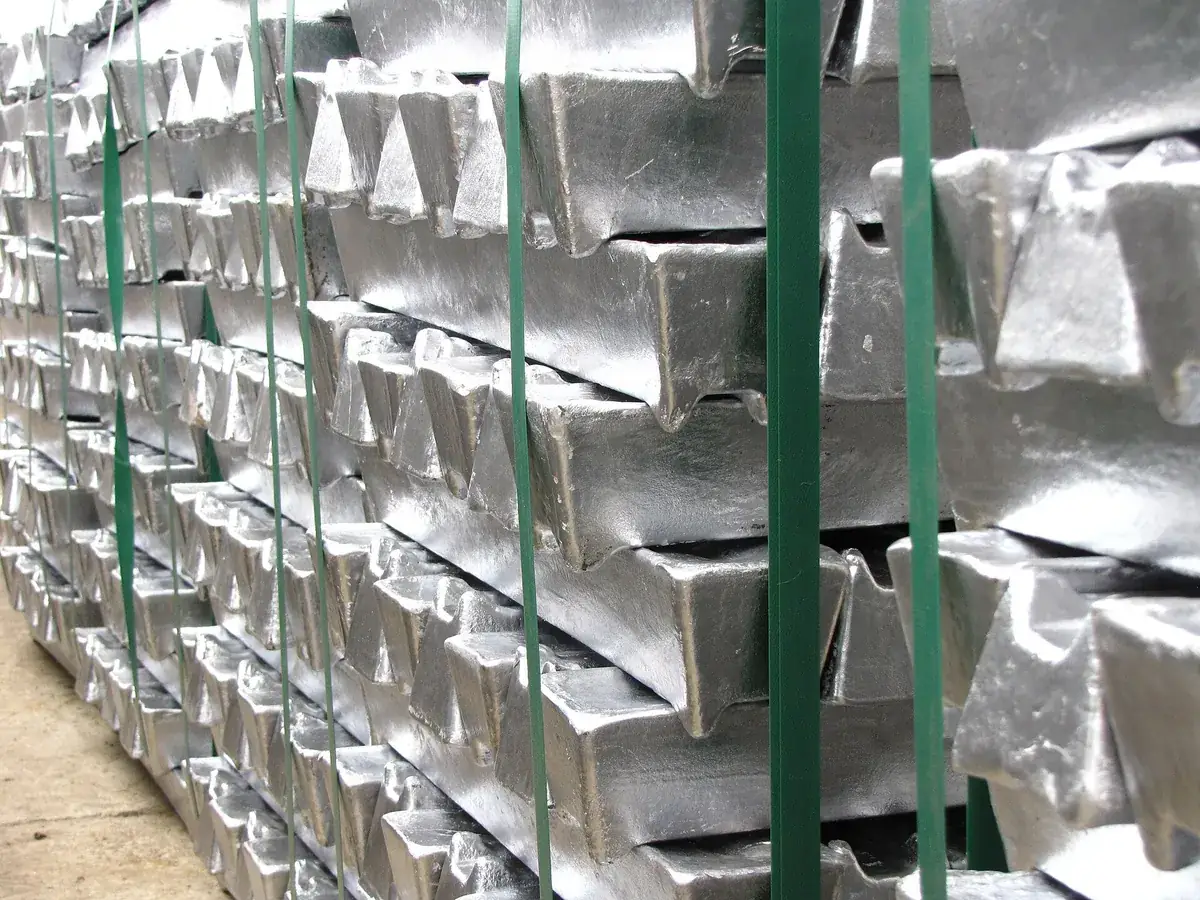
A remelt ingot is aluminium in its most basic commercial form: metal tapped from reduction cells, adjusted for cleanliness and cast into open moulds so that it can be shipped, stored and charged into a furnace. It is a raw material, not a semi-finished product. Nobody machines or forms a remelt ingot; it is always melted again.
Buyers fall into three groups. Alloy producers and extrusion or rolling casthouses use unalloyed ingot to dilute recycled scrap and to hit tight impurity limits in their own alloys. Foundries add it to correct iron and silicon in a melt, or to make alloys in-house. Steel plants use it as a deoxidiser, where purity matters less than consistent weight and cleanliness.
The same physical shape is cast in many purities, so the key buying question is chemistry. A 22 kg ingot that looks identical to a P1020A ingot may carry far more iron or a different trace profile. The grade must be fixed by a named designation and confirmed by a lot analysis, never by appearance or by the brand stamp alone.
North American and international practice names unalloyed remelt grades with a P designation, for example P1020A. The four digits are the maximum silicon and iron contents in hundredths of a per cent: P1020 means Si ≤ 0.10 % and Fe ≤ 0.20 %. A suffix letter adds limits on other elements. Europe uses EN 576 and the ISO system uses ISO 115, both of which classify ingots by minimum aluminium content.
| Grade | Si max (%) | Fe max (%) | Nominal Al (%) | Typical use |
|---|---|---|---|---|
| P1535 | 0.15 | 0.35 | ≈ 99.5 | Deoxidation, general foundry dilution |
| P1020A | 0.10 | 0.20 | 99.70 min | Exchange-grade metal; wrought and casting alloy production |
| P0610 | 0.06 | 0.10 | ≈ 99.85 | Bright-trim alloys, foil, low-iron and electrical alloys |
| P0406 | 0.04 | 0.06 | ≈ 99.90 | Reflector, lithographic and high-conductivity applications |
| Electrical (EC) grades | Per order | Per order | 99.5 – 99.7+ | Feed for 1350 conductor alloy; Ti, V, Cr and Mn limited |
Silicon and iron limits for the P grades follow directly from the designation. Nominal aluminium content for grades other than P1020A is shown as an approximate guide; the governing limits are those in the registration record or standard named on your order.
For electrical conductor feed, silicon and iron matter less than the transition elements. Titanium, vanadium, chromium and manganese each cut conductivity sharply even at a few hundredths of a per cent, so conductor-grade orders specify their combined maximum, and casthouses often treat the melt with boron to precipitate them.
P1020A is the reference chemistry for high-grade primary aluminium traded on the London Metal Exchange, which also accepts the Al99.70 grade of GB/T 1196. The two are very close, as the table shows.
| Element | P1020A, % max (AA registration, rev. 2018) | Al99.70, % (GB/T 1196) |
|---|---|---|
| Silicon (Si) | 0.10 | 0.10 max |
| Iron (Fe) | 0.20 | 0.20 max |
| Zinc (Zn) | 0.03 | 0.03 max |
| Gallium (Ga) | 0.04 | 0.03 max |
| Vanadium (V) | 0.03 | not specified |
| Copper (Cu) | not specified | 0.01 max |
| Magnesium (Mg) | not specified | 0.02 max |
| Others, each | 0.03 | 0.03 max |
| Others, total | 0.10 | 0.30 max (all impurities) |
| Aluminium | Remainder (99.70 typical minimum) | 99.70 min |
Two consequences for buyers. First, P1020A does not cap copper or magnesium as named elements; they fall under "others each". If your process is sensitive to a particular element, such as sodium and calcium in aluminium-silicon foundry alloys, or boron in conductor alloys, add an explicit limit to the purchase order. Second, iron is the impurity that most often decides whether an ingot is suitable for dilution, because iron cannot be removed economically once it is in the melt.
Remelt aluminium is cast in a few standard shapes chosen to suit the buyer's furnace door, charging equipment and melt rate. Exchange rules for high-grade primary aluminium allow ingots of 9 to 26 kg each and T-bars or sows of up to 788 kg, delivered in 25 tonne lots with a 2 % tolerance.
| Format | Typical unit weight | How it is handled | Best for |
|---|---|---|---|
| Standard ingot | About 9 – 26 kg (often 20 – 25 kg) | Interlocked stacks strapped into bundles of roughly 1 t | Most foundries and casthouses; manual or forklift charging |
| T-bar | Several hundred kg, up to 788 kg | Lifted by crane or forklift under the T-shaped foot | Large reverberatory and melting furnaces |
| Sow / low-profile sow | Several hundred kg | Single large block, often with lifting recesses | High melt-rate furnaces; fewer pieces to handle |
| Notched or small ingot | Under 10 kg | Broken at notches into smaller pieces | Steel deoxidation and small crucible furnaces |
Each bundle is strapped with steel or PET bands and marked with the producer's brand, grade, cast or lot number and net weight. Bundles load efficiently into 20-foot containers or break-bulk holds. Ask for net weight per bundle on the packing list; strapping and any timber skids should be excluded from the invoiced metal weight.
| Property | Value (approximate, 99.7 % Al) |
|---|---|
| Density at 20 °C | 2.70 g/cm³ |
| Melting point | About 658 – 660 °C (pure aluminium 660.3 °C) |
| Latent heat of fusion | About 397 kJ/kg |
| Specific heat at 20 °C | About 0.90 kJ/kg·K |
| Theoretical energy to melt from room temperature | About 1.1 MJ/kg (≈ 0.3 kWh/kg) |
| Liquid density near melting point | About 2.37 g/cm³ |
The theoretical melting energy is a floor, not a forecast. Real fuel or power consumption depends on furnace type, burner efficiency, heat recovery and the charge mix, and is typically several times the theoretical figure. Large sows and T-bars reduce handling and door-open time but melt more slowly per piece than standard ingots, which present more surface area to the furnace atmosphere.
Moisture trapped between stacked ingots can flash to steam under molten metal and cause an explosion. Store under cover, and preheat or dry ingots before charging into a liquid heel.
Damp or corroded surfaces add hydrogen to the melt, which shows up later as gas porosity. Degas with argon or nitrogen rotary degassing where quality demands it.
Charge clean ingots quickly into a hot furnace, avoid stirring that breaks the oxide skin, and skim before tapping. Fluxing helps separate oxides.
Confirm the chemistry with optical emission spectrometry after melting, even when a certificate is supplied, before adding alloying elements.
When diluting scrap, calculate the final iron and silicon from the ingot analysis and scrap analysis; the ingot grade is chosen to bring the blend inside the target alloy limits.
For deoxidation, consistent unit weight and low moisture matter more than purity; notched ingots allow accurate additions.
A remelt ingot certificate should identify the producer's brand, the cast or lot number, the grade designation, the analysis method and the measured content of every limited element. Metline supplies lot-traceable analysis certificates with each delivery and can arrange independent inspection at loading on request.
Buyers increasingly also ask for the source of the metal and its carbon intensity, which differ greatly between smelters depending on their electricity supply. If your customers require that information, state it at enquiry so that suitable metal and documentation can be quoted.
| Aspect | Primary remelt ingot | Secondary ingot |
|---|---|---|
| Source | Reduction-cell metal | Refined post-consumer or process scrap |
| Chemistry | Low, tightly controlled impurities | Higher and more variable Fe, Cu, Zn and Si |
| Main role | Dilution, high-purity and wrought alloys | Casting alloys and less sensitive products |
| Carbon footprint | Depends heavily on smelter power source | Much lower; remelting needs a small fraction of smelting energy |
| Specification | P1020A, EN 576, ISO 115 grades | Alloy-specific foundry or remelt specifications |
Most melt shops use both: recycled metal to cut cost and carbon, and primary ingot to keep impurities inside the alloy limits. The proportion is set by the tightest limit in the target alloy, usually iron.
P1020A is a registered unalloyed aluminium grade with at most 0.10 % silicon and 0.20 % iron, plus limits on zinc, gallium, vanadium and other elements, giving about 99.70 % aluminium minimum. The digits are the Si and Fe maximums in hundredths of a per cent.
Standard remelt ingots usually weigh about 20 – 25 kg, and exchange rules allow 9 to 26 kg. They are strapped into bundles of roughly one tonne. T-bars and sows weigh several hundred kilograms each, up to 788 kg under exchange rules.
They are very close. Both cap Si at 0.10 % and Fe at 0.20 % with 99.70 % Al minimum, but the trace-element lists differ slightly (for example GB/T 1196 Al99.70 limits copper and magnesium, while P1020A limits vanadium). Name the exact standard on your order.
Unalloyed ingot can be cast, but pure aluminium has poor fluidity and low strength as a casting. Foundries normally melt it with silicon, magnesium or master alloys, or buy pre-alloyed foundry alloy ingot.
Water trapped in stacks turns to steam instantly under molten aluminium and can cause a violent eruption. Damp metal also adds hydrogen, which causes porosity. Store ingots under cover and preheat them before adding them to a molten bath.
A certificate of analysis per lot showing brand, cast number and measured composition, a packing list with net bundle weights, and the usual commercial and shipping documents. Metline can arrange third-party inspection on request.
Tell us the grade, element limits, format, quantity and port. We will reply with availability, analysis certificates and a delivered price.






