Pipeline transition joints
Tubular aluminium-steel or aluminium-stainless joints that connect aluminium process piping to steel lines, for example in cryogenic and LNG plant.



A structural transition joint is an explosion-welded strip of steel, a pure aluminium interlayer and a marine aluminium alloy, which lets shipyards weld an aluminium superstructure to a steel hull with ordinary fusion welds on each side. Metline supplies STJ strip and cut shapes in standard and custom build-ups, tested to MIL-J-24445A and class society requirements, to yards and fabricators worldwide.
Steel and aluminium cannot be fusion welded to each other. The two metals form brittle iron-aluminium intermetallic compounds when melted together, and the joint cracks. A transition joint solves this by bonding the two metals in the solid state, so the shipyard only ever welds steel to steel and aluminium to aluminium.
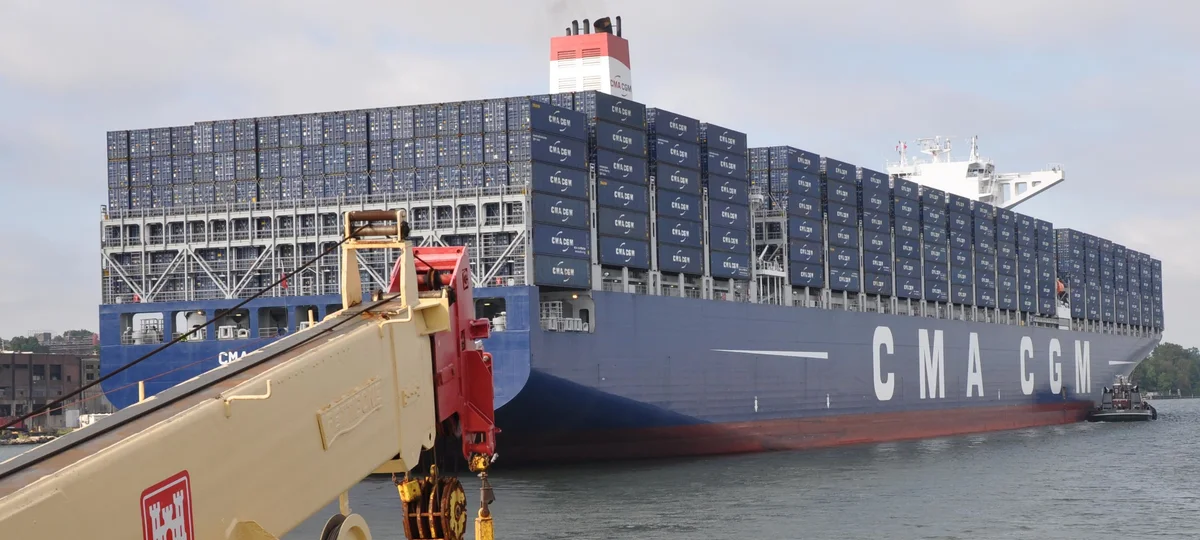
Most commercial and naval vessels use a steel hull for strength, abrasion resistance and cost, and an aluminium deckhouse, mast or upper superstructure to cut topside weight. Lowering weight high in the ship lowers the centre of gravity, which improves stability, lets the designer add a deck, or allows a lighter hull and a smaller engine for the same speed. Ferries, offshore supply vessels, cruise ships, frigates and patrol boats all rely on this mixed construction.
Before transition joints were widely available, aluminium superstructures were bolted or riveted to steel coamings with insulating tape and sealant between them. Those joints leaked, needed regular inspection and suffered galvanic corrosion wherever seawater bridged the insulation. A welded transition joint gives a continuous, watertight connection with no crevice for seawater to enter, and it needs no maintenance beyond the normal paint system.
Explosion welding (also called explosion cladding or explosion bonding) places a flyer plate a small, controlled distance above a base plate and covers it with a layer of explosive. When the charge is detonated from one edge, the flyer is driven onto the base at very high velocity and a jet of surface metal is forced out ahead of the collision point. The jet strips away oxide films, and the clean surfaces are pressed together so hard that they bond at the atomic level, usually with a characteristic wavy interface. The metals barely heat up, so their original properties are preserved and no brittle intermetallic layer forms.
A direct bond between structural steel and a magnesium-bearing aluminium alloy such as 5083 is weak, because magnesium encourages intermetallic formation. For this reason a soft, commercially pure aluminium interlayer (1050, 1060 or 1100) is bonded to the steel first, and the marine alloy is bonded on top. In high-temperature or specialist builds a thin titanium or nickel layer may also be added between steel and aluminium to act as a diffusion barrier.
Bonding is carried out on large clad plates, which are then ultrasonically inspected and cut into strips, bars, rings or blanks by sawing or waterjet. Bonding in a vacuum chamber, rather than in open air, removes trapped air from the gap between the plates and gives a more uniform interface with fewer oxide inclusions. Ask for the bonding method and the inspection results when you compare suppliers.
| Layer | Typical materials | Purpose |
|---|---|---|
| Steel base | Shipbuilding steel Grade A, D or AH36; ASTM A516 Gr 55/70; 316L stainless for special cases | Welded to the steel deck or coaming with normal steel procedures |
| Interlayer | 1050, 1060 or 1100 aluminium; titanium (Grade 1) or nickel in special builds | Gives a strong, ductile bond with the steel and blocks intermetallic growth |
| Aluminium alloy | 5083, 5086 or 5456 marine alloy; 3003 in some low-strength builds | Welded to the aluminium superstructure with 5183 or 5356 filler |
The thickness of each layer is chosen so that the welding heat on either side cannot raise the bond interface above its temperature limit, and so that each face is thick enough to take the fillet welds required by the structural design. The combinations below are widely used; other materials and layer thicknesses can be specified to match a class-approved drawing.
| Steel | Interlayer | Aluminium alloy | Typical total thickness (steel + interlayer + alloy) |
|---|---|---|---|
| Shipbuilding steel Grade D | 1050 | 5083 | 28 mm (15 + 3 + 10) or 33 mm (20 + 3 + 10) |
| Shipbuilding steel Grade A | 1050 | 5083 | 28 – 34 mm |
| ASTM A516 Gr 55 | 1050 | 5086 | 34.5 mm (19 + 9.5 + 6) |
| ASTM A516 Gr 55 | 1050 | 5083 | 19 mm (10 + 5 + 4) |
| ASTM A516 Gr 55 | 1100 | 5086 | 19.05 mm (9.525 + 6.35 + 3.175), i.e. 3/4 in |
| ASTM A516 | 1100 | 5456 | 34.9 mm (19.05 + 9.525 + 6.35), i.e. 1 3/8 in |
| ASTM A516 Gr 55 | Titanium Grade 1 | 3003 | 31.5 mm (19 + 1.5 + 10) |
| 316L stainless steel | Titanium Grade 1 | 3003 | 31.5 mm (20 + 1.5 + 10) |
| 316L stainless steel | 1100 + titanium + nickel | 5086 or 5456 | 24 – 31 mm multi-layer |
Strip width is set by the coaming or deck detail and is usually specified on the drawing; strips are supplied in straight lengths and can be cut to rings, discs, rectangles and profiled shapes.
The bond, not the parent metals, is the weak link of a transition joint, so acceptance testing focuses on the interface. MIL-J-24445A, the US Navy specification for aluminium-to-steel transition joints, is the reference most class societies and navies use, and its minimum values are widely quoted as the benchmark for commercial STJ.
| Property | Typical requirement | What it shows |
|---|---|---|
| Shear strength at the interface | ≥ 55 N/mm² (8 ksi) | Resistance to sliding of the aluminium over the steel under deck loads |
| Tensile strength through thickness (ram tensile) | ≥ 75 N/mm² (about 11 ksi) | Resistance to the superstructure lifting off the hull |
| Bend tests (face and side) | No separation at the bond | Ductility of the interface during fabrication and service |
| Thermal exposure | Bond properties retained after holding at up to 315 °C | Tolerance of welding heat on both faces |
| Ultrasonic inspection | Bonded area checked over the full plate before cutting | Detects unbonded areas or laminations |
In practice, strength tests on well-made explosion-welded joints often fail in the soft 1050 interlayer rather than at the bond itself, which is the desired result: it shows the interface is stronger than the weakest metal in the stack. Additional tests that yards and navies often specify include fatigue testing in tension-compression and torsion, dye-penetrant inspection of cut edges, chemical analysis of each layer and flatness checks.
The bond interface must not be overheated. Above roughly 315 °C held for any length of time, iron and aluminium start to diffuse across the interface and form a brittle intermetallic layer that weakens the joint. Welding procedures are written to keep the interface below that limit.
Joints should be stored dry and handled so the strip is not bent across the interface. If a strip must be curved to follow a deck camber, form it gently and check the bond afterwards, or order it pre-formed. Detailed welding instructions should always follow the procedure approved by your class society for the specific build-up.
A typical installation runs a continuous STJ strip along the top of the steel coaming. The steel face is fillet welded to the coaming, and the aluminium deckhouse plating is then welded to the alloy face, giving a watertight seam around the whole superstructure.
| Aspect | Explosion-welded STJ (vacuum) | Explosion-welded STJ (open air) | Bolted joint with insulation |
|---|---|---|---|
| Watertightness | Continuous weld, fully tight | Continuous weld, fully tight | Depends on sealant; leaks with age |
| Galvanic corrosion | No crevice at the joint | No crevice at the joint | Risk wherever insulation fails |
| Interface quality | Dense, uniform bond, few oxide inclusions | More variable; trapped air can leave voids | Not applicable |
| Formability and cutting | Good ductility; cuts cleanly | Defects can open during cutting or bending | Not applicable |
| Maintenance | Paint only | Paint only | Regular inspection, re-tightening, re-sealing |
| Weight | Light | Light | Heavier: bolts, flanges, doubler plates |
Bolted joints still have a place for removable structures, but for permanent connections a welded transition joint is lighter, tighter and cheaper to own over the life of the vessel.
Tubular aluminium-steel or aluminium-stainless joints that connect aluminium process piping to steel lines, for example in cryogenic and LNG plant.
Aluminium-stainless joints made to stay tight at very low temperatures, used where aluminium heat exchangers connect to stainless pipework.
Aluminium-steel blocks that carry current between aluminium bus bars and steel anode or cathode bars in smelting and electrochemical plants.
When aluminium and steel melt together they form brittle iron-aluminium intermetallic compounds, so a fusion weld between them cracks. An explosion-welded transition joint bonds the metals in the solid state, and the yard then welds steel to steel and aluminium to aluminium.
Magnesium in 5083 and other marine alloys weakens a direct bond to steel. A soft 1050 or 1100 interlayer bonds strongly to the steel and to the alloy, and its ductility absorbs strain at the interface.
The interface should not be held above about 315 °C. Above this, iron and aluminium diffuse across the bond and form a brittle layer, which is why welding procedures limit heat input and monitor the interface temperature.
Aluminium expands about twice as much as steel per degree. The bond is strong enough to carry the resulting shear, and the ductile interlayer and the relatively narrow strip limit the stress. Designers also allow for the difference in the superstructure detailing.
A correctly installed and painted joint has no moving parts or sealants and is expected to last for the service life of the hull. Bond separations seen in practice are usually linked to overheating during welding or to poor-quality bonding.
They are used where higher welding or service temperatures are expected, or where stainless steel must be joined to aluminium, such as LNG and cryogenic equipment. For a standard steel deck and 5083 deckhouse, a 1050 interlayer joint is normal.
Ship projects normally require joints from a class-approved process with testing witnessed by the society classing the vessel, such as LR, DNV, ABS or BV. Naval projects often call for MIL-J-24445A. State the requirement in your enquiry so the right test scope is quoted.
Send the build-up, strip width, length and class requirement. We will reply with test scope, certification and a delivered price.






