


Nuclear-Grade Aluminium Foam
In the nuclear sector, closed-cell aluminium foam is used where a light, non-combustible material must absorb impact energy or screen electromagnetic interference: crushable layers in transport packaging, shock buffers under sensitive equipment, and panels for shielded rooms. This guide explains what foam can and cannot do in nuclear service, and how to specify it for qualification.
- Material
- Closed-cell aluminium foam
- Density
- about 0.25 – 0.8 g/cm³
- Main roles
- Impact absorption, EMC screening
- Not for
- Neutron or gamma shielding on its own
What makes foam useful in nuclear applications
Nuclear designs value materials that behave predictably under accident loads, do not burn, and are free of organic content that can degrade under radiation or release gas. Closed-cell aluminium foam fits these needs: it is metallic, non-combustible, stable under ionising radiation in the way that solid aluminium is, and it crushes at a nearly constant stress, so the force it passes on can be calculated.
Foam is not a radiation shield. Its density is a fraction of solid aluminium, so it adds little attenuation of gamma rays, and aluminium alone is a poor neutron absorber. Where neutron absorption is required, designers use boron-containing materials such as aluminium-boron carbide composites; where gamma shielding is required, dense materials such as steel, lead or concrete do the work. Foam supports those layers mechanically and protects them from impact.
Properties relevant to nuclear service
| Property | Closed-cell aluminium foam | Design relevance |
|---|---|---|
| Density | About 0.25 – 0.8 g/cm³ | Low mass in packages and supports |
| Compressive plateau stress | Roughly 1 MPa at 0.3 g/cm³ up to about 15 MPa at 0.8 g/cm³ | Sets the crush force of an impact limiter or buffer |
| Densification strain | Typically 50 – 70 % | Available crush stroke for a given thickness |
| Combustibility | Non-combustible, no organic binder | No fuel load or off-gassing in fire |
| Melting point | About 660 °C (aluminium matrix) | Must be enclosed or protected where fire tests exceed this |
| Electrical conductivity | Conductive metal cell walls | Contributes to EMC screening of panels and rooms |
Values are indicative. Qualification requires batch compression testing to ISO 13314, and often dynamic and temperature-dependent testing, on the actual foam supplied.
Impact limiters for radioactive material packages
Packages for radioactive material must survive the regulatory test sequence set by the IAEA Regulations for the Safe Transport of Radioactive Material (SSR-6): for accident-resistant packages this includes a 9 m drop onto an unyielding target, a 1 m drop onto a steel punch and a fully engulfing fire of 800 °C for 30 minutes. Impact limiters at each end of a cask crush during the drop and keep decelerations within what the containment and contents can withstand.
Limiters have historically used wood, polyurethane foam and aluminium honeycomb. Aluminium foam offers a crush response that is less dependent on direction than honeycomb, and unlike wood or polymer foam it does not burn. Because its matrix melts at about 660 °C, foam inside a limiter is enclosed in a steel or stainless shell and placed so that the fire test does not compromise its function. The limiter design and its qualification remain the responsibility of the package designer and the competent authority.
Shock and seismic buffering of equipment
- Equipment mounts: foam pads and blocks under instrument racks, electronics and handling equipment absorb shocks from handling incidents.
- Drop protection in handling areas: crushable foam inserts in pits and transfer areas reduce the consequences of dropped loads.
- Containers for sensitive components: foam linings in reusable containers protect components during site transfer.
- Research and fusion facilities: conductive foam panels are being studied for electromagnetic screening and lightweight structural infill around diagnostics and power systems.
EMC shielded rooms and enclosures
Control rooms, instrumentation rooms and test cells need protection from electromagnetic interference. Aluminium foam panels, or foam-cored sandwich panels with aluminium skins, combine a conductive screen, structural stiffness, sound damping and non-combustibility in one modular element.
Shielding performance is decided mostly at the joints, doors and penetrations, not by the panel material alone. Continuous electrical bonding between panels, conductive gaskets at doors and filtered service entries are essential, and the finished room should be measured to a recognised method such as IEEE 299 or EN 50147-1.
How to specify foam for nuclear qualification
- Define the functionImpact absorption, equipment buffering or EMC panel, with the load, energy or attenuation target.
- Set density and toleranceChoose a density band from the required plateau stress and specify its permitted variation.
- Agree testsISO 13314 compression on each lot, dimensional and density checks, and any dynamic or temperature tests the safety case needs.
- TraceabilityLot identification, material certificates for aluminium skins and enclosures, and records to your quality plan.
- PackingClean, dry, protected packing to avoid contamination and handling damage.
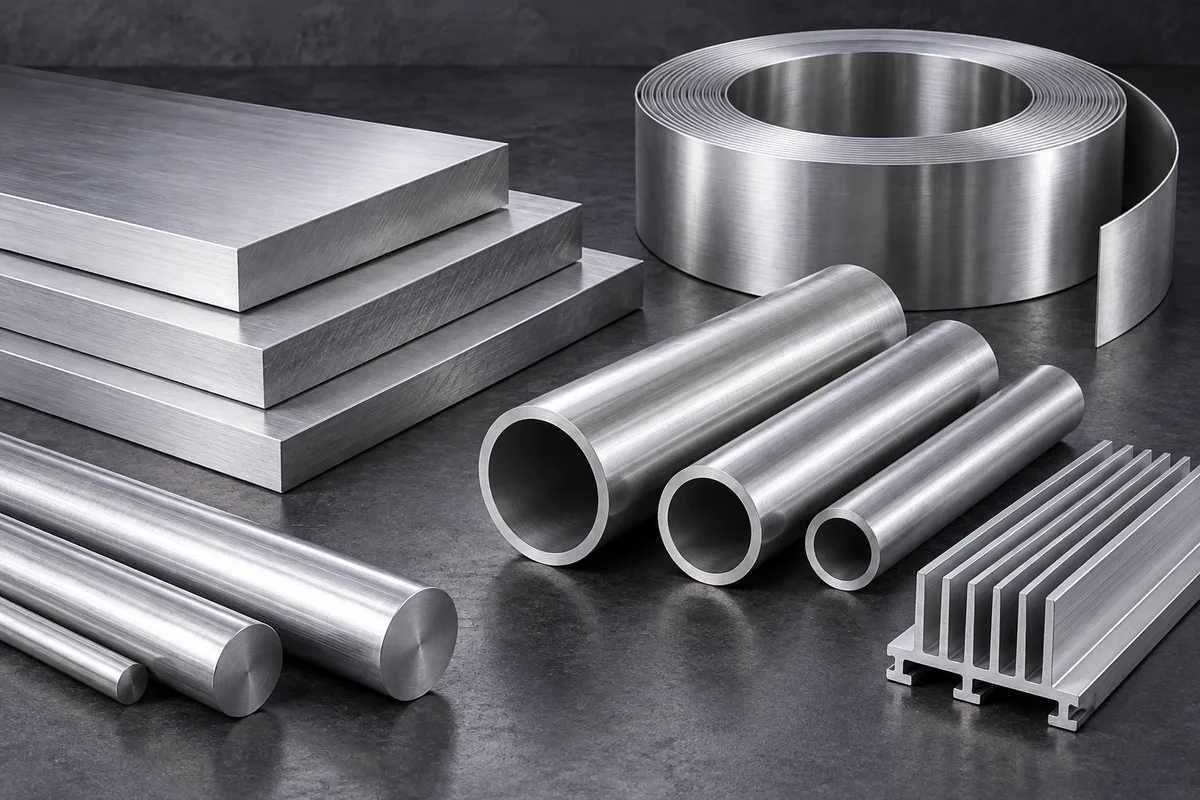
Metline supplies closed-cell aluminium foam panels and blocks, foam sandwich panels with aluminium skins, and the aluminium plate and extrusions that enclose them, with inspection documents and worldwide shipping.
References and standards
- IAEA SSR-6 (Rev. 1) – Regulations for the Safe Transport of Radioactive Material
- ISO 13314 – Compression test for porous and cellular metals
- IEEE 299 – Standard method for measuring the effectiveness of electromagnetic shielding enclosures
- Ashby et al. – Metal Foams: A Design Guide (Butterworth-Heinemann)
Nuclear-grade aluminium foam: frequently asked questions
Does aluminium foam shield against radiation?
Not meaningfully on its own. Its low density gives little gamma attenuation and aluminium absorbs few neutrons. Foam is used for impact absorption and EMC screening alongside dedicated shielding materials.
Why use aluminium foam instead of wood in impact limiters?
Foam is non-combustible, contains no moisture or organic material, and crushes at a more uniform stress in all directions. It must still be enclosed, because aluminium melts at about 660 °C and regulatory fire tests reach 800 °C.
What tests are needed for nuclear foam?
At minimum, density and dimensional checks and compression tests to ISO 13314 on each lot. Safety cases often add dynamic crush tests and testing at the minimum and maximum service temperatures.
Can foam panels be used for EMC shielded rooms?
Yes, as conductive, stiff, non-combustible panels. Performance depends on bonding at joints, doors and penetrations, so the completed room should be measured.
Do you supply foam with documentation for nuclear projects?
We supply foam with lot traceability, inspection and compression test reports, and certificates for aluminium skins and plate. Project-specific quality plans can be discussed at enquiry stage.
Need aluminium foam for nuclear equipment?
Share the application, crush or shielding target, dimensions and documentation requirements. We will propose foam options and a delivered price.





