Seawater systems
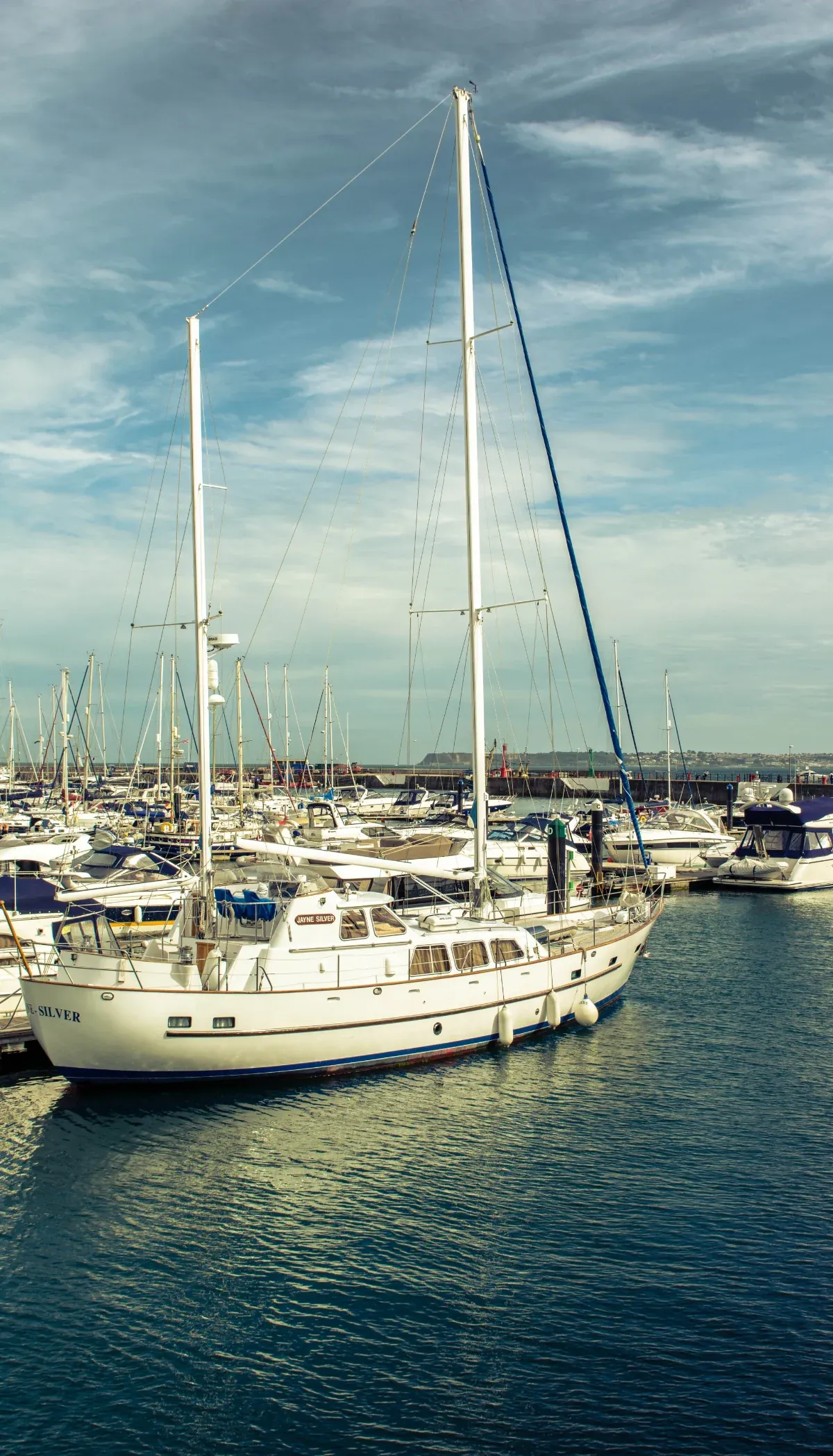
Cooling water, ballast and fire-main lines on aluminium hulls, joined by welding to 5083 or 5086 plate.



5083 aluminium pipe is the strongest of the common non-heat-treatable pipe alloys, with about 4.5 % magnesium for excellent resistance to seawater and full strength retention after welding. It is specified for shipboard and offshore piping, desalination plants and cryogenic LNG and industrial-gas lines, where it gets tougher as temperature falls. Metline supplies 5083 seamless pipe and tube in O, H111 and H112 to ASTM B241 and EN standards, worldwide.
5083 is an aluminium-magnesium-manganese alloy that gets its strength from magnesium in solid solution, not from heat treatment. That makes it unusually forgiving to weld: a butt-welded 5083 pipe joint retains nearly the full strength of annealed parent metal.
Pipe in 5083 is extruded seamlessly over a mandrel, then supplied annealed (O), lightly strain-hardened (H111) or as extruded (H112). Its combination of strength, weldability and corrosion resistance makes it the standard alloy for seawater cooling and fire-main lines on aluminium vessels, offshore platform piping and topsides, and the piping, tanks and heat exchangers of air-separation and LNG plants.
Cryogenic service is a particular strength. Unlike carbon steel, 5083 has no ductile-to-brittle transition: its tensile strength and toughness both rise as it is cooled towards −196 °C, which is why it is widely used for liquid-nitrogen, liquid-oxygen and LNG equipment. The one limit is sustained heat. Above roughly 65 °C, alloys with more than about 3 % magnesium can slowly become sensitised to intergranular corrosion, so 5083 is not used for hot-water or steam lines.
Registered limits for 5083 (EN AW-5083, AlMg4.5Mn0.7). Marine class societies may impose additional limits or tests on the same chemistry.
| Element | Minimum | Maximum | Role in the alloy |
|---|---|---|---|
| Silicon (Si) | — | 0.40 | Impurity |
| Iron (Fe) | — | 0.40 | Impurity |
| Copper (Cu) | — | 0.10 | Kept low for seawater resistance |
| Manganese (Mn) | 0.40 | 1.0 | Adds strength and grain control |
| Magnesium (Mg) | 4.0 | 4.9 | Main strengthening element |
| Chromium (Cr) | 0.05 | 0.25 | Grain control, stress-corrosion resistance |
| Zinc (Zn) | — | 0.25 | Impurity |
| Titanium (Ti) | — | 0.15 | Grain refiner |
| Others, each / total | — | 0.05 / 0.15 | |
| Aluminium (Al) | Remainder |
Seamless pipe minimums below are those commonly listed for ASTM B241 (and its withdrawn predecessor B345); always check the current edition and the certificate. Typical values are for reference.
| Temper | Basis | Tensile strength | Yield strength | Elongation |
|---|---|---|---|---|
| O | Specified minimum (seamless pipe) | 270 – 350 MPa / 39 – 51 ksi | 110 MPa / 16 ksi min | 14 % |
| H111 | Specified minimum (seamless pipe) | 276 MPa / 40 ksi | 165 MPa / 24 ksi | 12 % |
| H112 | Specified minimum (extruded) | 270 MPa / 39 ksi | 110 MPa / 16 ksi | 12 % |
| O | Typical | 290 MPa / 42 ksi | 145 MPa / 21 ksi | 22 % |
Aluminium pipe follows the same nominal pipe sizes and schedules as steel pipe (dimensions per ANSI H35.2, matching ASME B36.10M). Weight per metre below uses 2.66 g/cm³; 5083 pipe weighs about 34 % of steel pipe of the same size.
| NPS | OD (in / mm) | Sch 40 wall (in / mm) | Sch 40 kg/m | Sch 80 wall (in / mm) | Sch 80 kg/m |
|---|---|---|---|---|---|
| 1/2 | 0.840 / 21.3 | 0.109 / 2.77 | 0.43 | 0.147 / 3.73 | 0.55 |
| 3/4 | 1.050 / 26.7 | 0.113 / 2.87 | 0.57 | 0.154 / 3.91 | 0.74 |
| 1 | 1.315 / 33.4 | 0.133 / 3.38 | 0.85 | 0.179 / 4.55 | 1.10 |
| 1-1/4 | 1.660 / 42.2 | 0.140 / 3.56 | 1.15 | 0.191 / 4.85 | 1.51 |
| 1-1/2 | 1.900 / 48.3 | 0.145 / 3.68 | 1.37 | 0.200 / 5.08 | 1.83 |
| 2 | 2.375 / 60.3 | 0.154 / 3.91 | 1.84 | 0.218 / 5.54 | 2.54 |
| 2-1/2 | 2.875 / 73.0 | 0.203 / 5.16 | 2.92 | 0.276 / 7.01 | 3.87 |
| 3 | 3.500 / 88.9 | 0.216 / 5.49 | 3.82 | 0.300 / 7.62 | 5.18 |
| 4 | 4.500 / 114.3 | 0.237 / 6.02 | 5.45 | 0.337 / 8.56 | 7.56 |
| 5 | 5.563 / 141.3 | 0.258 / 6.55 | 7.38 | 0.375 / 9.52 | 10.49 |
| 6 | 6.625 / 168.3 | 0.280 / 7.11 | 9.58 | 0.432 / 10.97 | 14.42 |
| 8 | 8.625 / 219.1 | 0.322 / 8.18 | 14.41 | 0.500 / 12.70 | 21.90 |
| 10 | 10.750 / 273.1 | 0.365 / 9.27 | 20.44 | 0.594 / 15.09 | 32.52 |
| 12 | 12.750 / 323.8 | 0.406 / 10.31 | 27.02 | 0.688 / 17.48 | 44.74 |
For ship and offshore piping, the pipe usually must be manufactured and tested under the rules of a classification society such as DNV, ABS, Lloyd's Register or Bureau Veritas. Class rules for aluminium alloys set chemistry, mechanical testing frequency, corrosion testing for high-magnesium alloys and the certificate format, often with surveyor witness. State the class society and grade on the enquiry so material can be supplied with the right certification.
For cryogenic equipment, 5083-O is the usual choice because it combines weldability with excellent low-temperature toughness. Design codes such as ASME B31.3 list allowable stresses for 5083 pipe and permit its use at very low temperatures without impact testing in many cases; follow the code edition that governs your project.
Cooling water, ballast and fire-main lines on aluminium hulls, joined by welding to 5083 or 5086 plate.
Topside utility lines, helideck structures and walkways where weight and corrosion matter.
Cold-box piping, transfer lines and vaporiser connections at −162 °C and below.
MIG and TIG with ER5183 (preferred for matching strength) or ER5356. Clean oxide and oil carefully; preheat is not normally needed.
O and H111 pipe can be induction or cold bent; allow larger radii than for 3003 or 6063.
Avoid sustained service above about 65 °C and do not heat for forming beyond recommended times; ASTM G67 testing is used to check susceptibility.
Isolate from copper alloys and stainless steel in seawater with insulating flanges or gaskets.
Gummy in O temper; sharp tools with high rake angles and good lubrication give the best finish.
Butt-weld elbows, tees and reducers in 5083 or compatible 5xxx alloys keep the system uniform.
| Property | 5083-O | 5086-H32 | 6061-T6 |
|---|---|---|---|
| Typical tensile strength | 290 MPa | 290 MPa | 310 MPa |
| Typical yield strength | 145 MPa | 207 MPa | 276 MPa |
| As-welded strength | About 270 MPa | About 240 MPa | About 165 – 190 MPa |
| Seawater resistance | Excellent | Excellent | Fair–good |
| Cryogenic suitability | Excellent | Very good | Good |
| Typical use | Marine, LNG, pressure | Marine, tanks | Structural, general pipe |
5086 is slightly less strong annealed but somewhat more resistant to sensitisation and is often used interchangeably on vessels. See 5086 pipe.
Yes. 5083 has excellent resistance to seawater and marine atmospheres and is the standard alloy for shipboard and offshore piping, provided it is isolated from copper alloys and stainless steel.
Not for sustained service above about 65 °C. High-magnesium 5xxx alloys can become sensitised to intergranular corrosion at elevated temperatures over time.
It has no ductile-to-brittle transition: strength and toughness increase as temperature falls to −196 °C. It also welds well, so complex cold boxes and LNG lines can be fabricated reliably.
ER5183 is preferred because it gives the closest match to 5083 strength. ER5356 is also used. Avoid 4xxx fillers in structural seawater service.
Aluminium pipe follows standard NPS sizes in schedules such as 5, 10, 40, 80 and 160, plus metric OD × wall sizes. Availability depends on size and temper; send your list for confirmation.
O is fully annealed. H111 has slight strain hardening from straightening or stretching, which raises the minimum yield from about 110 MPa to about 165 MPa.
Send sizes, schedule, temper, class approval and quantity. We will confirm availability, certification and a delivered price.





