MCCL and metal-core PCBs
Base plates for LED lighting, power supplies, motor drives and automotive electronics.



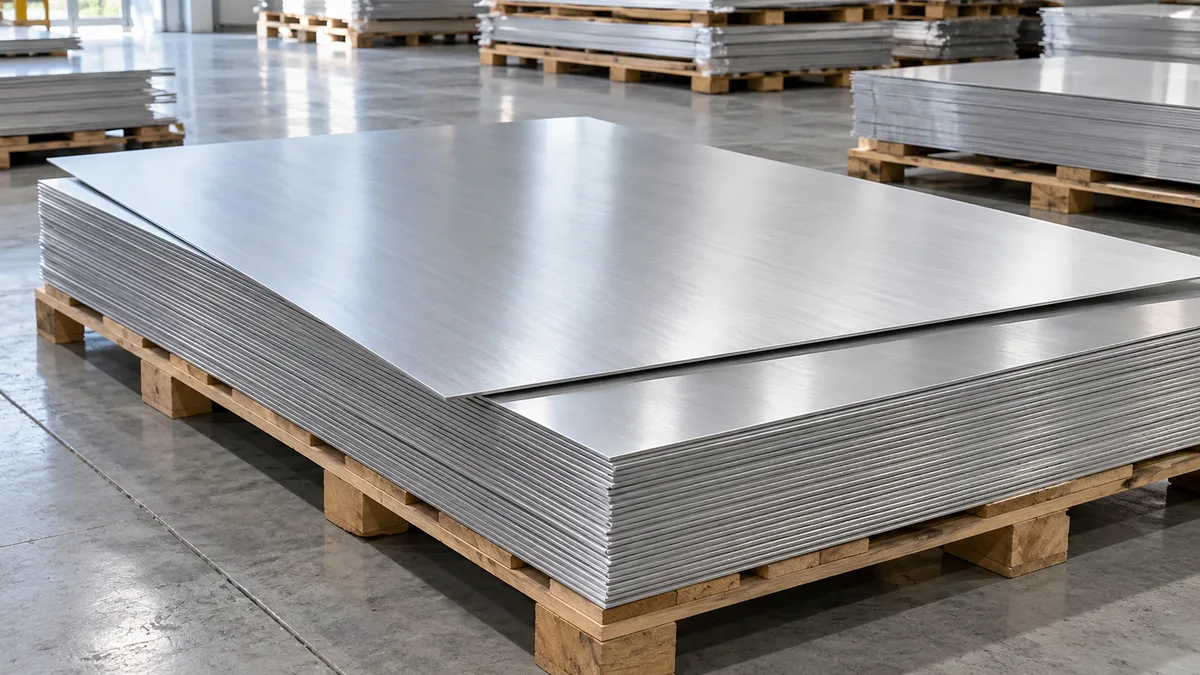
High adhesive aluminium is sheet, coil or foil whose surface has been anodised specifically for bonding, with an open, porous oxide that resins and adhesive films can flow into and lock onto. It is used where a laminate must not delaminate under hot pressing, soldering and thermal cycling: metal-core copper clad laminates (MCCL), LED substrates and aluminium-based composites. Metline supplies the substrate in the alloy, temper and size you need with a bonding-grade surface treatment.
Aluminium is easy to bond badly. Its natural oxide is thin, weak and often contaminated with rolling oil, and a decorative anodised film is sealed precisely so that nothing can enter its pores. Neither gives an adhesive or resin much to hold on to, and neither stays stable when moisture reaches the interface.
A high-adhesive surface is produced by cleaning, etching and then anodising under conditions chosen for bonding rather than appearance. The result is a thin, uniform oxide with wide, open pores and a rough microtopography. When a liquid resin or a softened adhesive film is pressed onto it, the polymer flows into the pores and cures there, creating a mechanical interlock across millions of sites per square millimetre, in addition to chemical bonding with the oxide.
The idea is not new. Aerospace bonding has relied on phosphoric acid anodising (PAA) and chromic acid anodising since the 1970s to make bonded metal structures durable in humid service. The same principles are now applied to electronic laminates and industrial composites, where peel failures, blistering in reflow and delamination in thermal cycling are the main quality risks.
| Item | High adhesive (bonding anodic) | Conventional sulphuric anodised | Brushed and degreased |
|---|---|---|---|
| Primary purpose | Bond strength and laminate stability | Corrosion and wear resistance, decoration | Clean, roughened surface at low cost |
| Surface structure | Thin oxide with wide, open, unsealed pores | Thicker oxide, usually sealed, fine pores | Mechanical scratch pattern on bare metal |
| Bond mechanism | Resin penetrates pores and interlocks | Mainly surface adhesion; sealed pores block penetration | Mechanical keying in scratches |
| Uniformity | Electrochemically controlled over whole area | Good, but optimised for appearance | Depends on abrasive, pressure and cleaning |
| Moisture durability of bond | High | Moderate | Lower; oxide can hydrate and weaken |
| Back-side printing | Good ink anchorage | Depends on sealing | Possible with careful pretreatment |
| Typical uses | MCCL, LED substrates, bonded composites | Architecture, enclosures, consumer goods | General bonding, non-critical laminates |
Peel strength depends heavily on the resin system, film thickness, press cycle and test method, so a single number for "high adhesive aluminium" is not meaningful. What a bonding-grade surface reliably changes is the failure mode: in a good bond, peel or wedge tests fail cohesively inside the adhesive rather than cleanly at the aluminium interface. Ask for test results with your own resin and press cycle.
Because the oxide is chemically stable and resists hydration better than a bare etched surface, moisture that diffuses to the bond line during humidity exposure or pressure-cooker testing does less damage. That is the main reason bonding-grade anodic films outperform simple abrasion in long-term durability, not just in initial peel strength.
A metal-core copper clad laminate (MCCL), also called aluminium-base CCL or insulated metal substrate, has three layers: copper foil for the circuit, a thin thermally conductive dielectric, and an aluminium base plate that spreads heat to a heat sink. The dielectric must bond to both metals and survive lead-free reflow and years of thermal cycling.
| Substrate alloy | Typical conductivity | Why it is chosen |
|---|---|---|
| 1060 | About 234 W/m·K | Highest thermal conductivity; soft, good for punching |
| 1100 | About 222 W/m·K | Similar to 1060 with slightly higher strength |
| 3003 | About 159 – 193 W/m·K depending on temper | Stronger than 1xxx with good conductivity |
| 5052 | About 138 W/m·K | Most common MCCL base: stiff, flat, good punching and V-scoring |
| 6061 | About 167 W/m·K | Highest strength, used where the base is also a structural plate |
Thermal conductivity values are typical published figures (ASM) and vary with temper.
The high-adhesive surface goes on the dielectric side. On the reverse side, the same porous film anchors marking inks, so batch numbers, orientation marks and traceability codes printed on the back of the board stay legible through processing. For the finished laminate format, see our aluminium base copper clad laminate guide.
Base plates for LED lighting, power supplies, motor drives and automotive electronics.
Thin sheet bonded to dielectric and circuit layers for COB and high-power LED modules.
Aluminium layers in multilayer laminates, shielding and thermal management stacks.
Aluminium skins bonded to cores or reinforcement, where peel and moisture durability matter.
Parts that need durable printed marking for traceability.
Brackets, panels and assemblies joined with structural adhesives instead of fasteners.
| Test | Typical standard | What it shows |
|---|---|---|
| Peel strength | IPC-TM-650 2.4.8 (laminates); ASTM D1876 or D3167 (adhesives) | Force to separate layers per unit width; failure mode |
| Lap shear | ASTM D1002 | Shear strength of a bonded joint |
| Wedge (durability) test | ASTM D3762 | Crack growth in a stressed bond under heat and humidity |
| Thermal stress / solder float | IPC-TM-650 2.4.13 | Blistering or delamination after solder exposure |
| Microstructure | SEM of the oxide surface and cross-section | Pore structure and uniformity of the anodic film |
| Bend test | Customer method | Whether the oxide and bond crack when the substrate is bent |
A useful qualification plan runs peel tests before and after humidity or pressure-cooker exposure and after thermal cycling, and records whether failure is cohesive or adhesive. Testing with the production resin and press cycle is essential; results with a different adhesive say little about yours.
It is aluminium sheet, coil or foil with a surface anodised specifically for bonding. The oxide is thin, porous and left unsealed so resins and adhesive films flow into it and interlock, giving stronger and more durable bonds than bare or conventionally anodised aluminium.
No. Decorative and protective anodising grows a thicker film and seals the pores to improve corrosion resistance and appearance. A bonding surface keeps the pores open and is optimised for resin penetration, not for looks or wear.
Resin enters the pores and cures there, creating mechanical interlocking across the whole surface in addition to chemical bonding. The anodic oxide is also more stable in humidity than a bare etched surface, so the bond lasts longer in service.
Yes. MCCL and metal-core PCBs are the main application. The treated side bonds to the dielectric layer and resists delamination during hot pressing, lead-free reflow and thermal cycling. 5052 and 1060 are the most common base alloys.
Yes. The same porous surface anchors inks well, so batch codes, part numbers and orientation marks printed on the reverse stay legible through processing.
Bonding surfaces should be kept clean, dry and sealed in their packing, and laminated or primed within the shelf life agreed for the treatment. Fingerprints, dust and oil films reduce bond strength, so handle with gloves.
Send the application, alloy, size, resin system and test requirements. We propose a substrate and arrange samples for your trial.





