


5052 Aerospace Aluminium Foil
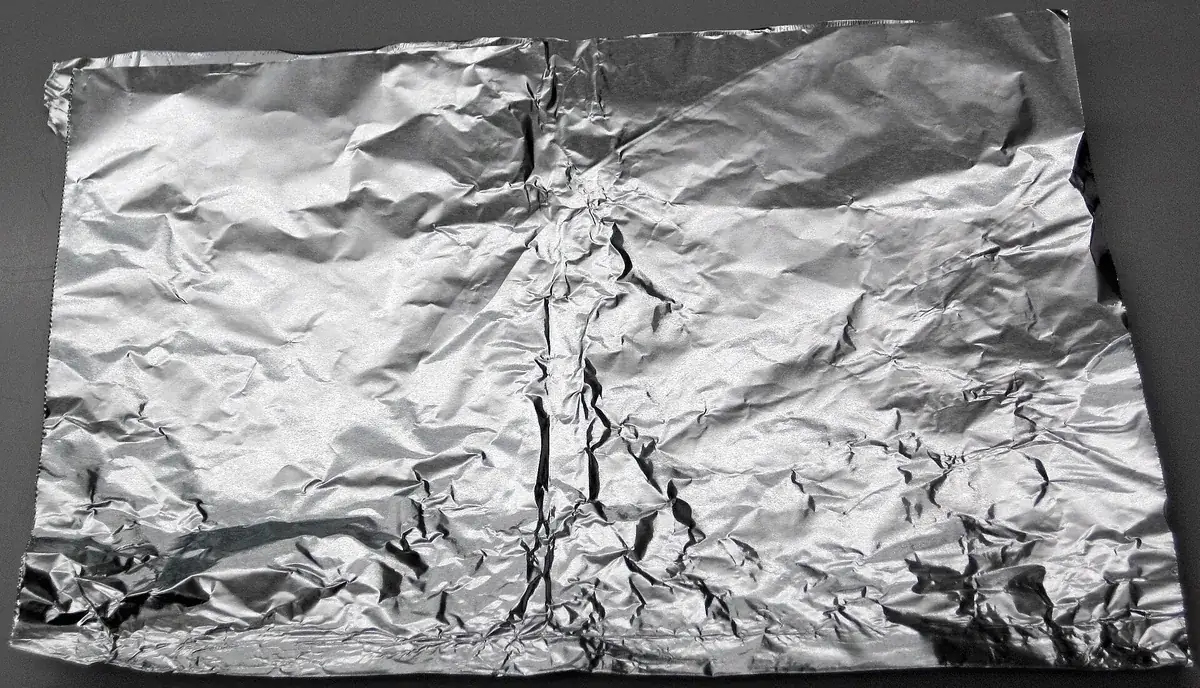
5052 foil is the standard material for aluminium honeycomb core in aircraft floors, flaps, control surfaces and interior panels, and it is also used for insulation facings and laminated foil systems. It is stronger and more corrosion-resistant than 1xxx and 3003 foil, while still rolling to gauges below 0.02 mm. Metline supplies 5052 foil from about 0.018 mm to 0.20 mm in hard and soft tempers, slit to width with mill certificates, worldwide.
- Alloy
- 5052 (Al-2.5Mg-0.25Cr)
- Tempers
- O, H18, H19, H32, H34
- Thickness
- About 0.018 – 0.20 mm
- Main use
- Honeycomb core, insulation, laminates
What makes 5052 foil the honeycomb alloy
Honeycomb core is made by printing adhesive lines on thin foil, stacking and curing the sheets into a block, and then pulling the block open so the cells form. The foil must be strong enough to give the core its shear and crush strength, ductile enough to expand without tearing, and durable enough to survive decades inside a sandwich panel.
5052 meets all three needs. Its 2.5 % magnesium gives roughly twice the strength of 3003 at the same gauge, so core can be lighter for the same panel stiffness, and its low copper content gives very good resistance to humidity, de-icing fluids and salt air. For these reasons, 5052 is the alloy behind most aerospace aluminium honeycomb, with 5056 used where higher strength is needed and 3003 reserved for commercial and architectural core.
Outside honeycomb, 5052 foil is chosen when a thin metallic layer must resist corrosion and mechanical damage better than pure aluminium foil: facings for thermal and acoustic insulation blankets, reflective heat-shield layers, laminated foil and film composites, foil tape backings and some fin and shutter applications. Hard tempers are used where stiffness matters; the annealed O temper where the foil is wrapped, embossed or deep-formed.
5052 foil chemical composition (wt %)
Foil uses the same registered 5052 composition as sheet and plate. Some published foil data show copper or manganese ranges of up to 0.4 %; those figures do not match the standard, which limits each to 0.10 % maximum. Ask for the mill certificate to confirm the actual analysis.
| Element | Minimum | Maximum | Role in the alloy |
|---|---|---|---|
| Silicon (Si) | — | 0.25 | Impurity; kept low for ductility |
| Iron (Fe) | — | 0.40 | Impurity; affects grain size and finish |
| Copper (Cu) | — | 0.10 | Kept low to protect corrosion resistance |
| Manganese (Mn) | — | 0.10 | Residual only |
| Magnesium (Mg) | 2.2 | 2.8 | Main strengthening element (solid solution) |
| Chromium (Cr) | 0.15 | 0.35 | Grain control; improves stress-corrosion resistance |
| Zinc (Zn) | — | 0.10 | Impurity |
| Others, each / total | — | 0.05 / 0.15 | |
| Aluminium (Al) | Remainder | About 96.1 – 97.7 % |
5052 foil tempers and mechanical properties
Foil properties depend heavily on gauge and on how the final rolling and annealing are done, so standards give limits for each thickness band. The values below are typical and indicate how the tempers compare; the mill certificate shows the actual results for your lot.
| Temper | Condition | Typical tensile strength | Typical elongation | Where it is used |
|---|---|---|---|---|
| O | Fully annealed | 170 – 215 MPa | Highest (thickness dependent) | Wrapping, embossing, laminates, formed parts |
| H32 | Quarter-hard, stabilised | 215 – 265 MPa | Moderate | Stiffer facings, tapes, shutters |
| H34 | Half-hard, stabilised | 235 – 285 MPa | Moderate to low | Dimensionally stable foil components |
| H18 / H19 | Full hard / extra hard | About 270 MPa and above | Low (1 – 3 %) | Honeycomb core, fin stock, ring-pull tabs |
Honeycomb manufacturers use extra-hard foil, often designated H19 or a related H19x temper, because strength in the cell walls governs core shear and compressive strength.
Physical properties
- Density
- 2.68 g/cm³ (0.0968 lb/in³)
- Modulus of elasticity
- 70.3 GPa (10,200 ksi)
- Thermal conductivity
- 138 W/m·K (H32, 25 °C)
- Electrical conductivity
- About 35 % IACS
- Coefficient of thermal expansion
- 23.8 µm/m·°C (20 – 100 °C)
- Melting range
- 607 – 650 °C
5052 foil in aerospace honeycomb core
Core properties are set by three choices: foil gauge, cell size and whether the foil is perforated or corrosion-treated. Thicker foil and smaller cells give higher density and strength. Core is described by alloy, cell size, foil gauge and density, for example "5052, 1/8 in cell, 0.0007 in foil, 3.1 pcf".
| Core parameter | Typical range for 5052 core | Effect |
|---|---|---|
| Foil gauge | About 0.0007 – 0.004 in (18 – 100 µm) | Thicker foil raises density, shear and crush strength |
| Cell size | 1/8, 5/32, 3/16, 1/4 and 3/8 in are common | Smaller cells give better face support and higher density |
| Density | About 1.0 – 12 lb/ft³ (16 – 190 kg/m³) | Main selector for panel strength and weight |
| Cell form | Hexagonal; over-expanded and flexible forms for curved panels | Flexible core follows compound curves |
| Treatment | Corrosion-inhibiting conversion coating; perforation for venting | Required for most aerospace core |
SAE AMS 4348 covers corrosion-inhibited 5052 honeycomb core for sandwich construction with 350 °F (177 °C) adhesive systems, and it references a 5052 foil specification (AMS 4004) for the foil itself. Legacy drawings may cite MIL-C-7438. Aerospace core is then bonded between aluminium or composite skins to make floor panels, flaps, spoilers, trailing edges, engine nacelle components, bulkheads and galley and lavatory panels.
Compared with 3003 foil, 5052 gives clearly higher core strength and better corrosion resistance; compared with 5056, it is slightly weaker but more widely available and lower in cost. See our 5052 honeycomb core guide and the 3003 vs 5052 comparison for core selection in detail.
5052 foil for insulation, heat shields and laminates
In aircraft, foil facings protect insulation blankets around ducts, engines and auxiliary power units, and reflective foil layers reduce radiant heat transfer to nearby structure. 5052 is chosen over pure aluminium foil where the facing must resist tearing, abrasion and corrosion from moisture and fluids during long service. It is often combined with glass-fibre cloth, polymer films or adhesives in laminated constructions, and joints are sealed with aluminium foil tape.
In industrial use the same properties suit HVAC ducting facings, pipe-insulation jackets and composite panels, where 5052 foil helps a laminate keep its integrity under vibration and temperature cycling.
- Reflective layers: bright-rolled 5052 foil reflects most radiant heat; keep the surface clean to maintain reflectivity.
- Laminates: specify the surface condition (degreased, primed or coated) your adhesive system needs.
- Tapes: soft O temper conforms to joints; harder tempers resist puncture.
Corrosion behaviour of 5052 foil
The magnesium in 5052 forms a stable oxide film, and with copper held at 0.10 % maximum the alloy resists pitting in humid and salt-laden air far better than 2xxx or copper-bearing foils. That matters in honeycomb, where foil is only a few hundredths of a millimetre thick and even slight corrosion can weaken the core. For aerospace core, the foil is usually given a corrosion-inhibiting conversion treatment before adhesive is applied, which further improves durability and bond strength.
Typical failure modes to design against are moisture ingress into sandwich panels through damaged edges or fastener holes, and galvanic contact between aluminium core and carbon-fibre skins. Edge sealing, potting around inserts and an isolating layer (often a glass-fibre ply) between carbon skins and aluminium core address both.
5052 foil standards and supply range
| Standard | Scope |
|---|---|
| SAE AMS 4004 | 5052 aluminium foil used for honeycomb core manufacture |
| SAE AMS 4348 | Corrosion-inhibited 5052 honeycomb core for sandwich construction |
| ASTM B479 | Annealed and non-annealed aluminium foil for flexible barrier, food contact and other applications |
| EN 546-2 / EN 546-3 | Aluminium foil: mechanical properties and tolerances |
| EN 573-3 | Chemical composition (EN AW-5052) |
Supply range
- Thickness
- About 0.018 – 0.20 mm (0.0007 – 0.008 in)
- Width
- About 100 – 1600 mm; slit to narrow widths on request
- Tempers
- O, H18, H19, H32, H34 and others on request
- Core ID
- 76 mm or 152 mm (3 or 6 in) steel or aluminium cores
- Surface
- Bright or matt; degreased; conversion-coated or primed on request
- Packing
- Coils wrapped and sealed with desiccant in export wooden cases
How to order 5052 foil
- SpecifyAlloy and temper, gauge, width, coil ID and maximum OD or coil weight, quantity and the governing specification with its revision (AMS 4004, ASTM B479 or EN 546).
- ConfirmWe confirm the specification can be met, the tolerance class, any extra tests and the delivery terms (EXW, FOB, CIF or DAP).
- InspectMaterial is checked for dimensions, straightness and surface condition; tests named on the order are carried out or arranged with a third party.
- DocumentEach lot ships with a mill test certificate to EN 10204 3.1 showing chemistry and mechanical results, traceable to the cast or lot number.
- Pack and shipExport packing in sealed, moisture-protected wooden cases or on pallets, shipped by sea or air to your port or door.
References and standards
- SAE AMS 4348 – Core, Honeycomb, Aluminum Alloy, Corrosion Inhibited, for Sandwich Construction, 5052
- SAE AMS 4004 – Aluminum Alloy Foil, 5052
- ASTM B479 – Annealed and Non-Annealed Aluminum and Aluminum-Alloy Foil
- EN 546-2 – Aluminium and aluminium alloys: foil, mechanical properties
- The Aluminum Association – International Alloy Designations and Chemical Composition Limits (Teal Sheets)
5052 aerospace aluminium (aluminum) foil: FAQs
How do I choose the right temper for 5052 foil?
Use hard tempers (H18 or H19) for honeycomb core, fin stock and other parts where stiffness and strength matter. Use O when the foil is wrapped, embossed or laminated and must conform without cracking; H32 or H34 sit between the two.
Why is 5052 used for honeycomb instead of 3003?
5052 foil is roughly twice as strong as 3003 and more corrosion-resistant, so the core is stronger for the same density, or lighter for the same strength. 3003 core is mainly used in commercial and architectural panels.
What thickness range is 5052 foil available in?
Typically from about 0.018 mm to 0.20 mm. Honeycomb core commonly uses foil of about 18 to 100 µm (0.0007 to 0.004 in).
Is 5052 foil suitable for insulation blankets?
Yes. It is used as a protective and reflective facing on thermal and acoustic insulation, where its tear and corrosion resistance outperforms pure aluminium foil.
What is the difference between 5052 foil and pure aluminium foil?
Pure aluminium foil (1145, 1235, 8011) is softer, more conductive and cheaper; 5052 is much stronger and more resistant to corrosion, which suits structural and long-life uses such as honeycomb.
Can 5052 foil be supplied with a corrosion-inhibiting treatment?
Yes. Conversion-coated or primed foil can be supplied on request to suit honeycomb and laminate manufacturers; specify the treatment and any qualification requirements.
Sourcing 5052 foil for core or laminates?
Send gauge, width, temper and quantity. We will reply with availability, certification and a delivered price.






