AT1 – general uprating
The workhorse grade. Same conductivity as standard EC wire, so line losses at a given temperature are unchanged, but the conductor can run at 150 °C. Used in most TACSR conductors.



Heat-resistant (thermal-resistant) aluminium alloy wire is a zirconium-bearing conductor wire that keeps its strength at 150 – 230 °C, where ordinary hard-drawn aluminium would anneal and soften. Stranded into TACSR, ZTACSR and related conductors, it lets a utility push far more current through an existing line without new towers. Metline supplies wire to IEC 62004 types AT1 to AT4 and the equivalent national grades, with full test certificates, to cable makers and utilities worldwide.
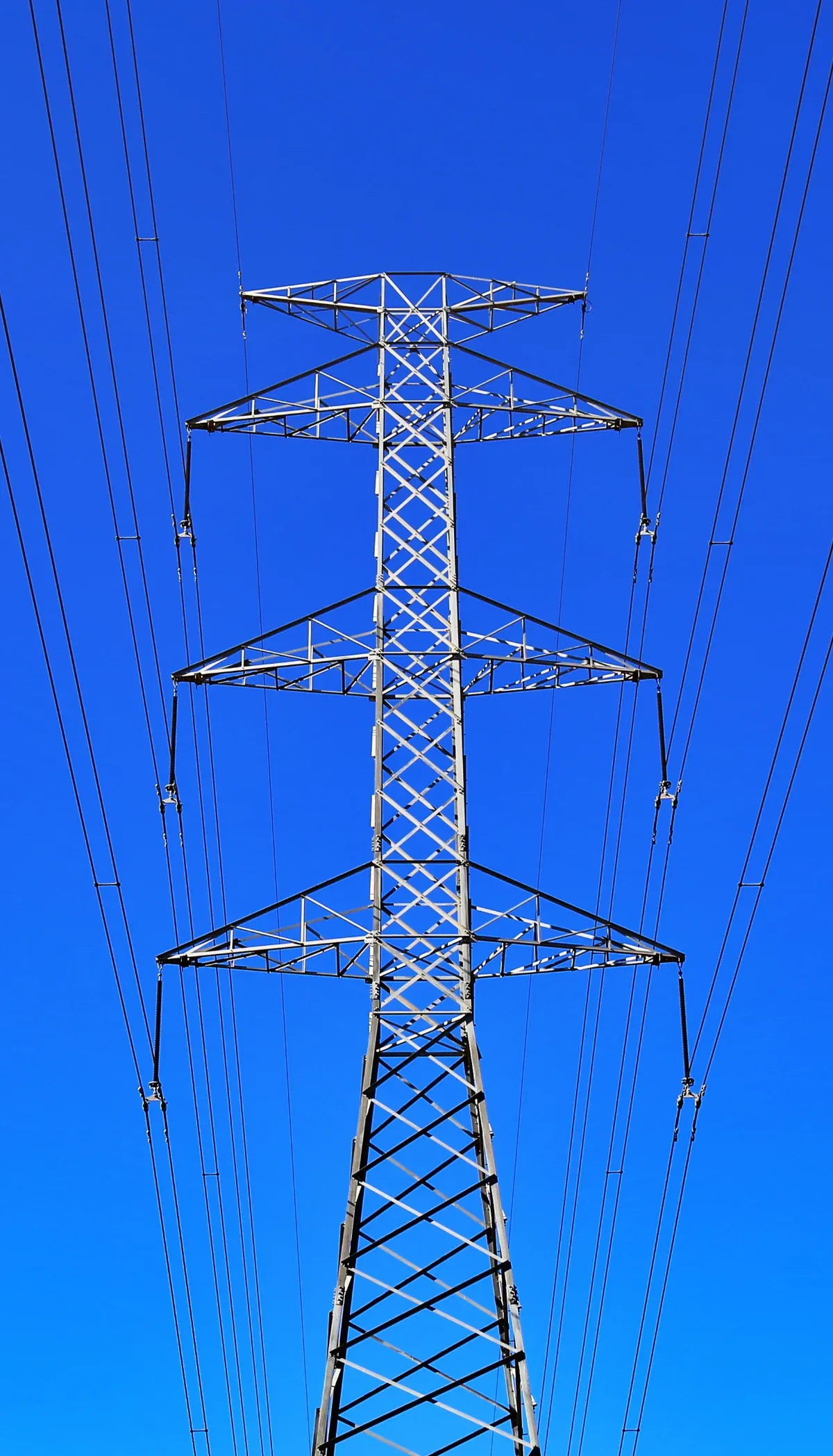
Standard hard-drawn electrical aluminium (1350-H19 to IEC 60889) gets its strength from cold work. Run it continuously above roughly 90 – 100 °C and that cold work slowly recovers: the wire loses tensile strength, the conductor creeps and sags, and the line can no longer be operated safely. That temperature ceiling is what limits the thermal rating of a conventional ACSR line.
Thermal-resistant wire solves the problem metallurgically. A small, controlled addition of zirconium to high-purity aluminium forms fine Al3Zr particles that pin the dislocation structure and raise the recrystallisation temperature well above that of plain EC aluminium. The wire can therefore run hot, at 150 °C for the basic grade and up to 230 °C for the highest grade, while keeping at least 90 % of its original tensile strength over a design life of several decades.
The alloy itself has the same density and practically the same thermal expansion as ordinary conductor aluminium. Its value is purely thermal endurance: more ampacity from the same conductor diameter and the same tower loads. That makes it the standard route for uprating existing lines, for congested urban corridors where new right-of-way is impossible, and for new lines that must carry high emergency loads.
IEC 62004 defines four types of thermal-resistant aluminium alloy wire before stranding. Each type is a trade-off between temperature capability, conductivity and strength. National standards use other names for the same materials: Japanese practice calls them TAl, KTAl, ZTAl and XTAl, and Chinese standard GB/T 30551 uses the designations NRLH1 to NRLH4.
| IEC type | Common names | Continuous operating temperature | Short-time (400 h total) limit | Conductivity (min.) | Resistivity at 20 °C (max.) |
|---|---|---|---|---|---|
| AT1 | TAl, NRLH1 | 150 °C | 180 °C | 60.0 % IACS | 28.735 nΩ·m |
| AT2 | KTAl (high strength), NRLH2 | 150 °C | 180 °C | 55.0 % IACS | 31.347 nΩ·m |
| AT3 | ZTAl (super thermal-resistant), NRLH3 | 210 °C | 240 °C | 60.0 % IACS | 28.735 nΩ·m |
| AT4 | XTAl (extra thermal-resistant), NRLH4 | 230 °C | 310 °C | 58.0 % IACS | 29.726 nΩ·m |
Continuous temperature is the rating for a design life of around 40 years with no more than 10 % strength loss. The short-time figure is the emergency temperature that may be reached for a cumulative total of about 400 hours over that life. IEC 62004 has now been consolidated into IEC 62641:2022, which covers all aluminium and aluminium alloy wires for stranded conductors; many specifications still cite IEC 62004, so confirm which edition governs your order.
The workhorse grade. Same conductivity as standard EC wire, so line losses at a given temperature are unchanged, but the conductor can run at 150 °C. Used in most TACSR conductors.
Higher tensile strength at the cost of conductivity. Chosen for long spans, river crossings and heavy-ice regions where mechanical load governs more than resistance.
Higher zirconium content and modified processing push the rating to 210 °C. Used in ZTACSR and in invar-cored (ZTACIR) or gap-type conductors where the line must double its capacity.
The highest-temperature grade, with an emergency limit of 310 °C. Specified for the most aggressive uprating projects, almost always on a low-sag core.
Physical constants are common to all four types except the temperature coefficient of resistance, which follows conductivity. Tensile minimums depend on wire diameter: smaller wires are drawn harder and are therefore stronger.
| Property | AT1 | AT2 | AT3 | AT4 |
|---|---|---|---|---|
| Density at 20 °C | 2.703 kg/dm³ | 2.703 kg/dm³ | 2.703 kg/dm³ | 2.703 kg/dm³ |
| Coefficient of linear expansion | 23 × 10⁻⁶ /°C | 23 × 10⁻⁶ /°C | 23 × 10⁻⁶ /°C | 23 × 10⁻⁶ /°C |
| Temperature coefficient of resistance (20 °C) | 0.0040 /°C | 0.0036 /°C | 0.0040 /°C | 0.0038 /°C |
| Minimum tensile strength (approx., by diameter) | 159 – 176 MPa | 225 – 248 MPa | 159 – 176 MPa | 159 – 169 MPa |
| Minimum elongation (250 mm gauge) | 1.5 – 2.0 % | 1.5 – 2.0 % | 1.5 – 2.0 % | 1.5 – 2.0 % |
Tensile ranges summarise the diameter-dependent minimums in IEC 62004 and GB/T 30551 for wires of roughly 2.3 – 4.5 mm; the exact value for your diameter is stated on the test certificate.
Unlike strength or conductivity, heat resistance cannot be read from a simple measurement. Standards therefore specify an accelerated ageing test: a sample is held at an elevated temperature, cooled, and tensile-tested. It passes if it retains at least 90 % of the tensile strength measured on the same wire before heating.
| Test duration | AT1 | AT2 | AT3 | AT4 |
|---|---|---|---|---|
| 1 hour (routine test) | 230 °C (+5 / −3) | 230 °C (+5 / −3) | 280 °C (+5 / −3) | 400 °C (+10 / −6) |
| 400 hours (type test) | 180 °C (+10 / −6) | 180 °C (+10 / −6) | 240 °C (+10 / −6) | 310 °C (+10 / −6) |
The short one-hour test is used for lot acceptance because it correlates with long-term behaviour. The 400-hour test is a type test, normally performed when a wire design or production route is first qualified. When you order, state which tests you want witnessed and whether third-party inspection is required.
Thermal-resistant wire is rarely used alone. It forms the aluminium layers of composite conductors whose core is chosen to control sag at high temperature, because at 150 – 230 °C thermal expansion, not strength, becomes the design limit.
| Conductor | Aluminium layers | Core | Typical use |
|---|---|---|---|
| TACSR | AT1 (or AT2) | Galvanised or aluminium-clad steel | Direct replacement of ACSR for roughly 50 % more capacity |
| ZTACSR | AT3 | Galvanised or aluminium-clad steel | Higher-temperature uprating where extra sag can be accommodated |
| TACIR / ZTACIR | AT1 or AT3 | Invar (Fe-Ni) alloy wire | Low-sag uprating that doubles capacity on existing towers |
| Gap-type (GTACSR / GZTACSR) | AT1 or AT3, inner layer trapezoidal | High-strength steel, free to move inside a grease-filled gap | Low-sag lines where stringing crews are trained for gap-type practice |
| All-alloy thermal-resistant (TAAC) | AT1 or AT2 throughout | None | Short spans, substation stringing and jumpers |
Above the conductor's so-called knee-point temperature, the aluminium layers expand away from the core and the core carries almost all the tension. Sag growth is then governed by the core's expansion coefficient, which is why invar (about 3 × 10⁻⁶ /°C) or gap-type designs are used when a line must run at 210 °C and above without lifting its towers.
| Property | 1350-H19 (EC) | 6201-T81 (AAAC) | AT1 thermal-resistant | AT3 thermal-resistant | 1350-O (ACSS) |
|---|---|---|---|---|---|
| Conductivity | 61.0 – 61.8 % IACS | 52.5 % IACS | 60.0 % IACS | 60.0 % IACS | 63 % IACS |
| Typical tensile strength (3.5 mm) | 160 – 170 MPa | 310 – 320 MPa | 160 – 170 MPa | 160 – 170 MPa | 60 – 95 MPa |
| Continuous temperature limit | about 75 – 90 °C | about 80 – 90 °C | 150 °C | 210 °C | 200 – 250 °C (core carries load) |
| Strength after high-temperature exposure | Anneals | Anneals | Retains ≥ 90 % | Retains ≥ 90 % | Already annealed |
| Typical conductor | AAC, ACSR | AAAC | TACSR | ZTACSR, ZTACIR | ACSS |
ACSS reaches similar temperatures by a different route: its aluminium is fully annealed from the start and the steel core carries the load. The choice between ACSS and TACSR often comes down to local practice, available fittings and whether the aluminium layers are expected to share mechanical load at everyday temperatures. Composite-core conductors (ACCC, ACCR) are a third option, generally at higher cost.
A small zirconium addition forms fine Al3Zr precipitates that resist recovery and recrystallisation. The cold-worked strength of the wire therefore survives continuous operation at 150 – 230 °C, whereas plain EC aluminium softens above roughly 90 – 100 °C.
With AT1 wire operating at 150 °C, a TACSR conductor typically carries about 1.5 times the current of an ACSR conductor of the same size. AT3 and AT4 designs on low-sag cores can approach twice the original rating. The exact figure depends on ambient conditions, sag limits and the rating method used.
Only slightly for AT1 and AT3 (60 % IACS versus about 61 % for 1350). AT4 is 58 % IACS, and the high-strength AT2 grade is 55 % IACS. Resistance at operating temperature, not 20 °C, should be used when comparing losses.
They describe the same class of wire: 150 °C continuous rating and 60 % IACS. The tensile tables are very close but not identical across standards, so specify one governing standard and have the certificate issued against it.
Usually not without checking. Fittings must be qualified for the higher continuous and emergency temperatures. Many utilities replace dead-ends, joints and jumper terminals with high-temperature versions when they reconductor.
We supply thermal-resistant aluminium alloy wire to cable makers and can also arrange stranded TACSR-type conductors to your specification, with full test certificates and export packing, shipped worldwide.
Tell us the wire type, diameter, standard and quantity, or the conductor you need. Our team will reply with certification details and a delivered quote.





