T3 / T351
Solution heat-treated, cold worked and naturally aged; T351 plate is also stretched to relieve stress. The standard tempers for damage-tolerant 2024.



Aircraft structures are built mainly from 2xxx (aluminium-copper) and 7xxx (aluminium-zinc) alloys: 2024 where fatigue and damage tolerance govern, 7075, 7050 and 7475 where strength and stress-corrosion resistance govern. This guide maps each major airframe part to the alloy, temper, product form and AMS specification normally used, and explains why.
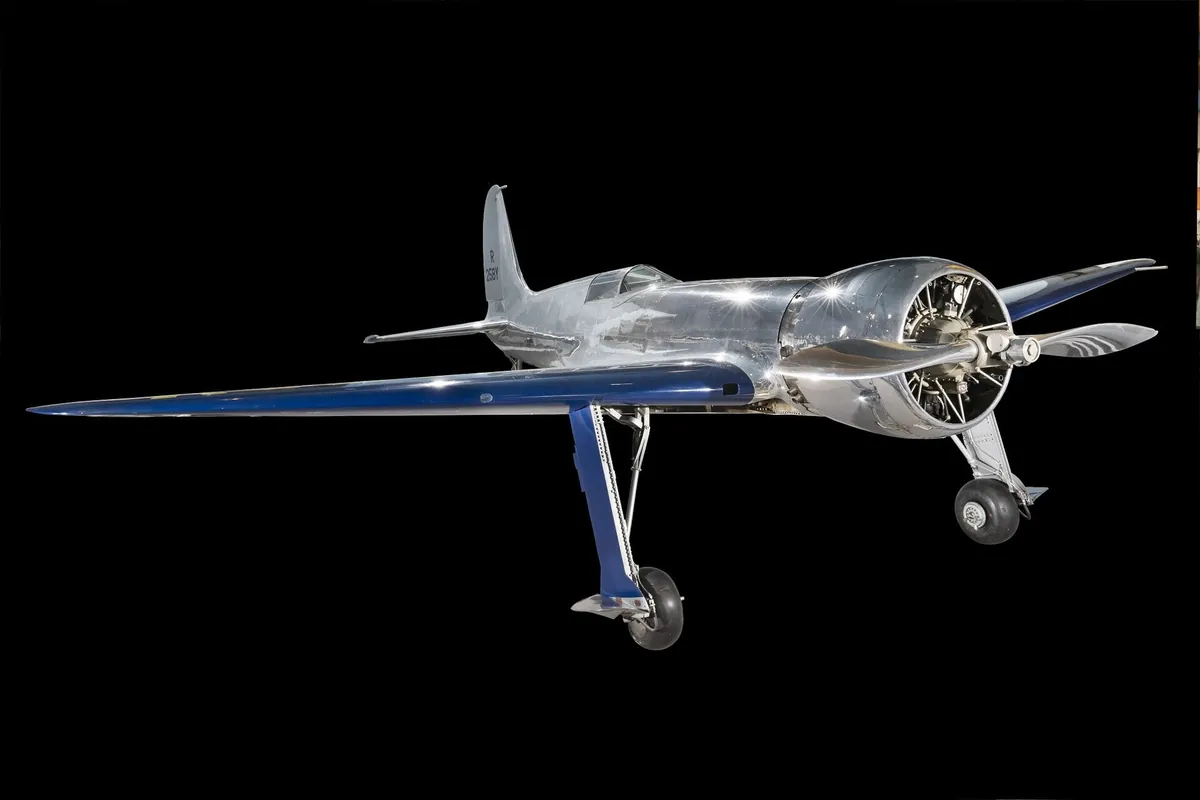
Even with carbon-fibre fuselages on some new airliners, aluminium alloys make up most of the structural weight of the world's commercial, regional, business and military aircraft fleet, and large parts of composite aircraft too. They offer a well-understood combination of strength, stiffness, damage tolerance, repairability and cost that designers can certify with confidence.
No single alloy suits the whole aircraft. The lower wing skin and fuselage skin are loaded mainly in tension and cycle with every flight, so fatigue crack growth and fracture toughness matter most. The upper wing skin is loaded mainly in compression, so yield strength matters most. Thick machined parts such as bulkheads and spars need strength that holds through the full thickness and low residual stress so they do not distort during machining. These different demands are why airframes combine several alloy families and tempers.
Over the decades, alloy development has followed those needs: 2024-T3 for damage-tolerant skins, 7075-T6 for high strength, over-aged T73 and T76 tempers to fix the stress-corrosion weakness of 7075-T6, and then 7050 and 7475 for thick plate with better toughness and through-thickness properties. Newer aluminium-lithium alloys (such as 2050, 2060, 2099 and 2196) lower density and raise stiffness on the latest programmes.
| Alloy / temper | Typical tensile strength | Typical yield strength | Character | Where it fits |
|---|---|---|---|---|
| 2024-T3 sheet | 483 MPa | 345 MPa | Excellent fatigue and damage tolerance | Fuselage skins, lower wing skins |
| 2024-T351 plate | 470 MPa | 325 MPa | Damage tolerant, stress relieved | Lower wing skins, fittings |
| 7075-T6 / T651 | 572 MPa | 503 MPa | Very high strength; susceptible to stress corrosion in the short transverse direction | Stringers, frames, seat tracks, upper wing |
| 7075-T7351 | 505 MPa | 435 MPa | Over-aged for stress-corrosion resistance | Forgings, thick fittings |
| 7050-T7451 | 524 MPa | 469 MPa | High strength through thick sections, good toughness and stress-corrosion resistance | Bulkheads, spars, ribs, frames |
| 7475-T7351 | High (see certificate) | High (see certificate) | Higher-purity 7075 variant with superior fracture toughness | Wing skins, fuselage bulkheads, damage-tolerant plate |
| 6061-T6 | 310 MPa | 276 MPa | Weldable, corrosion resistant, moderate strength | Secondary parts, ducts, ground equipment |
Typical values from the Aluminum Association and ASM data for the stated tempers. Design allowables come from MMPDS and the governing AMS specification, and specified minimums fall as plate thickness increases.
Density matters too: 2024 is 2.78 g/cm³, 7075 2.81 g/cm³ and 7050 2.83 g/cm³, compared with 2.70 g/cm³ for 6061. Aluminium-lithium alloys reach around 2.6 g/cm³ with a higher elastic modulus.
The table reflects common practice on transport and business aircraft. Individual programmes choose their own alloys and specifications, so treat this as a starting point and always follow the drawing.
| Part | Product form | Typical alloys and tempers | Typical specifications | What governs |
|---|---|---|---|---|
| Wing ribs and spars | Thick plate | 7050-T7451, 7050-T7651, 7475-T7351 | AMS 4050, AMS 4202, ASTM B209 | Strength, low distortion, flatness |
| Upper wing skins | Plate | 7075-T651/T7651, 7055, 7150 | AMS 4045, ASTM B209 | Compressive yield strength |
| Lower wing skins | Plate | 2024-T351, 7475-T7351, 2324 | AMS 4037, AMS 4202 | Fatigue, fracture toughness |
| Wing stringers | Extrusion or plate | 2024-T3511, 7075-T76511, 7050-T74511 | AMS-QQ-A-200/3, AMS 4342, ASTM B221 | Strength, crack growth |
| Leading-edge skins | Sheet | 2024-T3, 2024-O (formed then heat treated), 6061-T6 | AMS 4037, AMS 4041, AMS 4027 | Formability, corrosion resistance |
| Fuselage skins | Sheet (often Alclad) | 2024-T3 Alclad, 2524-T3 | AMS 4041, AMS-QQ-A-250/5 | Damage tolerance, corrosion protection |
| Fuselage frames | Extrusion or formed sheet | 2024-T3511, 7075-T73511, 7075-T76511 | AMS-QQ-A-200/3, AMS-QQ-A-200/11 | Strength, damage tolerance |
| Fuselage stringers | Formed sheet or extrusion | 7075-O formed then aged to T6, 7075-T6 | AMS 4045, ASTM B209 | Strength, formability |
| Floor beams | Extrusion | 7050-T74511, 7075-T73511 | AMS 4342, AMS-QQ-A-200/11 | Strength, damage tolerance |
| Seat tracks | Extrusion | 7075-T73511, 7075-T76511, 7150 | AMS-QQ-A-200/11, ASTM B221 | Strength, wear, corrosion |
| Bulkheads | Thick plate or forging | 7050-T7451, 7475-T7351 | AMS 4050, AMS 4202 | Strength, toughness, low distortion |
| Landing-gear and engine-mount fittings | Forging | 7050-T74, 7075-T73, 2014-T6 | AMS-QQ-A-367, ASTM B247 | Strength, stress-corrosion resistance |
| Brackets and clips | Sheet or thin plate | 2024-T3, 7075-T6, 6061-T6 | AMS 4037, AMS 4045, AMS 4027 | Strength, cost |
Solution heat-treated, cold worked and naturally aged; T351 plate is also stretched to relieve stress. The standard tempers for damage-tolerant 2024.
Solution heat-treated and artificially aged to peak strength. T651 is stretched. Highest strength but lowest stress-corrosion resistance for 7075.
Over-aged beyond peak strength. Gives up about 10 – 15 % of strength to gain very high resistance to stress-corrosion cracking.
Over-aged less than T73: better exfoliation corrosion resistance than T6 with less strength loss than T73.
An intermediate over-age used mainly for 7050, balancing strength, toughness and stress-corrosion resistance in thick sections.
The extrusion equivalents of stretched tempers; 511 allows minor straightening after stretching, 510 does not.
The single most common selection error on older designs was using 7075-T6 in thick parts loaded in the short-transverse direction, which caused stress-corrosion cracking in service. Modern practice specifies T73, T74 or T76 tempers for thick 7xxx parts unless the stresses are well understood.
| Form | Typical range | Main aerospace uses | Key quality requirements |
|---|---|---|---|
| Sheet | 0.3 – 6 mm, bare or Alclad | Skins, leading edges, frames, brackets | Surface quality, flatness, cladding thickness |
| Plate | 6 – 200 mm and thicker | Spars, ribs, bulkheads, skins | Ultrasonic inspection, flatness, residual stress, through-thickness properties |
| Extrusions | Shapes, bars and tubes | Stringers, floor beams, seat tracks, frames | Straightness, twist, grain structure, recrystallisation depth |
| Forgings | Die and hand forgings | Landing gear, engine mounts, fittings | Grain flow, ultrasonic class, stress-corrosion resistance |
Plate for primary structure is normally ultrasonically inspected to AMS-STD-2154 (formerly MIL-STD-2154), with the acceptance class set by thickness and part criticality. Forgings and thick plate also need checks on electrical conductivity and hardness to confirm the over-aged temper, since conductivity is a sensitive indicator of correct T73 or T74 ageing.
Metline supplies aerospace-grade plate, sheet, bar, extrusions and forgings with mill test certificates and full lot traceability. Tell us the specification and revision, and any customer requirements, when you request a quote.
2024 and 7075 are the most widely used. 2024-T3 is the classic fuselage and lower-wing skin alloy for fatigue resistance, and 7075 is used where higher strength is needed. 7050 has largely replaced 7075 for thick machined parts.
7050 keeps its strength and toughness through thick sections much better than 7075 and, in the T7451 temper, combines high strength with good stress-corrosion resistance. That makes it the standard choice for bulkheads, spars and ribs machined from thick plate.
Alclad sheet has a thin layer of high-purity aluminium bonded to each side of a strong core such as 2024. The cladding corrodes sacrificially and protects the core, which is why fuselage skins are often Alclad.
2024 and 7075 are generally not fusion welded on aircraft structure because welding causes cracking and strength loss. Joints are riveted, bolted or bonded. Friction stir welding is used on some approved applications.
Solution heat-treated, stress relieved by stretching, and over-aged. The over-ageing trades some strength for very high resistance to stress-corrosion cracking.
Yes. We supply 2xxx, 6xxx and 7xxx plate, sheet, extrusions, bar and forgings certified to AMS, AMS-QQ-A and ASTM specifications, with mill certificates and lot traceability.
Send the alloy, temper, specification, form, size and quantity. We will reply with availability, certification and a delivered price.





