H112
As-rolled with minimal controlled strain hardening; mechanical properties are guaranteed but no corrosion test is required. The usual delivery condition for 5A30 to GB/T 22641.



5A30 (GB/T 3190) and 5456 (Aluminum Association) are near-identical aluminium alloys with 4.7 – 5.5 % magnesium, manganese and chromium, giving more strength than 5083 in welded hull and deck plate. 5A30 is supplied mainly as H112 plate to GB/T 22641; 5456 is supplied in H116 and H321 to ASTM B928 with corrosion testing for naval and commercial ships. Metline supplies both, cut to size and certified, worldwide.
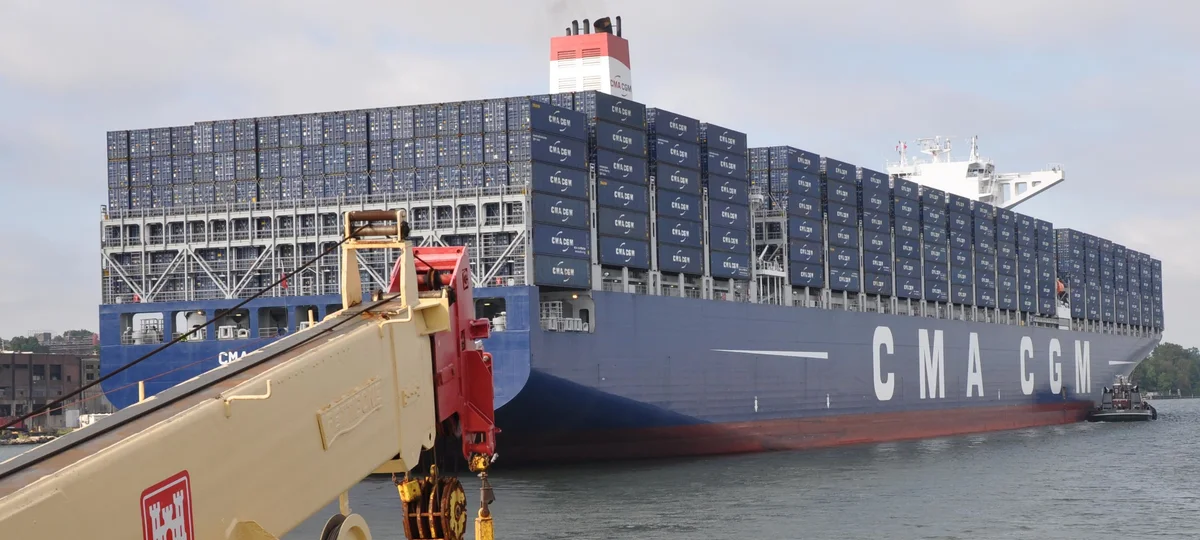
5456 was developed in the United States as a stronger alternative to 5083 for welded naval structures, and it remains a standard hull, deck and armour plate for patrol boats, landing craft and military vehicles. China's GB/T 3190 registers 5A30 with practically the same composition: 4.7 – 5.5 % magnesium, 0.5 – 1.0 % manganese and a small chromium addition. Buyers often see the two names together, and for most purposes they are interchangeable.
The extra magnesium compared with 5083 lifts strength by roughly 5 – 10 % in matching tempers, and welds made with ER5556 filler keep that advantage. The alloy also has good fatigue and impact behaviour, which is why it has been used for armour plate and blast-resistant panels as well as hulls.
The difference between the names shows up in how the plate is delivered. 5A30 is usually supplied as-rolled H112 plate to GB/T 22641, the Chinese standard for aluminium ship plate. 5456 for international marine service is normally ordered in the special H116 or H321 tempers to ASTM B928, which require each lot to pass exfoliation (ASTM G66) and intergranular corrosion (ASTM G67) tests. If your vessel is classed by DNV, ABS, Lloyd's Register or Bureau Veritas, those tested tempers are what the surveyor will expect.
| Element | 5A30 (GB/T 3190) | 5456 (Aluminum Association) |
|---|---|---|
| Magnesium (Mg) | 4.7 – 5.5 | 4.7 – 5.5 |
| Manganese (Mn) | 0.50 – 1.0 | 0.50 – 1.0 |
| Chromium (Cr) | 0.05 – 0.20 | 0.05 – 0.20 |
| Silicon (Si) | Si + Fe ≤ 0.40 | ≤ 0.25 |
| Iron (Fe) | (combined above) | ≤ 0.40 |
| Copper (Cu) | ≤ 0.10 | ≤ 0.10 |
| Zinc (Zn) | ≤ 0.25 | ≤ 0.25 |
| Titanium (Ti) | 0.03 – 0.15 | ≤ 0.20 |
| Aluminium (Al) | Remainder | Remainder |
The only meaningful difference is that 5A30 caps silicon and iron together at 0.40 % and sets a minimum titanium level. Both grades comfortably meet the low-copper requirement that marine alloys need.
| Alloy and temper | Thickness (mm) | Tensile strength Rm | Proof strength Rp0.2 | Elongation |
|---|---|---|---|---|
| 5A30 H112, GB/T 22641 minimum | 6 – 50 | ≥ 310 MPa | ≥ 175 MPa | ≥ 13 % |
| 5456 H116 / H321, ASTM B928 minimum | about 6.3 – 30 | ≥ 317 MPa (46 ksi) | ≥ 228 MPa (33 ksi) | about 10 % or more |
| 5456 H116, typical | — | about 350 MPa | about 255 MPa | about 16 % |
| 5456 O, typical | — | about 310 MPa | about 160 MPa | about 24 % |
ASTM B928 minimums fall slightly in thicker bands. Exact values for your thickness appear on the mill certificate.
As-rolled with minimal controlled strain hardening; mechanical properties are guaranteed but no corrosion test is required. The usual delivery condition for 5A30 to GB/T 22641.
Strain-hardened with controlled processing to produce a microstructure resistant to exfoliation and intergranular corrosion. Tested to ASTM G66 and G67 under ASTM B928.
Strain-hardened and thermally stabilised, again with B928 corrosion testing. Strength is similar to H116; the choice usually follows the shipyard's practice or the rules.
Fully annealed for maximum formability, used where plate must be pressed or rolled to tight curvature.
| Thickness (mm) | kg per m² | 1250 × 2500 mm (kg) | 1500 × 3000 mm (kg) | 2000 × 6000 mm (kg) |
|---|---|---|---|---|
| 6 | 15.96 | 49.9 | 71.8 | 192 |
| 8 | 21.28 | 66.5 | 95.8 | 255 |
| 10 | 26.60 | 83.1 | 119.7 | 319 |
| 12 | 31.92 | 99.8 | 143.6 | 383 |
| 15 | 39.90 | 124.7 | 179.6 | 479 |
| 20 | 53.20 | 166.2 | 239.4 | 638 |
| 25 | 66.50 | 207.8 | 299.2 | 798 |
| 30 | 79.80 | 249.4 | 359.1 | 958 |
| 40 | 106.40 | 332.5 | 478.8 | 1277 |
| 50 | 133.00 | 415.6 | 598.5 | 1596 |
ER5556 is the matching filler for 5456 and gives the highest weld strength; ER5183 is also widely used. Avoid ER5356 for primary structure.
Welds in H116 plate fall back towards O-temper strength in the heat-affected zone; class rules give reduced welded design values.
As with all alloys above 3 % Mg, keep long-term service below about 65 °C to avoid sensitisation.
Bend radii of about 1.5 – 3 × thickness for H116 plate; form tighter curves in O temper.
Waterjet, plasma or sawing; remove plasma-affected edges on critical joints.
Unpainted plate performs well above and below the waterline; antifouling must be copper-free or applied over a barrier coat.
Joining aluminium superstructures to steel hulls is usually done with explosion-bonded transition strip; see our aluminium-steel transition joint page.
| Grade (H116) | Min. Rm | Min. Rp0.2 | Relative availability |
|---|---|---|---|
| 5083 | 305 MPa | 215 MPa | Very high |
| 5456 / 5A30 | 317 MPa | 228 MPa | Moderate |
| 5059 | 370 MPa | 270 MPa | Moderate |
5456 gives a modest strength gain over 5083; 5059 gives a larger one. Many yards choose 5083 for availability and use 5456 or 5059 only where plate thickness and weight must be reduced.
Practically yes. Both have 4.7 – 5.5 % Mg, 0.5 – 1.0 % Mn and 0.05 – 0.20 % Cr. 5A30 limits Si + Fe to 0.40 % combined and sets a minimum titanium content.
Both are strain-hardened tempers tested for exfoliation and intergranular corrosion to ASTM B928. H321 includes a thermal stabilisation step; strengths are similar.
ER5556 is the matching filler; ER5183 is also common. Both give higher weld strength than ER5356.
Slightly: ASTM B928 minimums for H116 plate are about 317 / 228 MPa for 5456 against 305 / 215 MPa for 5083.
About 53.2 kg per m², or roughly 239 kg for a 1500 × 3000 mm plate.
Send alloy, temper, sizes, class requirements and destination; we will reply with availability, certification and a delivered price.






