


Aluminium Foil and Strip for Transformer Windings
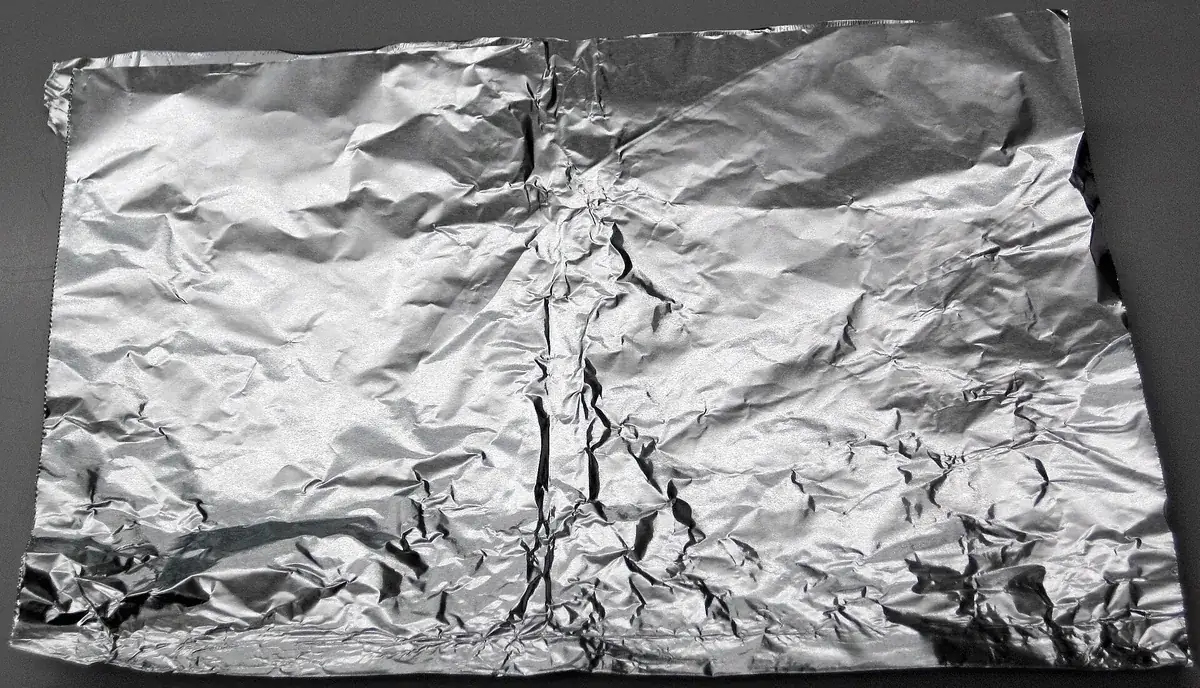
Foil-wound transformers use a continuous sheet of high-purity aluminium, the full width of the coil, in place of many turns of wire. The strip must be soft, highly conductive and free of burrs that could pierce the interlayer insulation. Metline supplies 1050, 1060, 1070 and 1350 strip in the annealed O temper, slit and deburred for low-voltage and high-voltage windings, to transformer makers worldwide.
- Alloys
- 1050, 1060, 1070, 1350
- Temper
- O (fully annealed)
- Thickness
- About 0.08 – 3.0 mm
- Width
- Up to about 1,500 mm
Why transformers use aluminium foil windings
In a foil winding, each turn is one layer of strip as wide as the coil, separated from the next by a sheet of insulation. Because the conductor fills the whole axial height of the coil, current spreads evenly across it, the ampere-turns of the low-voltage and high-voltage windings stay balanced along their length, and the axial forces during a short circuit are much lower than in wire-wound coils. Heat also escapes more easily, since every turn reaches the cooling ducts at its edges.
Aluminium is the dominant foil material in dry-type and oil-immersed distribution transformers. It conducts about 61 – 62 % as well as copper by volume but weighs roughly 30 % as much, so an aluminium winding with the same resistance needs about 1.6 times the cross-section yet weighs about half as much as copper. Its lower and more stable price is the other reason: in a distribution transformer, the winding metal is one of the largest cost items.
Foil windings are most common on low-voltage windings, where currents are high and turns are few, and on cast-resin and other dry-type units in the distribution range. High-voltage windings with many turns often use narrower strip in disc or layer construction, or remain wire-wound.
Alloys used for transformer strip and their composition
| Element (wt %, max unless shown) | 1050 | 1060 | 1070 | 1350 |
|---|---|---|---|---|
| Aluminium, minimum | 99.50 | 99.60 | 99.70 | 99.50 |
| Silicon | 0.25 | 0.25 | 0.20 | 0.10 |
| Iron | 0.40 | 0.35 | 0.25 | 0.40 |
| Copper | 0.05 | 0.05 | 0.04 | 0.05 |
| Manganese | 0.05 | 0.03 | 0.03 | 0.01 |
| Magnesium | 0.05 | 0.03 | 0.03 | — |
| Zinc | 0.05 | 0.05 | 0.04 | 0.05 |
| Titanium (1350: V + Ti) | 0.03 | 0.03 | 0.03 | 0.02 |
Registered limits per the Aluminum Association and EN 573-3. 1350 also limits chromium (0.01), boron (0.05) and gallium (0.03); the tight limits on Ti, V, Mn and Cr exist because these elements in solid solution reduce conductivity sharply.
1350 is the electrical-conductor ("EC") grade and is the usual choice when the transformer designer specifies a guaranteed minimum conductivity. 1060 and 1070 reach similar conductivity through higher purity. 1050 is acceptable where cost matters more than the last fraction of a percent of conductivity. Whichever grade is chosen, the mill certificate should report measured conductivity or resistivity, not just chemistry.
Conductivity and mechanical properties in the O temper
| Property | Typical value or range | Notes |
|---|---|---|
| Electrical conductivity | About 61 – 62.5 % IACS | 1350 and 1070 at the top of the range, 1050 at the bottom; verified per lot |
| Resistivity at 20 °C | About 0.0276 – 0.0283 Ω·mm²/m | The reciprocal of conductivity; measured to methods such as ASTM B193 |
| Tensile strength, O temper | About 60 – 95 MPa | Low strength is intended; soft strip winds tightly without springback |
| Elongation, O temper | About 20 % and above | Higher on thicker strip |
| Density | 2.70 g/cm³ | Copper is 8.89 – 8.96 g/cm³ |
| Thermal conductivity | About 220 – 235 W/m·K | Helps carry heat from the winding to its edges |
Annealing is essential. Cold-rolled strip in a hard temper loses some conductivity through work-hardening, springs back during winding (leaving air gaps that weaken the coil and trap heat), and is more likely to crack at the turn-ends where leads are welded. Strip is therefore supplied fully soft, and suppliers control the anneal so that the surface stays bright and free of oil residue.
Edge quality, flatness and tolerances
The edges of the strip are the most critical feature. A burr only a few hundredths of a millimetre high can cut through the interlayer insulation when the coil is wound tight and cause a turn-to-turn fault. For this reason transformer strip is slit with sharp, well-set knives and, for many orders, the edges are rolled or deburred to a rounded profile.
Typical supply requirements
- Burr height
- Commonly specified at about 0.03 mm or less for thin strip and 0.05 mm or less for heavier strip
- Edge profile
- Square slit, or rounded / deburred edges on request for high-voltage windings
- Camber
- Limited so the strip tracks straight on the winding machine; tighter on narrow strip
- Thickness tolerance
- A small percentage of nominal on thin foil, or a few hundredths of a millimetre on strip, per the agreed standard
- Coil build
- Tight, even winding with no telescoping, layering or interleaving; no joins unless agreed
- Surface
- Clean, dry and bright, free of oil, scratches, dents and oxide stains
Exact limits are agreed per order against EN 14121 or the transformer maker’s specification.
Flatness matters too. Wavy edges or a "centre buckle" shape prevent the strip lying flat against the insulation, leading to uneven pressure and local hot spots. Good tension levelling and slitting practice deliver strip that lies flat under the winding tension.
Supply range and strip weights
Supply range
- Thickness
- About 0.08 – 0.20 mm foil, 0.20 – 3.0 mm strip
- Width
- From narrow slit strip (about 16 mm) to about 1,500 mm
- Coil inner diameter
- Commonly 150, 200, 300, 400 or 500 mm, matched to the winding machine mandrel
- Coil outer diameter
- Set to the machine; often up to about 1,000 mm
- Edge
- Slit, deburred or round-edged
Strip weight is thickness × width × length × 2.70 g/cm³. The table gives weight per metre for some common sizes.
| Thickness (mm) | Width (mm) | Weight (kg per metre) |
|---|---|---|
| 0.2 | 300 | 0.162 |
| 0.5 | 500 | 0.675 |
| 0.8 | 600 | 1.296 |
| 1 | 800 | 2.160 |
| 1.5 | 1000 | 4.050 |
| 2 | 1200 | 6.480 |
| 2.5 | 1250 | 8.438 |
Aluminium vs copper foil for windings
| Factor | Aluminium (1350 / 1070) | Copper (annealed) |
|---|---|---|
| Conductivity | About 61 – 62 % IACS | 100 % IACS |
| Density | 2.70 g/cm³ | 8.89 – 8.96 g/cm³ |
| Cross-section for equal resistance | About 1.6 × | 1 × |
| Weight for equal resistance | About 0.5 × | 1 × |
| Coil size | Larger, so core and tank grow slightly | More compact |
| Thermal expansion | Matches epoxy cast resin reasonably well | Lower than aluminium |
| Terminations | Needs welding or bimetallic transitions to copper terminals; oxide film must be managed | Simpler to braze and bolt |
Both materials can meet the losses and temperature-rise limits of IEC 60076 and IEEE C57 standards; the choice is an economic and packaging decision. Aluminium wins where weight and material cost dominate; copper is chosen where size is constrained or where the user specifies it.
Winding, insulation and joining practice
- Interlayer insulation: strip is wound with insulating films or papers such as polyester, aramid or composite laminates (for example DMD), or with pre-preg sheets in cast-resin coils
- Tension control: constant winding tension keeps layers tight without stretching the soft strip
- Lead attachment: aluminium or copper lead bars are joined across the strip width by TIG or MIG welding, cold-pressure welding or, increasingly, friction-stir or ultrasonic methods
- Bimetallic joints: where aluminium leads meet copper terminals, use Cu-Al transition pieces or friction-welded joints to avoid galvanic corrosion
- Oxide management: clean joint surfaces immediately before welding or bolting; use contact compound on bolted aluminium joints
- Storage: keep coils in their wrapping in a dry store; condensation on bright strip causes staining that can affect joint quality
References and standards
- EN 14121 – Aluminium and aluminium alloys: sheet, strip and plate for electrotechnical applications
- EN 573-3 – Chemical composition and form of wrought products
- IEC 60076-11 – Power transformers: dry-type transformers
- ASTM B193 – Resistivity of Electrical Conductor Materials
- The Aluminum Association – International Alloy Designations and Chemical Composition Limits
Transformer winding aluminium (aluminum) foil: FAQ
Which aluminium grade is best for transformer windings?
1350, the electrical-conductor grade, is the usual choice because it guarantees high conductivity through tight limits on impurities. 1060 and 1070 give similar results through higher purity, and 1050 is used where a slightly lower conductivity is acceptable.
Why must transformer strip be in the O temper?
Annealed strip is soft, so it winds tightly without springback and has slightly higher conductivity than work-hardened strip. Hard strip leaves gaps between turns, which weakens the coil mechanically and traps heat.
Why are burr-free edges so important?
A burr can pierce the thin interlayer insulation when the coil is wound and pressed, causing a turn-to-turn short. Transformer strip is slit with precise tooling and often edge-rounded to prevent this.
Is an aluminium winding as good as copper?
Electrically, yes, when it is sized correctly: the aluminium conductor needs about 1.6 times the cross-section of copper for the same resistance, but weighs about half as much. Both meet IEC and IEEE loss and temperature-rise requirements.
What sizes can Metline supply?
Foil from about 0.08 mm and strip up to about 3 mm thick, in widths up to about 1,500 mm, on cores matched to your winding machine, with a mill test certificate reporting chemistry, mechanical properties and conductivity.
Need transformer winding strip?
Send the alloy, thickness, width, coil dimensions, edge condition and destination. We reply with availability, certification and a delivered price.






