


7085 and 7056 Appliqué Aluminium Armour Plate
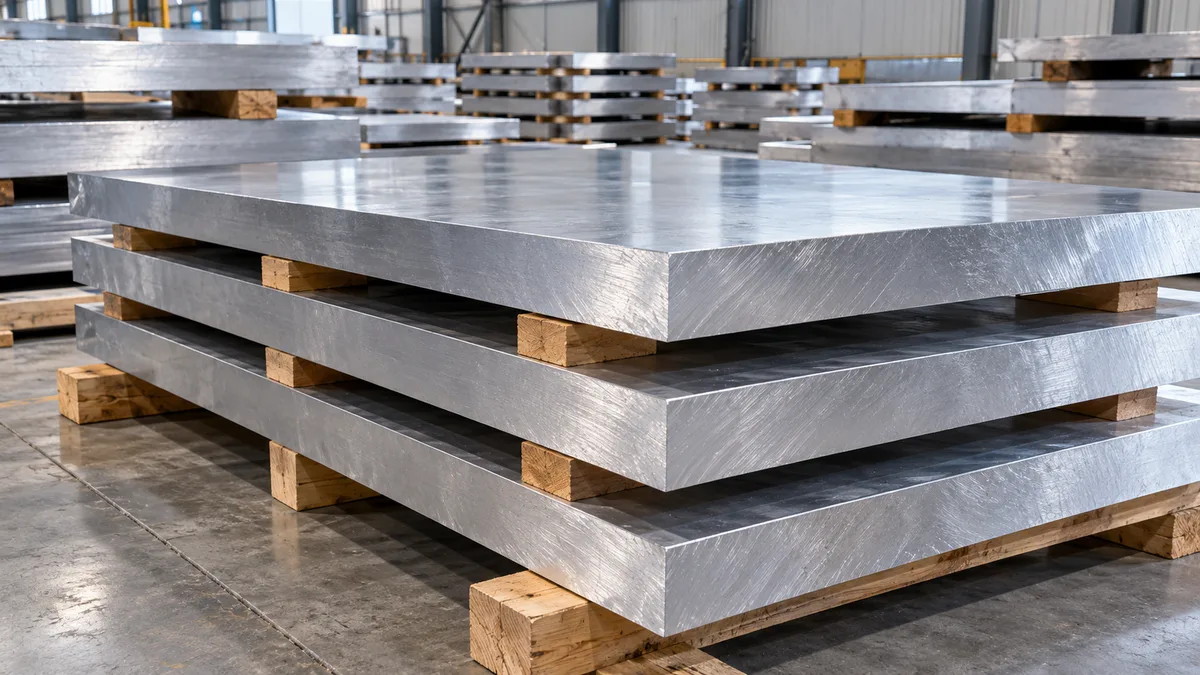
7085 and 7056 are very high-strength Al-Zn-Mg-Cu alloys qualified as unweldable appliqué armour under MIL-DTL-32375B. Because the panels are bolted onto a vehicle rather than welded, they can be used at full aged strength, giving more protection per kilogram than the weldable armour alloys. Metline supplies 7085 and 7056 plate to specification, cut and machined to panel drawings, worldwide.
- Specification
- MIL-DTL-32375B
- Alloys
- 7085 · 7056
- Thickness
- 0.5 – 3.0 in
- Fixing
- Bolted appliqué
What appliqué armour is and why 7085 and 7056 suit it
Appliqué armour is a layer of panels bolted onto the outside of a vehicle hull. The hull provides the structure; the appliqué adds protection where the threat is greatest and can be removed, replaced or upgraded without cutting the vehicle.
Because appliqué is not welded, it can be made from alloys that would crack or lose strength in a weld. 7085 was developed as a thick-section aerospace alloy with very high zinc and low iron and silicon, which gives high strength and toughness throughout heavy sections. 7056 pushes zinc even higher for further strength. In armour, both are aged to conditions that balance armour-piercing resistance against fragment and blast performance.
MIL-DTL-32375 first covered 7085 alone, from 0.500 to 3.000 in thick, and stated that fusion weldability had not been determined, so the alloy should only be used as appliqué. Revision B (2017) widened the scope to 7085, 7056, 7075, 7181 and 7099 unweldable appliqué plate, with ballistic test appendices for 7085, 7056 and 7075.
Chemical composition of 7085 and 7056 (wt %)
| Element | 7085 | 7056 |
|---|---|---|
| Silicon (Si) | 0.06 | 0.10 |
| Iron (Fe) | 0.08 | 0.12 |
| Copper (Cu) | 1.3 – 2.0 | 1.2 – 1.9 |
| Manganese (Mn) | 0.04 | 0.20 |
| Magnesium (Mg) | 1.2 – 1.8 | 1.5 – 2.3 |
| Chromium (Cr) | 0.04 | — |
| Zinc (Zn) | 7.0 – 8.0 | 8.5 – 9.7 |
| Titanium (Ti) | 0.06 | 0.08 |
| Zirconium (Zr) | 0.08 – 0.15 | 0.05 – 0.15 |
| Others, each / total | 0.05 / 0.15 | 0.05 / 0.15 |
| Aluminium | Remainder | Remainder |
The very low iron and silicon limits in 7085 reduce coarse intermetallic particles, which improves toughness. Zirconium rather than chromium controls the grain structure, and the low magnesium-to-zinc ratio keeps quench sensitivity low, so thick plate is strong at its centre as well as at the surface.
Types, tempers and properties
The specification defines plate types that correspond to different ageing treatments. In broad terms, one type is aged for maximum strength and armour-piercing resistance, and another is aged further for higher toughness and elongation, which helps against fragments and blast. Minimum tensile, yield and elongation values and minimum V50 limits are tabulated for each alloy, type and thickness band.
| Aspect | High-strength type | High-toughness type |
|---|---|---|
| Ageing | Near peak strength | Over-aged |
| Strength | Highest | Lower |
| Elongation | Lower | Higher |
| Main threat | Armour-piercing bullets | Fragments and blast |
| Typical position | Side and frontal appliqué | Areas exposed to fragments and blast loading |
For design figures use the minimums tabulated in MIL-DTL-32375B for the ordered alloy, type and thickness; the mill certificate reports actual results for each lot.
Sizes, tolerances and testing
Supply range
- Alloys
- 7085, 7056 (7075 and others under the same specification on request)
- Thickness
- 0.500 – 3.000 in (12.7 – 76.2 mm)
- Plate size
- Up to about 100 in wide and 236 in long, depending on thickness
- Processing
- Saw and waterjet cutting, drilling and machining of bolt patterns
- Testing
- Chemistry, tensile per ASTM B557, ultrasonic inspection, V50 per MIL-STD-662 where specified
Thickness tolerance follows the ANSI H35.2 bands for the ordered width, with the minus side limited so that no plate is thinner than the ballistic design allows. Flatness matters for appliqué, since panels must sit close to the hull; specify flatness requirements for large panels.
Designing and fixing appliqué panels
- Bolt pattern: keep fasteners away from panel centres in high-threat zones and use enough fixings so a hit does not detach the panel
- Stand-off: a small air gap or spall liner between appliqué and hull can improve performance against some threats
- Galvanic isolation: isolate steel fasteners and dissimilar hulls with sleeves, washers and sealant
- Corrosion protection: conversion coat, prime and paint, and seal drilled holes and cut edges; 7xxx alloys are more corrosion sensitive than 5xxx
- No welding: do not weld, tack or heat these plates; heat lowers strength and can cause cracking
- Panel size: smaller panels are easier to handle and replace after damage
Where 7085 and 7056 appliqué is used
- Armoured vehicles: add-on kits for personnel carriers, wheeled combat vehicles, reconnaissance and command vehicles
- Upgrade programmes: raising the protection of an existing fleet without rebuilding hulls
- Naval craft: bolt-on protection for bridges and critical compartments, with careful corrosion protection
- Aircraft and helicopters: ballistic panels where weight is critical
Choosing between appliqué and weldable alloys
| Alloy | Specification | Weldable | Relative strength | Typical use |
|---|---|---|---|---|
| 5083-H131 | MIL-DTL-46027 | Yes | Moderate | Welded base hull |
| 7039-T64 | MIL-DTL-46063H | With care | High | AP-resistant plate |
| 2139 | MIL-DTL-32341A | Yes (Class I, qualified thicknesses) | High | Hull and floor armour |
| 2195 / 2060 | MIL-DTL-32341A | No | High, lower density | Lightweight appliqué |
| 7085 / 7056 | MIL-DTL-32375B | No | Very high | High-threat appliqué |
How to order appliqué armour plate
- SpecifyAlloy, type, specification revision, thickness, plate size or panel drawings, and quantity.
- Define testingBallistic acceptance, ultrasonic inspection and witness requirements.
- QuoteWe confirm availability, certification and delivery terms (EXW, FOB, CIF or DAP).
- ShipPlates or machined panels in seaworthy wooden cases with EN 10204 3.1 certificates, subject to applicable export controls.
References and standards
- MIL-DTL-32375B – Armor Plate, Aluminum Alloy, 7085, 7056, 7075, 7181 and 7099, Unweldable Applique
- MIL-DTL-32375A (EverySpec listing)
- MIL-STD-662F – V50 Ballistic Test for Armor
- The Aluminum Association – International Alloy Designations and Chemical Composition Limits
7085 and 7056 appliqué armour: frequently asked questions
Why is 7085 armour plate called unweldable?
Its fusion weldability as armour has not been established, and high-copper 7xxx alloys tend to crack and lose strength when welded. MIL-DTL-32375 therefore restricts it to bolted appliqué use.
What thickness range does MIL-DTL-32375 cover?
0.500 to 3.000 in nominal thickness for 7085, with Revision B also covering 7056, 7075, 7181 and 7099.
What is the difference between 7085 and 7056?
7056 has more zinc (8.5 – 9.7 % against 7.0 – 8.0 %) and slightly more magnesium, giving higher strength. 7085 has lower iron and silicon for toughness in thick sections.
How is appliqué aluminum armour attached?
With bolts or studs to the base hull, often with isolation washers and sealant. The fixing layout is part of the ballistic design and should be tested with the panel.
Can appliqué panels be supplied machined?
Yes. Plates can be cut to panel outlines and drilled for bolt patterns to your drawing, then protected for shipment.
Planning an add-on armour kit?
Send alloy, type, thickness and panel drawings. We will reply with availability, test scope and a delivered price.





