


Technical library
A constant profile is only the start of a finished component specification.

From billet to profile
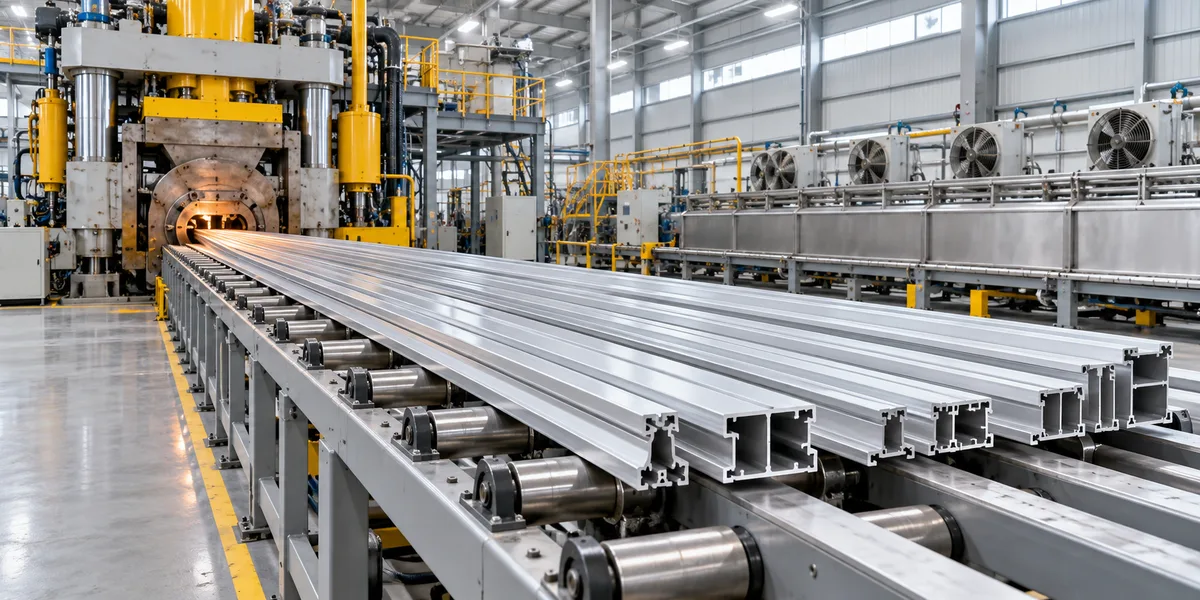
Extrusion forces heated solid aluminium through a die to create a profile. Hydro’s overview describes subsequent cooling, straightening, cutting and ageing where required. The extrusion shape and the delivered material condition are therefore connected manufacturing decisions. A cross-section drawing alone does not establish the finished assembly’s fit or mechanical performance.
Design around useful functions
Describe which features locate parts, carry loads, retain seals or provide access for tools. Ask the extruder to review the proposed walls, cavities and tolerances against its manufacturing capability. A profile can incorporate functions that would otherwise require secondary operations, but confirm the total route and tooling scope before treating that possibility as a cost saving.
Sequence fabrication and finish
Identify holes, slots, bends, joints and exposed faces in addition to the section shape. Agree when machining and surface treatment occur and which dimensions apply after finishing. Ask how the actual alloy, geometry and cooling route support the specified temper. An extrusion process overview cannot guarantee that every shape will achieve the same properties.
Make the offer comparable
Include drawing revision, alloy, temper, cut length, quantity, surface expectations, certification and packing needs in the enquiry. Clarify tooling ownership, trial approval and responsibility for later fabrication. Keep supplier-specific capabilities separate from general extrusion principles. No universal wall limit, press speed or heat-treatment setting is prescribed here; those belong to the qualified manufacturing plan.
Continue exploring
Alloy database · Product guides · Engineering calculators
Sources and verification
Selected facts checked 14 October 2026. Source data is reference information, not certification of supplied material.
- Hydro • Aluminum extrusion process — Live public page; no publication revision stated · checked 2026-10-14
Bring fabrication into the section review
Constellium separates large profiles and extruded structures from rolled products. Profile acceptance should therefore describe the whole section and its cutting, bending, joining and coating interfaces. Identify functional faces and controlled openings before reviewing a similar-looking substitute; outside size does not preserve wall layout, joint access or finished-part geometry.
Source: www.hydro.com, www.constellium.com







