


Technical library
Distinguish shaped castings from billet and slab feedstock before comparing manufacturing offers.
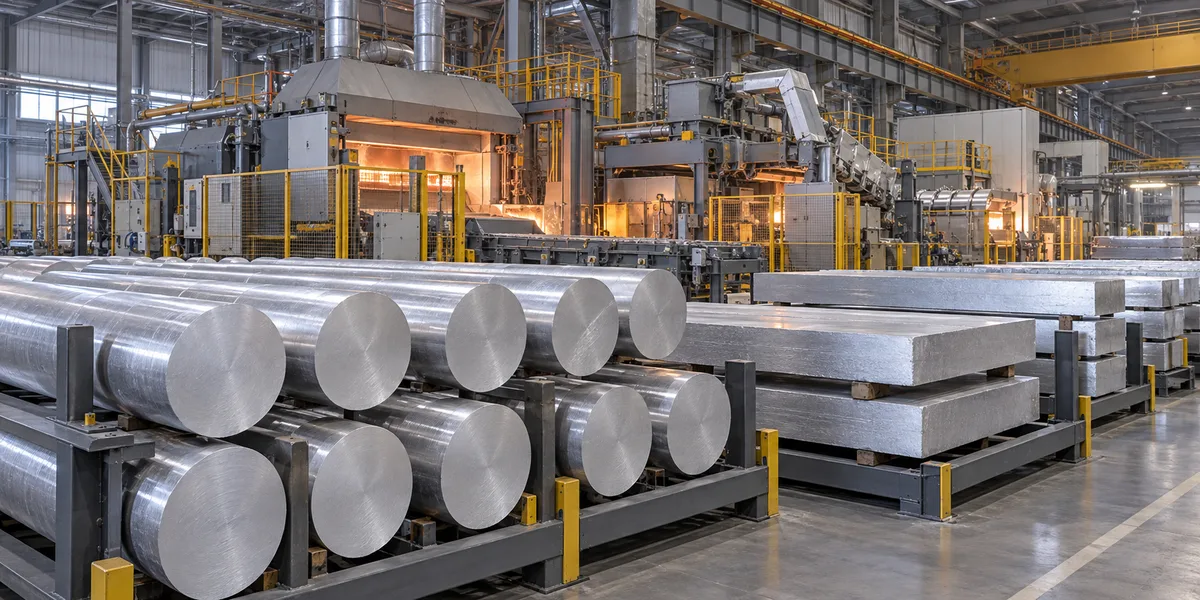

Two different outputs
Casting can make feedstock for later deformation or a component close to its final shape. The Aluminum Association distinguishes billets and ingots from sand, permanent-mould and die-cast products. A cast billet offered to an extruder and a finished housing offered to an assembler therefore need different drawings, inspection plans and commercial comparisons.
Compare the complete route
Production quantity affects the economics of a casting method, but quantity is only one enquiry variable. Request a route proposal against the component drawing, including tooling, machining, finishing, inspection and delivery. Compare the total delivered scope instead of using a low casting price as a proxy for the cost of a finished accepted part.
Specify acceptance rather than appearance
For the proposed casting, identify functional surfaces and any pressure-containing or fatigue-sensitive features. Ask the foundry which inspection methods are proposed and what acceptance criteria will govern them. A visually clean external surface does not substitute for the inspection requirements agreed for the actual component. Avoid imposing an arbitrary inspection method without defining its purpose.
Confirm material and change control
Request the exact casting alloy designation, delivered condition and applicable specification. Agree how tooling changes, repairs and manufacturing-route changes will be approved and documented. Wrought-alloy data should not silently be applied to a cast component. This overview provides a route-selection framework; qualification, casting quality limits and structural acceptance remain project-specific.
Continue exploring
Alloy database · Product guides · Engineering calculators
Sources and verification
Selected facts checked 14 October 2026. Source data is reference information, not certification of supplied material.
- Aluminum Association • Production and processing — Live public page; no publication revision stated · checked 2026-10-14
Read cast-property rows with their process column
Rio Tinto’s foundry guide separates ingot chemistry from typical cast-specimen properties and labels sand, permanent-mould and die-casting methods. Alcoa also distinguishes foundry feedstock from other cast-product forms. Select the component process and acceptance basis first; an ingot designation should not be treated as proof of a final casting’s soundness, heat treatment or strength.
Source: www.riotinto.com, www.alcoa.com





