PA12 / PA11 polyamide
Extruded over the drawn tube as a continuous jacket. Gives stone-chip, abrasion and salt protection for under-body lines. Plastic clips and fittings can be welded or moulded directly to the jacket.



Coated automotive aluminium tube is precision drawn or extruded tube with a protective layer added for life under the vehicle: a PA12 nylon jacket for fuel, brake, cooling and air-conditioning lines, or a zinc or flux coating for tubes that are brazed into radiators and condensers. The aluminium core is usually 3003, 3102 or 5052. Metline supplies bare and coated tube to drawing, with full traceability, to vehicle and component makers worldwide.
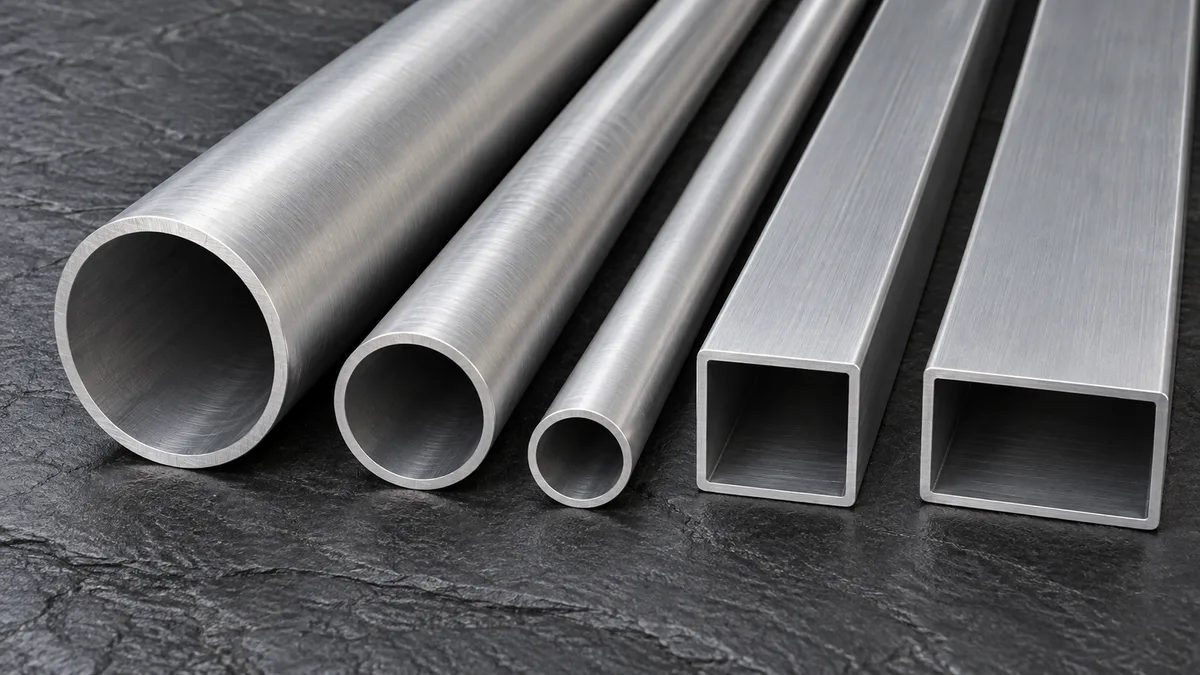
Steel brake and fuel lines have been the default for decades, but they are heavy and depend on zinc and polymer layers to survive road salt. An aluminium line weighs about one third as much for the same size, and when it is sheathed in nylon it resists stone chipping and corrosion as well as or better than coated steel.
The term covers two quite different products. Polymer-coated fluid tube is a seamless drawn aluminium tube with an extruded layer of polyamide 12 (PA12, also called nylon 12), sometimes with a conversion pretreatment underneath for adhesion. It is bent into routed lines for fuel, vapour, clutch, coolant, heater and air-conditioning circuits. Metallic or flux-coated heat-exchanger tube is extruded round or multi-port (micro-channel) tube with a thin sprayed zinc layer or a pre-applied brazing flux. During furnace brazing the zinc diffuses into the surface and forms a sacrificial layer that protects the core from pitting, and the flux removes oxide so the fins bond to the tube.
In both cases the coating and the metal work as one system. The coating gives impact and corrosion protection; the aluminium core carries the pressure, holds the bend and provides the thermal performance. That is why the core alloy, temper and wall thickness must be specified as carefully as the coating itself.
Extruded over the drawn tube as a continuous jacket. Gives stone-chip, abrasion and salt protection for under-body lines. Plastic clips and fittings can be welded or moulded directly to the jacket.
A chromate-free conversion layer applied before polymer coating improves adhesion and stops corrosion creeping under the jacket from a cut end or damage point.
Zinc is sprayed onto extruded tube straight after the press. In the brazing furnace it diffuses into the surface, creating a zinc-rich layer that corrodes sideways instead of pitting through the wall.
Non-corrosive potassium fluoroaluminate flux, sometimes mixed with silicon powder, is applied with a binder so the assembler can skip fluxing before controlled-atmosphere brazing.
Used on visible tubes such as roof rails or trim tubes; mainly for appearance, with some corrosion benefit.
Hard, thin oxide layer for wear surfaces and decorative tubes. Not used where tubes must be brazed.
Fluid lines need a ductile, corrosion-resistant core that bends without cracking; heat-exchanger tubes need good brazeability and a controlled corrosion potential. The typical properties below are for drawn tube at room temperature; guaranteed minimums are set by the order standard and shown on the mill certificate.
| Alloy and temper | Tensile strength (typ.) | Yield strength (typ.) | Where it is used |
|---|---|---|---|
| 3003-O | 110 MPa | 40 MPa | Fuel, vapour and air-conditioning lines that are bent tightly |
| 3003-H14 | 150 MPa | 145 MPa | Straight or gently bent lines, heater and coolant tubes |
| 5052-O | 195 MPa | 90 MPa | Higher-pressure hydraulic and clutch lines |
| 5052-H32 | 230 MPa | 195 MPa | Stiffer lines and structural fluid tubes |
| 6063-T6 | 240 MPa | 215 MPa | Air-conditioning hard pipes and fittings |
| 3102 / 1xxx (H112) | Low | Low | Extruded micro-channel and round condenser tubes, usually zinc coated |
| Application | Typical outside diameter | Typical wall | Coating |
|---|---|---|---|
| Brake, clutch and hydraulic lines | 4.75 – 8 mm | 0.7 – 1.2 mm | PA12 jacket |
| Fuel and vapour lines | 6 – 12 mm | 0.7 – 1.0 mm | PA12 jacket |
| Coolant, heater and battery-cooling lines | 10 – 25 mm | 1.0 – 1.5 mm | PA12 or bare |
| Air-conditioning lines | 8 – 22 mm | 1.0 – 1.5 mm | Bare, PA12 or painted |
| Condenser and radiator tube | Flat MPE or round 5 – 10 mm | 0.25 – 0.5 mm per port wall | Zinc or pre-flux |
These ranges describe common practice rather than limits. Always state whether a dimension is the bare metal diameter or the overall coated diameter, because fittings, flares and clips are designed around one or the other. Polymer jackets are usually a few tenths of a millimetre thick, and the coated diameter tolerance must be agreed separately.
| Test | Typical method | What it shows |
|---|---|---|
| Neutral salt spray | ISO 9227 / ASTM B117 | Corrosion resistance of coated lines and cut ends |
| Acidified salt spray (SWAAT) | ASTM G85 Annex A3 | Pitting resistance of brazed heat-exchanger tube |
| Stone chip / gravel impact | SAE J400 or OEM equivalent | Coating resistance to road debris |
| Burst and pressure cycling | OEM specification | Wall strength after bending and ageing |
| Coating adhesion and thickness | Peel, cross-cut, gauge measurement | Bond between jacket and metal |
| Eddy current and leak test | ASTM E215 / helium or air leak | Wall defects in the bare tube |
| Internal cleanliness | Residue weight per area | Freedom from oil and particles in fluid circuits |
Agree acceptance on the condition the part will actually see. A coating that passes on a straight sample can crack or thin on the outside of a tight bend, so many programmes test bent and clipped samples after thermal cycling. Ask for tube lot, coating batch and printed line identification to be traceable to the mill certificate.
| Item | Standard |
|---|---|
| Seamless drawn tube | ASTM B210, ASTM B483, EN 754-2 (properties), EN 754-7/-8 |
| Extruded tube and micro-channel | ASTM B221, EN 755-2 |
| Chemical composition | Aluminum Association registrations, EN 573-3 |
| Corrosion tests | ISO 9227, ASTM B117, ASTM G85 |
| Inspection certificate | EN 10204 type 3.1 |
| Quality system for automotive supply | IATF 16949 at the tube and coating plants, where the OEM requires it |
Most coated line programmes are governed by the vehicle maker's own material specification, which sets coating type, thickness, adhesion, stone-chip and fluid-resistance tests. Send that specification with your enquiry so the tube and coating can be matched to it.
PA12 nylon is tough, resists fuels, oils and road salt, and absorbs stone impacts. On an under-body line it protects the thin aluminium wall from chipping and corrosion and lets plastic clips be welded directly onto the tube.
Aluminium lines are used for clutch, hydraulic and some brake circuits when the design, fittings and validation are developed for aluminium. A steel line cannot be swapped for aluminium of the same size without checking burst pressure, fatigue and fitting design.
After brazing, the zinc forms a thin diffusion layer that is more electrochemically active than the core. Corrosion then spreads sideways through that layer instead of pitting through the tube wall, which greatly extends the life of thin-wall tubes.
3003 in O temper is the most common because it bends easily and resists corrosion. 5052 is chosen when higher pressure or stiffness is needed.
Yes. Small-diameter drawn tube can be supplied in coils or in straight lengths, bare or coated, with capped ends and a mill certificate.
Send your drawing and OEM specification. Our team will propose the core alloy, coating and test plan, and reply with a delivered price.





