Forming
In O temper, thin 6061 bends flat on itself and draws well. Heat-treat after forming to reach T4 or T6.



6061 foil is thin cold-rolled 6061 strip, usually 0.1 – 0.2 mm thick and supplied soft in O temper. Unlike the 1xxx and 8xxx alloys used for packaging foil, 6061 can be heat-treated after forming, so thin parts such as shims, laminated shim packs, etched components and formed covers can reach far higher strength. Metline supplies 6061 thin strip slit to width and cut to length, to customers worldwide.
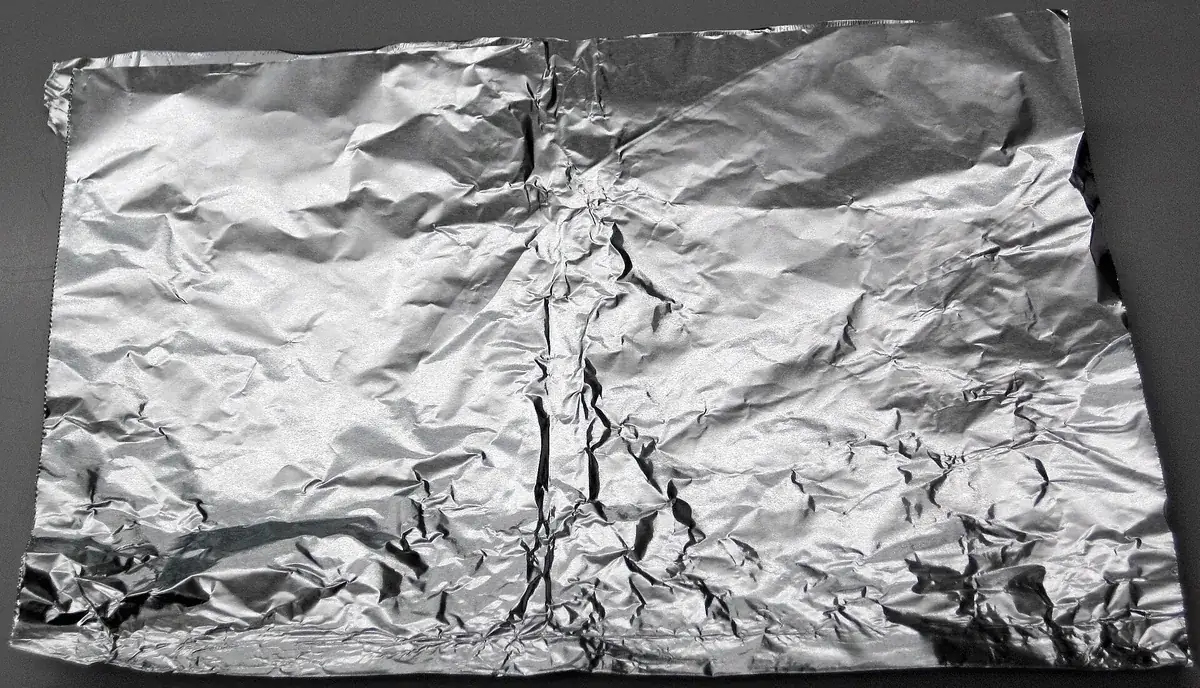
Most aluminium foil is made from 1xxx and 8xxx alloys, which are soft, cheap and cannot be strengthened by heat treatment. 6061 is a different proposition: it is a structural alloy rolled very thin. In the annealed O temper it bends, draws and etches easily; after solution treatment and ageing the same part can reach T6 strength.
That makes thin 6061 useful for engineered parts rather than wrapping. Typical aerospace and high-technology uses are shims and laminated (peelable) shim packs for fitting assemblies, chemically milled or photo-etched parts, thin formed covers and clips, layers in bonded laminates, gasket and EMI shield inserts, and test coupons where the part must match the chemistry of a 6061 structure.
It is not the right material for galley foil containers, meal trays or insulation blankets. Those use 3003, 8011 or 1xxx foil, which are cheaper and form more easily. Choose 6061 foil when you need either its chemistry or the option to heat-treat after forming.
Thin strip uses the same registered composition as 6061 sheet and plate (EN 573-3, Aluminum Association).
| Element | Minimum | Maximum | Role in the alloy |
|---|---|---|---|
| Silicon (Si) | 0.40 | 0.80 | Forms the strengthening Mg2Si phase with magnesium |
| Iron (Fe) | — | 0.70 | Impurity; held low for toughness and surface quality |
| Copper (Cu) | 0.15 | 0.40 | Adds strength; a small penalty in corrosion resistance |
| Manganese (Mn) | — | 0.15 | Grain structure control |
| Magnesium (Mg) | 0.80 | 1.20 | Main strengthening element with silicon |
| Chromium (Cr) | 0.04 | 0.35 | Limits recrystallisation, improves stress-corrosion resistance |
| Zinc (Zn) | — | 0.25 | Impurity |
| Titanium (Ti) | — | 0.15 | Grain refiner |
| Others, each / total | — | 0.05 / 0.15 | |
| Aluminium (Al) | Remainder | About 95.8 – 98.6 % |
Foil is normally supplied in O temper, so the guaranteed properties are maximums that confirm the material is soft enough to form. After heat treatment to T6, thin strip reaches the familiar 6061-T6 level. Elongation of very thin gauges is lower than for thicker sheet because the test piece is so thin.
| Condition | Tensile strength | Yield strength (0.2 %) | Note |
|---|---|---|---|
| O (as supplied) | ≤ 150 MPa / 22 ksi | ≤ 85 MPa / 12 ksi | Soft condition for forming, etching and heading |
| O, typical | About 125 MPa | About 55 MPa | Comparison only |
| T4 after heat treatment, typical | About 240 MPa | About 145 MPa | Formable; can be aged later |
| T6 after heat treatment, typical | About 310 MPa | About 276 MPa | Peak strength |
Data sheets that list 290 MPa tensile and 240 MPa yield for "6061-O foil" are quoting T6 values. O temper cannot reach those figures; check that the certificate reports properties for the temper you ordered.
Thin strip is weighed at 2.70 kg per m² per millimetre, so a 0.15 mm sheet weighs about 0.41 kg per m². For shim work, state the thickness tolerance you need: precision shim stock is often specified to a few micrometres, much tighter than standard sheet tolerances.
In O temper, thin 6061 bends flat on itself and draws well. Heat-treat after forming to reach T4 or T6.
Solution treatment around 530 °C with a rapid quench, then ageing around 160 – 175 °C. Thin parts distort easily, so use fixtures and controlled quench.
Etches evenly in standard alkaline etchants, which suits photo-etched shims and precision blanks.
Anodise or acid-etch and prime before bonding for durable laminates.
Can be furnace or dip brazed with low-melting Al-Si fillers under close temperature control, because the solidus is only about 580 °C.
Good corrosion resistance; anodise or conversion coat thin parts that will see moisture or salt.
| Alloy | Heat-treatable | Typical use | Choose it when |
|---|---|---|---|
| 1145 / 1235 | No | Insulation, capacitors, packaging | Lowest cost and highest purity matter |
| 3003 | No | Containers, ducts, heat-exchanger fins | Good formability and modest strength are enough |
| 5052 / 5056 | No | Honeycomb core | Strength and corrosion resistance without heat treatment |
| 2024 | Yes | High-strength laminates and honeycomb | Highest strength is needed |
| 6061 | Yes | Shims, etched parts, formed covers | A weldable, heat-treatable 6061 match is required |
Because 6061 can be heat-treated. Parts formed or etched in the soft O temper can be strengthened to T6 afterwards, which 1xxx, 3xxx and 8xxx foils cannot do.
Usually O (annealed), with a maximum tensile strength of about 150 MPa. T4 and T6 thin strip can be supplied on request but is harder to form.
Typical tensile strength is about 125 MPa and yield about 55 MPa. Values of 290 MPa or more belong to the T6 temper, not to O.
Not normally. Insulation blankets use 1xxx foil and food trays use 3003 or 8011. 6061 is chosen for engineered thin parts such as shims and etched components.
Yes. Thin strip can be slit to width and supplied in coils or cut sheets, packed in sealed cases, and shipped worldwide with a mill test certificate.
Send thickness, width, temper, quantity and destination. Our team will reply with availability and a delivered price.






