


1145 Aerospace Aluminium Foil
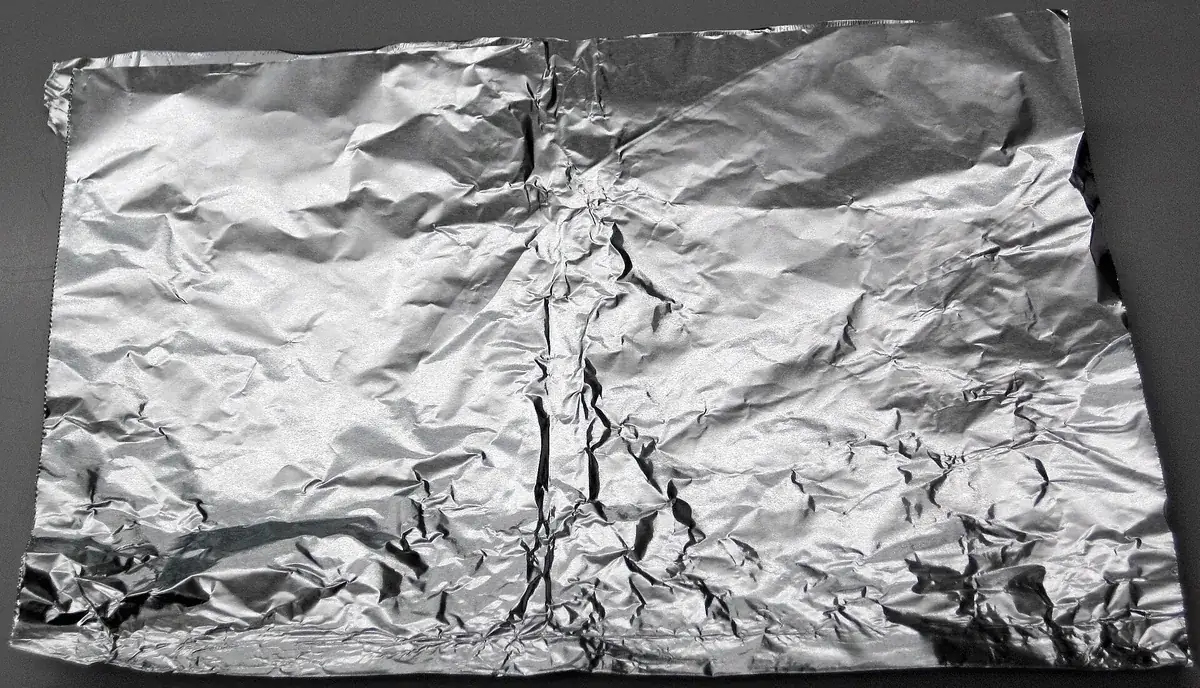
1145 is a 99.45 % pure aluminium foil alloy. In aerospace and defence work it is used for thermal and reflective insulation layers, foil tapes and laminates, cable and harness wrapping, electromagnetic shielding and capacitor foil. Annealed 1145-O foil and light-gauge sheet are covered by SAE AMS 4011. Metline supplies 1145 foil in O, H14 and H19, slit to width on cores, with mill certificates, worldwide.
- Alloy
- 1145 (UNS A91145)
- Purity
- 99.45 % Al min
- Tempers
- O, H14, H18, H19
- Thickness
- about 0.006 – 0.2 mm
Why 1145 is used for aerospace foil
1145 sits between the common 99.0 – 99.35 % foil alloys (1100, 1235) and the ultra-high-purity capacitor grades (1188, 1199). The tighter limit on silicon plus iron gives fewer pinholes in thin gauges, higher conductivity and very consistent annealing.
Those properties matter in the places aerospace uses foil: reflective layers in thermal and acoustic insulation blankets, aluminium foil tapes and foil-faced laminates, harness and cable wraps for screening, gaskets and shields for electromagnetic compatibility, and electrolytic and film capacitors in avionics. Soft 1145-O conforms to complex shapes and is the usual choice for laminating and wrapping; full-hard H19 stays flat and stiff for shields and slit components.
SAE AMS 4011 covers 1145-O foil and light-gauge sheet. It was stabilised in 2022, which means it remains usable but is no longer being revised. Commercial foil is supplied to ASTM B479, and capacitor foil to the relevant capacitor-foil specifications or customer drawings.
1145 chemical composition
| Element | Limit (wt %) |
|---|---|
| Silicon + iron (Si + Fe) | 0.55 max combined |
| Copper (Cu) | 0.05 max |
| Manganese (Mn) | 0.05 max |
| Magnesium (Mg) | 0.05 max |
| Zinc (Zn) | 0.05 max |
| Vanadium (V) | 0.05 max |
| Titanium (Ti) | 0.03 max |
| Others, each | 0.03 max |
| Aluminium (Al) | 99.45 min |
1145 does not contain tin, and "1145A" is not a separately registered grade; certificates should state 1145 with the limits above.
Properties of 1145 foil
Foil properties depend strongly on gauge and processing, so specifications usually set tensile and elongation limits by thickness band rather than a single figure. The values below are a guide; the certificate shows the tested values for each lot.
| Temper | Condition | Tensile strength (guide) | Elongation | Typical use |
|---|---|---|---|---|
| O | Fully annealed | about 60 – 100 MPa | Highest; rises with gauge | Laminates, tapes, blankets, wraps |
| H14 / H24 | Half hard | about 100 – 140 MPa | Low | Formed shields, gaskets |
| H18 / H19 | Full hard / extra hard | about 150 MPa and above | Very low | Flat shields, slit parts, capacitors |
Physical properties (typical)
- Density
- 2.70 g/cm³
- Electrical conductivity
- about 61 – 62 % IACS (O)
- Thermal conductivity
- about 230 W/m·K
- Melting range
- about 646 – 657 °C
- Thermal expansion
- about 23.6 µm/m·°C
- Total hemispherical emissivity
- low on bright, clean foil, which makes it a good reflective layer
Standards and equivalents
| Document | Scope |
|---|---|
| SAE AMS 4011 | Foil and light-gauge sheet, 99.45 Al (1145-O), annealed (stabilised 2022) |
| ASTM B479 | Annealed aluminium and aluminium-alloy foil for flexible barrier and other applications |
| ASTM B373 | Aluminium foil for capacitors |
| EN 546 / EN 573-3 | European foil standards and chemistry |
| Designations | UNS A91145; ISO Al99.45 |
Sizes, surface and packing
Supply range
- Thickness
- about 0.006 – 0.2 mm; light-gauge sheet above that
- Width
- Slit from about 10 mm up to 1600 mm
- Surface
- Bright one side / matte one side for thin gauges, or bright both sides; degreased for laminating
- Cores
- Aluminium, steel or paper cores; inner diameter to order (commonly 76 or 152 mm)
- Quality checks
- Thickness, width, pinhole count, wettability (for laminating), surface cleanliness
- Packing
- Coils wrapped and sealed with desiccant in wooden cases, eye-to-sky or eye-to-wall
For laminating and tape coating, specify a wettability test (often a water-brush test class) so the foil surface accepts adhesive. For capacitor or shielding duty, state the pinhole limit and any surface-cleanliness requirement.
How to order 1145 foil
- SpecifyAlloy and temper, thickness, width, core and coil size, quantity and the governing specification with its revision (AMS 4011, ASTM B479 or a customer drawing).
- ConfirmWe confirm the specification can be met, the tolerance class, test requirements and delivery terms (EXW, FOB, CIF or DAP).
- InspectMaterial is checked for dimensions and surface condition; any extra tests named on the order are carried out or arranged.
- DocumentEach lot ships with a mill test certificate to EN 10204 3.1 showing chemistry and mechanical results, traceable to the heat or lot number.
- Pack and shipExport packing in sealed, moisture-protected cases or on pallets, shipped by sea or air to your port or door.
References and standards
- SAE AMS 4011 – Aluminum, Foil and Light Gage Sheet, 99.45Al (1145-O), Annealed
- ASTM B479 – Annealed Aluminum and Aluminum-Alloy Foil for Flexible Barrier, Food Contact, and Other Applications
- ASTM B373 – Aluminum Foil for Capacitors
- The Aluminum Association – International Alloy Designations and Chemical Composition Limits (Teal Sheets)
1145 aerospace aluminium (aluminum) foil: FAQ
What does AMS 4011 cover?
SAE AMS 4011 covers 1145 aluminium foil and light-gauge sheet in the annealed O temper. It has been stabilised, so it is still usable but no longer revised.
What is the difference between 1145 and 1235 foil?
1145 is 99.45 % Al minimum; 1235 is 99.35 %. 1145 has slightly lower impurity levels, which helps conductivity and pinhole performance in thin gauges.
Can I get 1145 foil in H19?
Yes, full-hard H19 foil is produced for shields, slit parts and capacitors. Note that AMS 4011 covers only the O temper, so H19 is ordered to ASTM or a customer specification.
Is 1145 used for aircraft honeycomb core?
Structural aerospace honeycomb is normally made from 5052 or 5056 foil, and some from 3003. 1145 is used for insulation, tapes, shielding and capacitors rather than structural core.
What thicknesses can you supply?
Typically about 0.006 – 0.2 mm foil, slit to width on cores; thicker light-gauge sheet on request.
Need 1145 foil for insulation, shielding or capacitors?
Send thickness, width, temper, core and specification. We reply with availability and documentation.






