Solvent-based dry lamination
A polyurethane adhesive dissolved in solvent is coated on one web, dried in an oven and nipped to the second web. Versatile and strong, and still common for retort and demanding structures.



Laminated aluminium foil bonds a thin aluminium layer to plastic film, paper, foam or fabric so that each layer does the job it is best at: the foil blocks light, oxygen and moisture or reflects heat, while the other layers add strength, sealability, printability or insulation. This guide explains the main laminate families, which foil alloy and gauge suit each one, how laminates are made and tested, and what to put in a specification.
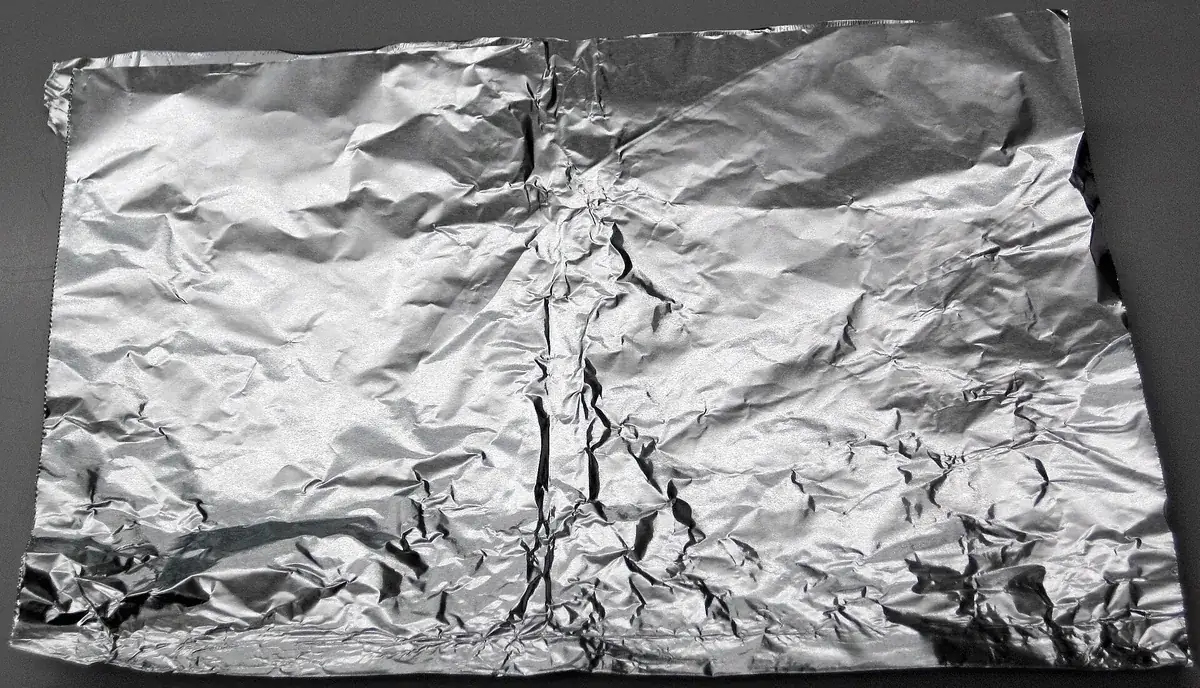
Aluminium foil on its own is an excellent barrier and reflector, but it is thin, tears easily, cannot be heat-sealed and develops pinholes at the gauges used in flexible packaging. Laminating it to other materials keeps those strengths and removes the weaknesses.
In packaging, a few microns of foil inside a plastic laminate give a barrier to oxygen, water vapour, light and aroma that clear films struggle to match. The outer film carries the print and protects the foil; the inner film provides the heat seal and the food-contact surface; the adhesive layers tie it all together and cover the occasional pinhole. In building and industrial uses, foil laminated to kraft paper, glass-fibre scrim, foam or woven fabric becomes a vapour retarder, a reflective insulation layer, a duct-wrap facing or a heat shield.
Because so many combinations are possible, laminated foil is usually specified layer by layer, with the foil chosen for its function in the structure. Metline supplies aluminium foil for converters' own laminating lines as well as finished laminated foil built to the customer's structure.
| Laminate family | Typical structure | Typical applications | Foil alloy and temper |
|---|---|---|---|
| Foil-plastic | PET / Al / PE, PET / Al / CPP, BOPP / Al / PE, OPA / Al / PVC | Food and coffee pouches, sachets, lidding, blister packs, pouch cells | 8079-O, 8011-O, 1235-O; 8021-O for cold-form blister and pouch cells |
| Foil-paper | Paper / Al, Al / paper / PE, kraft / Al | Cigarette inner liners, chocolate and butter wraps, sachets, labels | 1235-O, 8011-O, 1145-O |
| Foil-scrim-kraft (FSK) | Al / glass scrim / kraft paper | Facing for duct wrap, duct board and building insulation | 8011-O, 1235-O |
| Foil-foam / bubble | Al / PE foam or air bubble / Al | Reflective roof and wall insulation, cold-chain liners, duct insulation | 8011-O, 8079-O, 3003 for heavier gauges |
| Foil-fabric | Al / glass-fibre cloth, Al / woven polyester | Pipe and equipment insulation facing, heat shields, fire curtains, cable wraps | 8011, 1235, 3003 in O or hard tempers |
| Custom multilayer | Three or more layers combining film, paper, foam, scrim and adhesive | Tapes, shielding, combined barrier and insulation products | Chosen for the structure |
The foil gauge is set by what the foil has to do in the laminate. Below about 20 µm, foil contains some pinholes; once it is laminated, the films and adhesive cover them and the structure as a whole remains a very high barrier. Thicker foil is used where the foil must give the laminate stiffness, dead-fold, formability or push-through behaviour.
| Function of the foil | Typical gauge | Preferred alloy | Example |
|---|---|---|---|
| Barrier layer in flexible pouches and sachets | 6 – 9 µm | 8079-O, 8011-O, 1235-O | Snack, coffee and powder packs |
| Barrier in retort pouches | 7 – 12 µm | 8079-O, 8011-O | Ready meals sterilised in the pack |
| Paper laminates for wrapping | 6 – 9 µm | 1235-O, 8011-O | Cigarette inner liner, chocolate wraps |
| Butter and fat wraps | About 7 – 12 µm | 8011-O | Foil-paper wraps for butter and margarine |
| Cold-form blister base | About 45 – 60 µm | 8021-O, 8079-O | OPA / Al / PVC blisters for moisture-sensitive drugs |
| Pouch-cell battery film | About 35 – 50 µm | 8021-O, 8079-O | Nylon / Al / CPP battery packaging film |
| Insulation facings and reflective layers | 7 – 25 µm | 8011-O, 1235-O | FSK, foil-foam and foil-glass-cloth |
| Heavy industrial laminates and shields | 25 – 50 µm | 8011, 3003 | Heat shields, heavy-duty tapes |
8021 and 8079 have higher iron content than 1235 and give the foil more strength and elongation in the soft temper, which is why they dominate cold-forming and battery film, where the foil is stretched into a cavity without cracking. 1235 is very pure and rolls to the thinnest gauges with few pinholes. 8011 is the general-purpose choice for most laminating work. Push-through blister lidding is a different product: a hard-temper foil with heat-seal lacquer, covered in our PTP foil guide.
A polyurethane adhesive dissolved in solvent is coated on one web, dried in an oven and nipped to the second web. Versatile and strong, and still common for retort and demanding structures.
Two-component, 100 % solids polyurethane adhesive applied at low coat weight. No drying oven and no solvent emissions; needs curing time before slitting and pouch making.
A molten curtain of polyethylene is extruded between foil and film or paper, acting as both adhesive and a sealant layer. Widely used for foil-paper-PE structures.
A water-based adhesive bonds foil to paper; the water escapes through the porous paper. A standard route for foil-paper wraps and labels.
Heat and pressure bond pre-coated films, foams or fabrics to the foil. Used for foil-foam and foil-cloth insulation products.
Heat-seal lacquers, primers and colour coats are applied directly to foil. Lighter than a laminate where the full film structure is not needed.
Whatever the method, the foil surface must be clean and wettable so that adhesive or extrudate wets it evenly. Fully annealed foil has had its rolling oil burned off; converters typically check wettability or dyne level at goods-in. Poor wetting shows up later as low bond strength, tunnelling or delamination, especially after retort or exposure to aggressive contents.
In food, pharmaceutical and personal-care packaging, the laminate is designed around the product, the filling line and the shelf life.
Food-contact laminates must comply with the rules of the destination market: in the EU, the framework Regulation (EC) No 1935/2004 and, for the plastic layers, Regulation (EU) No 10/2011 with migration testing of the multilayer; in the US, the relevant FDA regulations for each layer, including adhesives under 21 CFR 175.105. Ask your laminate supplier for a declaration of compliance covering the whole structure.
Aluminium foil has very low thermal emittance, roughly 0.03 – 0.05 for a clean bright surface. Facing an air space, it cuts radiant heat transfer sharply, which is the basis of reflective insulation and radiant barriers. Laminated to other materials, it also acts as a vapour retarder that keeps moisture out of fibrous insulation.
| Product | Structure | Purpose | Points to specify |
|---|---|---|---|
| FSK facing | Foil / glass scrim / kraft | Vapour retarder and facing for glass or mineral wool duct wrap and building insulation | Water-vapour permeance, tear strength, surface-burning characteristics |
| Reflective bubble or foam insulation | Foil / PE bubble or foam / foil | Reflective insulation under roofs, in walls and in cold-chain packaging | Thickness, emittance of the foil faces, thermal performance with the air spaces |
| Foil-glass cloth | Foil / woven glass fibre | Robust facing for pipe and equipment insulation, heat shields | Fabric weight, temperature limit, fire classification |
| Foil tapes | Foil / pressure-sensitive adhesive / liner | Sealing joints in foil-faced insulation and ducts | Foil gauge, adhesive type and temperature range |
Fire behaviour is tested on the complete laminate, not the foil alone: surface-burning characteristics under ASTM E84 / UL 723 in North America, reaction-to-fire classes under EN 13501-1 in Europe, and older national tests such as DIN 4102 still appear in specifications. A flammability rating for one plastic layer does not classify the finished product. Reflective insulation performance is defined by standards such as ASTM C1224 and EN 16012, and depends heavily on the air spaces in the installed system.
| Property | Common test method | Why it matters |
|---|---|---|
| Bond (peel) strength between layers | ASTM F904 or the converter's T-peel method | Delamination is the most common laminate failure |
| Heat-seal strength | ASTM F88 | Pack integrity on the filling line and in transport |
| Water-vapour transmission | ASTM F1249 | Shelf life of moisture-sensitive products |
| Oxygen transmission | ASTM D3985 | Shelf life of oxygen-sensitive products |
| Pinholes in the foil layer | Light-table inspection of the base foil | Barrier consistency, especially in thin foil |
| Thickness and grammage | Micrometer and weight per m² | Consistent machine running and cost control |
| Residual solvent | Gas chromatography | Food-contact safety and odour |
| Fire performance (insulation laminates) | ASTM E84 / UL 723, EN 13501-1 | Building-code compliance |
Exact ranges depend on the structure; confirm each layer, gauge and tolerance in the technical agreement.
Start from what the pack or product must do: barrier level, sealing method, stiffness, print, temperature and fire requirements. Then choose the outer layer for print and protection, the foil gauge for barrier or forming, and the inner layer for sealing or bonding.
Usually 6 – 9 µm for pouches and sachets, 7 – 12 µm for retort pouches, and about 45 – 60 µm for cold-form blister base, where the foil is stretched into cavities.
Yes, once laminated. The films and adhesive bridge the pinholes, and the laminate as a whole remains a very high barrier to oxygen, moisture and light.
Common causes are poor foil wettability, incorrect adhesive or cure, aggressive contents attacking the adhesive, and retort or heat exposure beyond the adhesive's rating. Bond-strength tests after ageing with the real product reveal most problems.
It depends on the complete laminate. Facings are tested as finished products, for example to ASTM E84 / UL 723 or EN 13501-1; check the classification for the exact product.
Yes. Metline supplies annealed foil in 8011, 8079, 1235, 8021 and other alloys, slit to width on suitable cores, as well as finished laminated foil to your structure.
Rolls slit to width, cut sheets and die-cut parts, with options such as adhesive backing, perforation, printing and coating, packed for export.
Send the application, layer structure or performance targets, width, roll size and quantity. We will propose a structure and quote a delivered price.






