Tobacco inner liners
The classic use: 6 – 7 µm foil on light backing paper keeps cigarettes fresh, carries embossing and folds sharply around the bundle. See cigarette packaging foil.



Paper-backed aluminium foil is a laminate of thin annealed foil, usually 6 – 9 µm of 1235 or 8011, bonded to a lightweight base paper so that the pack gets the foil's barrier and shine together with the paper's stiffness, printability and fold. Foil backing paper is the base paper made for this lamination. This guide explains the structure, the foil and paper grades used for cigarette liners, chocolate and butter wraps, labels and insulation facings, and what to put in the specification.
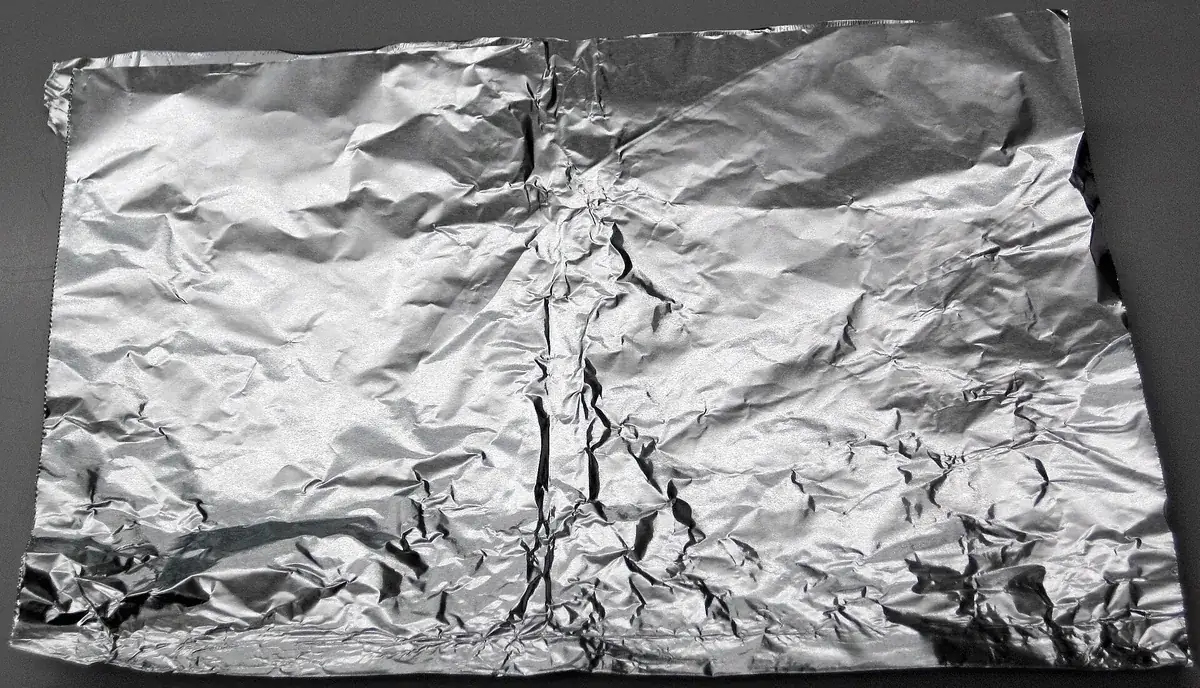
Thin aluminium foil is an almost perfect barrier to light, oxygen, moisture and aroma, but on its own a 7 µm foil tears easily, wrinkles and is hard to print and feed on packing machines. Laminating it to paper fixes those weaknesses. The paper carries the tensile load through the machine, takes print and embossing, and gives the dead-fold and crease-retention that wrappers need, while the foil provides the barrier and the metallic look.
The paper used for this purpose is called foil backing paper or foil lining paper. It is a thin, strong, very smooth paper, usually single-side glazed, designed to bond tightly to foil and to run on high-speed laminators and packing lines without breaks. Its grammage, normally in the 21 – 50 g/m² band for tobacco and confectionery and heavier for labels and technical laminates, is matched to the foil gauge and the end use.
There are two quite different products that both look like "foil paper". Foil-paper laminate contains a genuine aluminium foil layer. Vacuum-metallised paper has only a very thin evaporated aluminium coating, a fraction of a micron thick; it is cheaper and recycles with paper, but it is a much weaker barrier. Specify which one you need.
| Structure | Typical build | Typical use |
|---|---|---|
| Foil / paper | 6 – 7 µm foil + 21 – 50 g/m² backing paper | Cigarette inner liners, confectionery wraps |
| Printed or lacquered foil / paper | Coloured lacquer or print on 7 – 9 µm foil + 30 – 50 g/m² paper | Chocolate, butter and cheese wraps |
| Foil / paper / PE | Foil + paper + heat-seal polyethylene layer | Sachets, lids, seal-able wraps |
| Foil / kraft | 7 – 12 µm foil + 40 – 70 g/m² kraft paper | Industrial wraps, ream wrap, liner papers |
| Foil / scrim / kraft (FSK) | Foil + glass-fibre scrim + kraft | Facings for insulation and ductwork vapour barriers |
| Foil / paper / woven fabric | Laminate reinforced with woven fabric | Heavy-duty and reflective insulation wraps |
Lamination is done either wet, with a water-based adhesive such as a casein, starch or synthetic latex system that dries through the paper, or by wax or hot-melt bonding for wraps that must be heat-sealable or grease-resistant. For food and tobacco, adhesive and inks must be approved for the intended contact and must not transfer odour.
Fully annealed (O temper) foil is used because it is soft, folds flat and has the cleanest surface after the annealing furnace burns off rolling oil. 1235 is a commercially pure alloy (at least 99.35 % Al) prized for low pinhole counts in very thin gauges; 8011 contains more iron and silicon, giving higher strength, and is widely used for thicker wraps and labels.
| Element | 8011 (wt %) | 1235 (wt %) |
|---|---|---|
| Silicon (Si) | 0.50 – 0.9 | Si + Fe ≤ 0.65 |
| Iron (Fe) | 0.6 – 1.0 | (see Si) |
| Copper (Cu) | ≤ 0.10 | ≤ 0.05 |
| Manganese (Mn) | ≤ 0.20 | ≤ 0.05 |
| Magnesium (Mg) | ≤ 0.05 | ≤ 0.05 |
| Chromium (Cr) | ≤ 0.05 | — |
| Zinc (Zn) | ≤ 0.10 | ≤ 0.10 |
| Titanium (Ti) | ≤ 0.08 | ≤ 0.06 |
| Others, each / total | 0.05 / 0.15 | 0.03 / — |
| Aluminium (Al) | Remainder | ≥ 99.35 |
| Use | Alloy and temper | Typical foil gauge |
|---|---|---|
| Cigarette inner liner | 1235-O, 8011-O | 6 – 7 µm |
| Chocolate and confectionery wrap | 1235-O, 8011-O, 8079-O | 7 – 12 µm |
| Butter and margarine wrap | 8011-O, 1235-O | 7 – 9 µm |
| Beer and beverage labels | 8011-O | 9 – 12 µm |
| Insulation facings (FSK) | 1235-O, 8011-O, 8079-O | 7 – 25 µm |
Composition limits are the registered Aluminum Association values. Thin foil can contain occasional pinholes; their number falls sharply as gauge rises and is reduced further by lamination, because the paper and adhesive bridge them. Agree the pinhole test (for example ASTM B926 or EN 546-4) and limits for the base foil in the order.
| Property | Why it matters | Typical test |
|---|---|---|
| Grammage (g/m²) | Sets stiffness, strength and cost; commonly 21 – 50 g/m², heavier for kraft laminates | ISO 536 |
| Tensile strength (machine direction) | Prevents web breaks on laminators and packers | ISO 1924-2 |
| Smoothness of the bonding side | A smooth, closed surface gives tight, even foil contact and a bright finish | ISO 8791 (Bekk / Bendtsen) |
| Moisture content | Affects curl, flatness and adhesive drying | ISO 287 |
| Brightness and cleanliness | Visible on the paper side of wraps; dirt specks show through thin foil | ISO 2470, dirt count |
| Fold endurance | Wraps and liners are folded and creased repeatedly | ISO 5626 |
| Sizing / absorbency | Controls adhesive penetration and print behaviour | Cobb test, ISO 535 |
Roll quality matters as much as paper properties: even winding tension across the width, clean square ends, accurate width and consistent core size all affect splicing and running speed. For food contact, the paper must comply with the rules of the destination market, for example EU Regulation (EC) No 1935/2004 and national paper recommendations, or US FDA 21 CFR 176.170.
The classic use: 6 – 7 µm foil on light backing paper keeps cigarettes fresh, carries embossing and folds sharply around the bundle. See cigarette packaging foil.
Printed or coloured laminate wraps that hold their fold and protect from light and moisture. See chocolate foil.
Grease-proof wraps that keep out light and oxygen and prevent taint.
Neck and body labels for beer and spirits; see beer label foil.
FSK and foil/kraft laminates as vapour retarders and radiant barriers on mineral wool and duct wrap.
Ream wraps, gift wrap, lamp reflectors and decorative laminates.
Laminates are harder to recycle than mono-materials. Paper mills can repulp some foil-paper laminates and recover the fibre, with the aluminium separated as reject; dedicated processes can also recover aluminium from laminates. Where recyclability in the paper stream is the priority and the barrier need is modest, vacuum-metallised paper is the usual alternative. Where shelf life, light protection or aroma barrier is critical, a genuine foil layer remains the more reliable choice.
Down-gauging the foil and paper, using water-based adhesives and avoiding unnecessary plastic layers all reduce the environmental footprint of a laminate without losing its function.
A thin, strong, smooth base paper made for laminating to aluminium foil. It gives the foil machine strength, printability and fold, typically at 21 – 50 g/m² for tobacco and confectionery wraps.
Annealed 1235-O and 8011-O are the most common, with 8079-O for some wraps. 1235 is favoured for the thinnest gauges, 8011 for thicker, stronger foils.
Foil paper contains a real aluminium foil layer, usually 6 – 12 µm, and is a strong barrier. Metallised paper carries an evaporated coating well under one micron thick; it is cheaper and paper-recyclable but a weaker barrier.
It can be, when the foil, paper, adhesive and inks all meet the food-contact rules of the market, such as EU Regulation 1935/2004 or US FDA regulations. Ask for the compliance declaration for the exact laminate.
Typically 6 – 7 µm, laminated to a light backing paper, then embossed and sometimes printed or coloured.
Some paper mills accept it and recover the fibre while separating the aluminium. Recyclability depends on local facilities; metallised paper is easier to recycle with paper.
Tell us the foil gauge, paper weight, decoration and roll size. We will reply with a specification and price.






