Aluminium Rectangular Tube: Standard Die Sizes and Custom Tooling
Every extruded rectangular tube is pushed through a hollow (porthole) die made for its exact width, height and wall, so the sizes that already have tooling are the fastest and cheapest to buy. This guide lists common sharp-corner rectangular and square tube sizes with their weight per metre, explains when a new die is needed, and sets out the design rules, alloys, tolerances and finishes that apply to custom rectangular tube.
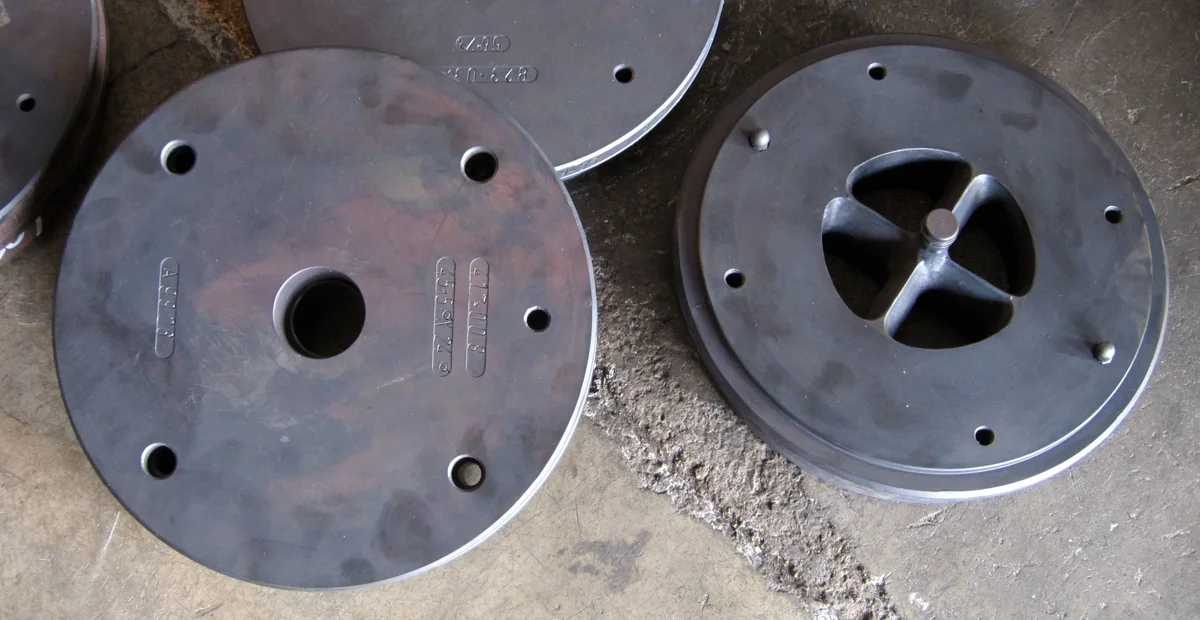
Rectangular tube is a hollow extrusion, so it needs a two-part porthole die: a mandrel that forms the inside and a die plate that forms the outside. The die is machined from hot-work tool steel for one specific section, and its cost and trial time are the main reasons a custom size takes longer than a standard one.
Hundreds of rectangular sizes already have tooling in the extrusion supply chain because they are used every day in frames, furniture, machinery, vehicles and buildings. Choosing one of those sizes means no tooling charge, no die trial and a proven section that the press runs consistently. When a design truly needs a different size, wall or corner shape, a new die is made and the tube is produced from your drawing.
This page is a practical reference. The tables give standard sharp-corner rectangular and square sizes with calculated weights; the later sections explain how dies are designed, which features need new tooling, and how to specify a custom section so that it extrudes well the first time.
Tooling basics
How a porthole die forms a rectangular tube
A heated aluminium billet is pushed into the die under high pressure. The metal divides into several streams as it flows through ports around the mandrel support bridges, then re-joins in a welding chamber before it passes through the gap between mandrel and die plate. That gap is the tube wall.
Seam (extrusion) welds
Where the streams re-join, solid-state seams form along the tube length. In a correctly run die they are as strong as the parent metal and invisible after finishing, but they are why porthole tube is not treated as "seamless" pipe for code pressure parts.
Bearing length
The land that controls metal speed. Die makers vary bearing length around the section so thick and thin parts of the profile exit at the same speed, which keeps the tube straight and the walls flat.
Corner radius
Sharp outside corners are standard on architectural tube, typically with a small internal radius. Rounded-corner tube needs different tooling and has a specified outside radius.
Die size and press
The circumscribing circle diameter (CCD), the smallest circle that encloses the section, decides the die and press size. A 100 × 45 mm tube has a CCD of about 110 mm.
Die life
Dies wear and are periodically re-nitrided or corrected. A die in regular use is a known quantity; a new die needs a trial and sometimes correction runs.
Multi-cavity dies
Small tubes are often run two or more at a time from one die, improving output and price for small sections.
Standard sizes
Standard sharp-corner rectangular tube sizes and weights
A = width, B = height, T = wall thickness, all in millimetres. Weights are calculated for sharp outside corners and a density of 2.70 g/cm³ (6063, 6061, 6082); real tubes with small internal radii weigh very slightly more. Inch sizes such as 25.4 × 12.7 mm (1 × 1/2 in) and 76.2 × 50.8 mm (3 × 2 in) are included.
A × B (mm)
Wall T (mm)
kg per metre
kg per 6 m length
12 × 10
1
0.108
0.65
18 × 12
1.4
0.206
1.23
20 × 10
1
0.151
0.91
20 × 10
1.5
0.219
1.31
20 × 12
1
0.162
0.97
20 × 12
1.5
0.235
1.41
20 × 15
1
0.178
1.07
25 × 15
1
0.205
1.23
25 × 15
1.5
0.300
1.80
25 × 15
1.8
0.354
2.12
25 × 20
1.2
0.276
1.66
25 × 20
1.5
0.340
2.04
25.4 × 12.7
1
0.195
1.17
30 × 10
0.9
0.186
1.11
30 × 15
1
0.232
1.39
30 × 15
1.5
0.340
2.04
30 × 15
2
0.443
2.66
30 × 20
2
0.497
2.98
30 × 20
3
0.713
4.28
30 × 25
1
0.286
1.72
34 × 20
2
0.540
3.24
34 × 20
3
0.778
4.67
35 × 25
1.5
0.462
2.77
35 × 25
2
0.605
3.63
35 × 25
4
1.123
6.74
38 × 19
3
0.826
4.96
38 × 25
1
0.329
1.98
38.1 × 25.4
1
0.332
1.99
40 × 12
2
0.518
3.11
40 × 15
2
0.551
3.30
40 × 20
1.2
0.373
2.24
40 × 20
2
0.605
3.63
40 × 20
3
0.875
5.25
40 × 25
1
0.340
2.04
40 × 25
2
0.659
3.95
40 × 25
3
0.956
5.73
40 × 30
1.5
0.543
3.26
40 × 30
2
0.713
4.28
45 × 20
1.4
0.470
2.82
50 × 20
1
0.367
2.20
50 × 20
2
0.713
4.28
50 × 25
1.4
0.546
3.27
50 × 25
2
0.767
4.60
50 × 25
3
1.118
6.71
50 × 30
1.2
0.503
3.02
50 × 30
2
0.821
4.92
50 × 30
3
1.199
7.19
50 × 30
4
1.555
9.33
50 × 40
1.5
0.705
4.23
50 × 40
2
0.929
5.57
50.8 × 25.4
1.4
0.555
3.33
50.8 × 25.4
3.18
1.199
7.20
50.8 × 38.1
2
0.917
5.50
55 × 30
2
0.875
5.25
60 × 20
1.4
0.584
3.50
60 × 20
2
0.821
4.92
60 × 30
1.5
0.705
4.23
60 × 30
2
0.929
5.57
60 × 40
2
1.037
6.22
60 × 40
3
1.523
9.14
60 × 40
4
1.987
11.92
60 × 50
3
1.685
10.11
63.5 × 38.1
3.18
1.635
9.81
65 × 30
1.6
0.793
4.76
70 × 30
1.5
0.786
4.71
70 × 50
3
1.847
11.08
75 × 25
2
1.037
6.22
75 × 50
1.4
0.924
5.54
76.2 × 25.4
3.18
1.635
9.81
76.2 × 38.1
1.4
0.843
5.06
76.2 × 50.8
3.18
2.072
12.43
76.2 × 50.8
4.5
2.867
17.20
80 × 20
2
1.037
6.22
80 × 30
2
1.145
6.87
80 × 40
1.5
0.948
5.69
80 × 40
3
1.847
11.08
80 × 40
4
2.419
14.52
80 × 50
4
2.635
15.81
80 × 60
2
1.469
8.81
80 × 60
3
2.171
13.02
80 × 70
6
4.471
26.83
100 × 30
2
1.361
8.16
100 × 30
3
2.009
12.05
100 × 40
2
1.469
8.81
100 × 40
3
2.171
13.02
100 × 44
2
1.512
9.07
100 × 45
3
2.252
13.51
Calculated weights for reference. For any size not listed, use the rectangular tube weight calculator: mass (kg/m) = 2 × T × (A + B − 2T) × 0.0027.
Standard sizes
Square tube sizes, including thick-wall sections
Square tube uses the same porthole tooling principle. Thick-wall square sections, with walls of 6 – 10 mm and more, are used for machine frames, robot arms and parts that are machined after extrusion.
Rounded, slim, thick-wall and multi-cavity rectangular tube
Variant
Example sizes
Features
Typical uses
Rounded-corner (radiused)
20 × 40 × 2, 30 × 60 × 3, 50 × 100 × 4 mm with R2 – R10
Soft outside corners, safer to handle, coat more evenly
Roof racks, ladders, furniture, handrails
Flat-oval / obround
20 × 40, 30 × 60 mm
Fully rounded short sides
Seating, trolleys, fluid lines
Slim thin-wall
15 × 40 × 1.0, 20 × 50 × 1.2, 30 × 60 × 1.5 mm
Walls down to about 0.8 – 1.2 mm; width-to-height up to about 4 : 1
Display frames, LED housings, interiors
Thick-wall
50 × 80 × 6, 60 × 100 × 8, 80 × 120 × 10 mm
Walls of 5 – 12 mm and more
Vehicle frames, heavy equipment, machined parts
Multi-cavity and ribbed
To drawing
Internal webs add stiffness or form separate channels
Battery trays, platforms, cooling and cable ducts
Telescopic sets
Nested sizes with controlled clearance
Outside of one tube slides inside the next
Adjustable legs, poles, booms
Rounded corners, internal ribs, non-90° walls and any section outside the listed sizes need their own die. For telescoping sets, the clearance is set by the tolerance stack of both tubes, so it is worth checking the combination with us before ordering; see square telescopic tubes.
Custom tooling
When do you need a new die?
Situation
New die needed?
What happens
Size, wall and corner match an existing die
No
Produced directly; no tooling charge
Same outside size but a different wall
Usually yes
A new mandrel or complete die is cut, since the wall gap is fixed by the tooling
Size from your own drawing, not in the existing range
Yes
Die designed from the drawing, trial-extruded and measured before production
Double or multi-cavity, ribs, non-90° walls
Yes
More complex porthole die; extrudability review recommended
Special corner radius or tight precision tolerances
Yes
New die plus possible post-extrusion sizing or machining
Rectangular tube cut, drilled or bent to drawing
No
Produced from a standard die, then processed
Drawing reviewWe check the section for extrudability: wall ratio, CCD, corner radii and tolerance requirements, and suggest changes that reduce cost.
Die design and manufactureThe die is designed for the alloy and press, then machined and heat-treated.
Trial and first-article inspectionSamples are measured against the drawing and the results sent for approval.
ProductionOnce approved, the die is used for your production and repeat orders.
Design for extrusion
Design rules for a custom rectangular tube
Keep walls uniform. Where walls must differ, keep the ratio of thickest to thinnest wall within about 2 : 1 to avoid uneven metal flow, distortion and surface streaks after anodising.
Respect minimum wall for the size. Minimum practical wall rises with CCD and with harder alloys: 6063 allows the thinnest walls, 6061 and 6082 need more.
Add small internal radii. An internal corner radius of about 0.5 – 1 mm improves die life and metal flow without changing the outside look.
Avoid very wide, thin flat walls. They sag or concave during extrusion; add a slight crown, a rib or more thickness.
Specify only the tolerances you need. Standard EN 755-9 or ANSI H35.2 tolerances are cheaper and faster than special ones.
Mark decorative faces. Tell us which faces will be visible after anodising so the die can be designed to keep seam welds and die lines away from them.
Material and quality
Alloys, tempers, tolerances and finishes
Alloy and temper
Min. tensile (MPa)
Min. yield (MPa)
Best for
6063-T5
150
110
Architectural, furniture, display frames, anodised parts
6063-T6
205
170
General frames needing more strength
6061-T6
260
240
Structural and machine frames, welded assemblies
6005A-T6
Between 6063-T6 and 6082-T6
Thin-wall structural tube with good extrudability
6082-T6
Highest of the 6xxx group in thicker walls
European structural and transport applications
6063 and 6061 minimums from ASTM B221 for extruded tube; EN 755-2 minimums apply to EN orders and vary with wall thickness.
Quality and finish
Dimensional tolerances
EN 755-9 (profiles), EN 12020-2 for precision 6060/6063, ANSI H35.2 for ASTM B221 orders
Certificate
EN 10204 3.1 with chemistry and mechanical properties; dimensional and coating reports on request
Do I pay for a die if my rectangular tube size is in the standard list?
No. If the width, height, wall and corner style match an existing die, the tube is produced directly with no tooling charge. A tooling cost applies only when a new die has to be made.
Can the same die make a tube with a thicker wall?
Generally not. The wall is the gap between mandrel and die plate, so a different wall needs a new mandrel or a new die. Ask us, because a nearby existing size may meet your load requirement.
Is extruded rectangular tube seamless?
No. It is made in a porthole die, which forms longitudinal seam welds where metal streams re-join. They are sound for structural and general use, but code pressure piping normally requires seamless tube made over a mandrel.
What alloy should I choose for rectangular tube?
6063-T5 or T6 for architectural, furniture and anodised parts; 6061-T6 for structural frames and welded assemblies; 6005A or 6082 for thin-wall structural sections and European specifications.
How do I calculate the weight of aluminum rectangular tube?
Multiply 2 × wall × (width + height − 2 × wall), all in mm, by 0.0027 to get kg per metre. For example, 50 × 25 × 2 mm tube weighs about 0.77 kg/m.
What tolerances apply to rectangular tube?
EN 755-9 for general profiles, EN 12020-2 for precision 6060/6063 sections, and ANSI H35.2 for orders to ASTM B221. Tighter tolerances can be agreed for a custom die.
Have a rectangular tube size in mind?
Send the dimensions or drawing, alloy, finish and quantity. We will check existing tooling and reply with a price and delivery.