Orange peel (stucco)
A random, fine-grained texture. The most popular pattern for pipe and duct insulation jacketing, cold-room linings and refrigeration panels because it hides surface marks and looks uniform.



Embossed aluminium foil is thin aluminium strip that has been rolled between patterned rolls to give it a raised texture such as orange peel (stucco), diamond or hemispherical dimples. The pattern makes the foil stiffer, less glaring and more resistant to visible scratches and creases, which is why it is used for insulation jacketing, duct facings, heat shields, cold rooms and decorative packaging. Metline supplies embossed foil in 1xxx, 3003 and 8011 alloys, 0.04 – 0.30 mm thick, worldwide.
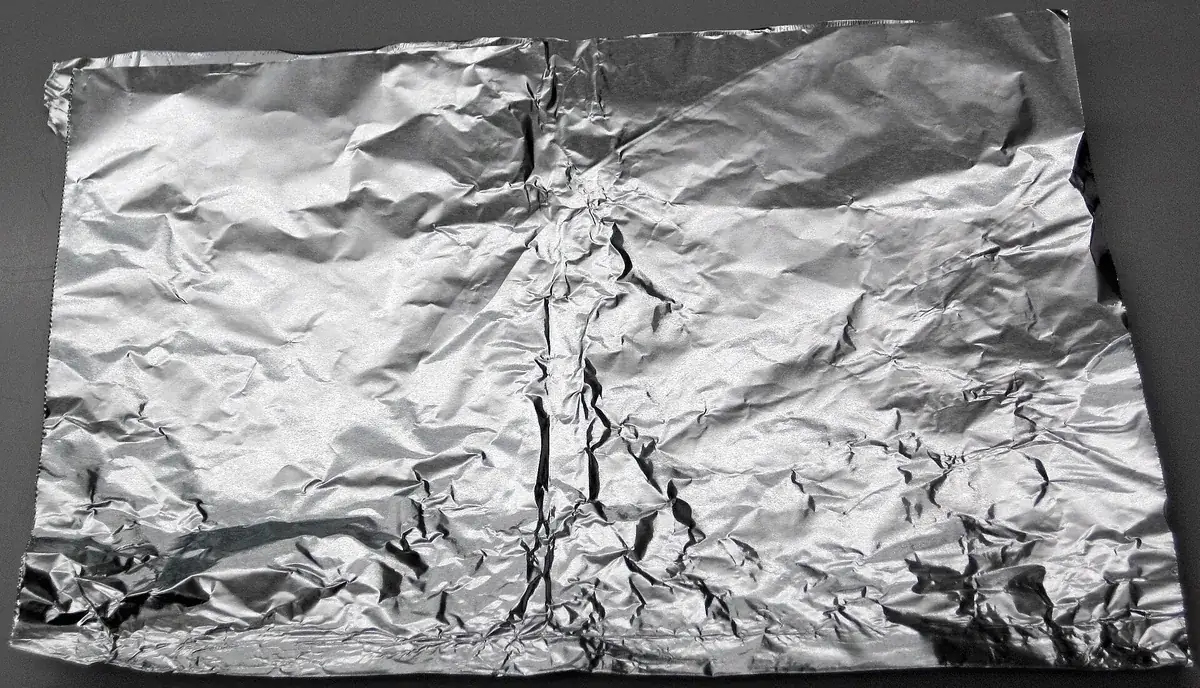
Embossing is a cold-forming step after rolling and annealing. The foil passes between a hard engraved roll and a softer or matched roll, which presses a repeating relief into the metal without removing any material. The base alloy and gauge stay the same, but the foil behaves very differently in use.
Note the vocabulary. Under EN 546 and most mill practice, product up to 0.20 mm is foil; thicker material, such as 0.25 – 0.30 mm embossed stock, is technically thin strip or sheet. Buyers often call the whole range "embossed foil", and we use the term the same way here.
A random, fine-grained texture. The most popular pattern for pipe and duct insulation jacketing, cold-room linings and refrigeration panels because it hides surface marks and looks uniform.
A regular raised diamond grid with a strong three-dimensional effect. Used for decorative linings, gift and cosmetic packaging and interior trims.
Evenly spaced small domes that give high stiffness and stand-off from the surface beneath. Used in automotive heat shields and exhaust and engine insulation.
Linear or wave textures for appliances, decorative strips and product labels.
Logos and special textures are possible with a dedicated engraved roll; this suits large, repeat orders.
Unembossed foil has the smoothest surface and highest specular reflectance, but shows creases and dents more readily.
| Alloy | Main alloying | Character | Typical embossed uses |
|---|---|---|---|
| 1050 / 1060 | Al ≥ 99.5 / 99.6 % | Very ductile, highest reflectivity and corrosion resistance | Insulation facings, decorative foil, heat shields |
| 1100 | Al ≥ 99.0 %, Cu 0.05 – 0.20 % | Slightly stronger than 1050, excellent formability | Jacketing, duct facings, refrigeration |
| 3003 | Mn 1.0 – 1.5 % | About 20 % stronger than 1100 with good corrosion resistance | Heavier jacketing, cold-room linings, heat shields |
| 8011 | Fe 0.6 – 1.0 %, Si 0.5 – 0.9 % | Good strength and puncture resistance at thin gauges | Packaging, laminated facings, food and household use |
Temper is chosen for how the foil will be handled after embossing. H14 and H24 (half hard) are common for jacketing and panels that must hold their shape; H18 (full hard) gives maximum stiffness for flat facings; H22 and O (soft) suit products that are wrapped, folded or laminated. The embossing step itself adds some work hardening.
Chemical limits follow the Aluminum Association registrations and EN 573-3. Each lot is supplied with a mill test certificate.
Foil weight is about 2.71 g per square metre for each micron of thickness. The table helps estimate coil length; embossing does not change weight per square metre, although the measured "embossed height" is greater than the base gauge.
| Base gauge (µm) | Weight (g/m²) | Length of 100 kg at 1000 mm width (m) |
|---|---|---|
| 40 | 108 | 923 |
| 50 | 136 | 738 |
| 60 | 163 | 615 |
| 80 | 217 | 461 |
| 100 | 271 | 369 |
| 150 | 406 | 246 |
| 200 | 542 | 185 |
| 250 | 678 | 148 |
| 300 | 813 | 123 |
Stucco-embossed 1100 or 3003 with a moisture barrier is wrapped over mineral-wool or foam insulation on pipes, tanks and ducts to protect it from weather and damage.
Embossed foil faces fibreglass duct board and flexible duct, adding stiffness and a cleanable, reflective surface.
Vapour-retarder facings, cold-room linings and refrigerator back panels, where low permeance and a durable appearance matter.
Hemispherical-embossed 1050 or 3003 forms lightweight shields around exhausts, turbochargers and under-floor areas.
Embossed 8011 is used for decorative lids, confectionery, cosmetics and gift wrap where texture adds visual value.
Coloured or anodised embossed foil for trims, labels and display surfaces.
Embossing pattern standards are not codified in the way alloy properties are, so it is good practice to approve a sample or reference swatch before a first order and to keep it as the acceptance reference.
Mainly insulation jacketing for pipes and ducts, HVAC duct facings, cold-room and refrigerator linings, automotive heat shields and decorative packaging, where the texture adds stiffness, hides marks and reduces glare.
They are the same random, fine texture under two names. "Stucco" is common in insulation and building markets, "orange peel" in packaging and general trade.
1100 and 3003 in H14 or similar tempers are most common. 3003 is a little stronger and more dent-resistant; both are often supplied with a polyethylene or polysurlyn moisture barrier on the inside face.
No. Weight per square metre depends on the base gauge, about 2.71 g/m² per micron. Embossing increases the apparent thickness measured over the relief, not the amount of metal.
Yes. Colour-coated, lacquered, film-protected, self-adhesive and hot-melt-backed embossed foil can be supplied to specification, together with mill certificates, worldwide.
Send the alloy, gauge, width, pattern sample and quantity. We will confirm availability and a delivered price.






