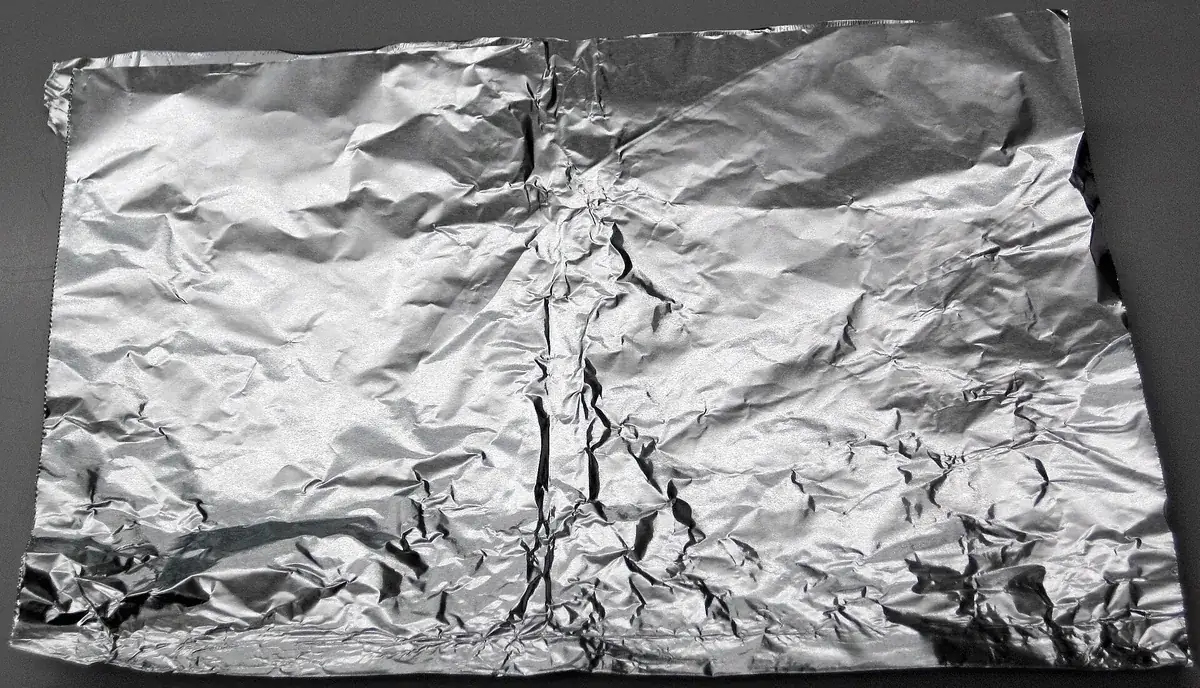
Plain foil
Bare O-temper foil for direct wrapping. Lowest cost and full dead-fold, but thin plain foil can tear on high-speed machines and will show any pinholes.



Candy wrapping foil is very thin, soft (O temper) aluminium foil, usually 8011 or 1235, that keeps sweets dry, fresh and free from odours while holding a twist or fold without springing open. It is used plain, printed, colour-lacquered or laminated to paper or film. This guide explains which alloy, gauge, temper and construction suit each candy format; Metline supplies foil in jumbo and slit rolls to converters and confectionery packers worldwide.
Sugar confectionery is hygroscopic: hard candies, toffees and caramels pull moisture from the air, turn sticky and lose their shape. Fat-based sweets go rancid when exposed to light and oxygen, and all confectionery picks up odours from its surroundings. Aluminium foil is one of the few flexible materials that blocks moisture, oxygen, light and aroma almost completely, and it does so at a thickness of a few hundredths of a millimetre.
The second reason confectioners choose foil is dead-fold. Fully annealed foil stays exactly where it is folded or twisted. A twist-wrapped toffee does not unwind, a folded chocolate coin stays closed, and a foil-wrapped praline keeps its crisp edges, all without glue or heat sealing. Plastic films spring back and need an extra seal to do the same job.
Foil also prints and embosses well, accepts gold, silver and coloured lacquers, and gives seasonal and premium sweets the shine buyers associate with quality. Chocolate bars, which have their own requirements, are covered in our chocolate foil guide; this page focuses on candies, toffees, lollipops and mixed confectionery.
8011 contains iron and silicon additions that give a finer grain and higher strength than pure aluminium, so thin foil has fewer breaks during rolling and converting. 1235 is 99.35 % pure aluminium; it is softer, has slightly better dead-fold and is widely used for the thinnest gauges and paper laminates. Limits below are registered values (EN 573-3 / Aluminum Association).
| Element (wt %) | 8011 | 1235 |
|---|---|---|
| Silicon (Si) | 0.50 – 0.9 | Si + Fe ≤ 0.65 |
| Iron (Fe) | 0.6 – 1.0 | (combined with Si) |
| Copper (Cu) | ≤ 0.10 | ≤ 0.05 |
| Manganese (Mn) | ≤ 0.20 | ≤ 0.05 |
| Magnesium (Mg) | ≤ 0.05 | ≤ 0.05 |
| Chromium (Cr) | ≤ 0.05 | — |
| Zinc (Zn) | ≤ 0.10 | ≤ 0.10 |
| Titanium (Ti) | ≤ 0.08 | ≤ 0.06 |
| Others each / total | ≤ 0.05 / 0.15 | ≤ 0.03 / — |
| Aluminium (Al) | Remainder | ≥ 99.35 |
Food-contact foil must also meet the purity limits of EN 602 (composition of aluminium for food contact) or the equivalent rules in the destination market; both 8011 and 1235 do.
Almost all candy foil is supplied in O temper (fully annealed). The final anneal softens the metal and burns off rolling oil, leaving a dry, clean surface that is ready for printing and food contact. Harder tempers such as H18 are used only when the foil is laminated to a film that provides the shape, or for lids and trays.
| Candy format | Typical construction | Foil gauge (approx.) |
|---|---|---|
| Twist-wrapped toffees and hard candies | Plain or printed foil, or foil/paper laminate | 7 – 12 µm foil, often laminated to light paper |
| Chocolate coins, eggs and figures | Coloured lacquered or embossed foil | 9 – 15 µm |
| Pralines and truffles | Printed or embossed foil, sometimes heat-seal lacquered | 10 – 20 µm |
| Lollipop and stick candy wraps | Foil/paper or foil/film laminate | 7 – 12 µm foil in laminate |
| Chewing gum strips | Foil/paper laminate inner wrap | 6 – 9 µm foil |
| Candy box liners and lids | Heavier foil, sometimes H-temper | 20 – 40 µm and above |
Gauges are typical industry ranges for guidance; the right gauge depends on the wrapping machine, barrier target and cost.
Bare O-temper foil for direct wrapping. Lowest cost and full dead-fold, but thin plain foil can tear on high-speed machines and will show any pinholes.
Gold, silver and coloured transparent or opaque lacquers applied on one or both sides for festive and premium sweets. The lacquer must be food-safe on the product side.
Gravure or flexo printed with brand designs and often embossed with a pattern that adds stiffness and hides creases.
Foil bonded to light paper, typically with wax or adhesive. The paper adds strength and a printable surface; the foil supplies barrier and fold. Common for twist wraps and gum.
Foil laminated to PET, BOPP or PE for flow-wrap and pouch packs. Gives heat-sealability; dead-fold is reduced.
A lacquer that seals to itself or to a tray, used where packs must be sealed rather than folded.
Metallised film (a vapour-deposited aluminium layer on plastic film) is a cheaper alternative for flow-wraps, but it does not dead-fold and its barrier is lower than a continuous foil. For gifts and premium lines, solid foil remains the preferred material.
Each delivery is supplied with a mill certificate showing alloy, temper, thickness and mechanical test results, and a food-contact declaration where required.
Foil is priced as the metal value plus a conversion charge. The metal part follows the aluminium market (LME or a regional reference price on the day of order). The conversion charge depends on how much rolling and annealing the gauge needs, and it rises steeply as foil gets thinner: 7 µm foil costs far more per tonne to make than 20 µm foil, although it covers almost three times the area.
8011 and 1235 in O temper. 8011 is a little stronger and runs well on fast machines; 1235 is softer with excellent dead-fold and is common in foil/paper laminates.
Most twist wraps use about 7 – 12 µm foil, often laminated to paper. Chocolate novelties and pralines use about 9 – 20 µm, and box liners and lids are heavier.
Annealed aluminium deforms plastically and has almost no elastic spring-back, so it holds the shape it is folded into. This "dead-fold" is the main reason foil is used for twist-wrapped sweets.
Yes. Food-contact foil meets the composition limits of EN 602, and coatings on the food side must comply with the food-contact rules of the market. Annealing also removes rolling oil from the surface.
Foil is a solid aluminium layer with a near-total barrier and dead-fold. Metallised film is plastic with a microscopic aluminium coating; it is cheaper and heat-sealable but does not hold a fold and has a lower barrier.
Yes. Foil can be supplied with gold, silver or coloured lacquers, printed and embossed, or as a laminate with paper or film, depending on your wrapping process.
Send your candy format, machine and target gauge. Metline will reply with matching foil, samples and delivery options.






