Quality system
Automotive production suppliers usually work to IATF 16949, with production part approval (PPAP) packages that freeze material, process and inspection.



Vehicle aluminium is chosen around the manufacturing route and the component's job: an outer panel must stamp cleanly and look perfect after painting, a crash rail must fold predictably, and a battery enclosure must stay sealed and protect cells in a collision. No single alloy does all of that. This guide maps the main automotive alloys to their components and explains what to define before sourcing.
| Component group | Typical alloys and tempers | Why |
|---|---|---|
| Outer body panels (bonnet, doors, roof) | 6016-T4, 6014-T4 (Europe); 6111, 6022 (North America) | Formable in T4, then strengthened by the paint-bake cycle; no stretcher-strain marks |
| Inner panels and structural sheet | 5182-O, 5754-O, 5083 | High formability and strength without heat treatment; Lüders lines are hidden on inner parts |
| Crash management and rails | 6082, 6061, 6005A, 6008 (T6/T7); 7003, 7108 for bumper beams | High energy absorption with controlled folding; 7xxx for highest strength |
| Battery enclosures and trays | 6xxx extrusions (6063, 6061, 6082, 6005A) with 5754 or 6xxx sheet; cast or extruded frames | Stiffness, crash protection, weldability, sealing |
| Structural castings | AlSi10MnMg (EN AC-43500), A356-T6, A380 | Large thin-walled nodes and mega-castings; wheels; housings |
| Heat exchangers | Brazing sheet: 3003 or 3xxx core clad with 4343 / 4045; fin stock | Controlled-atmosphere brazing of radiators, condensers, battery cold plates |
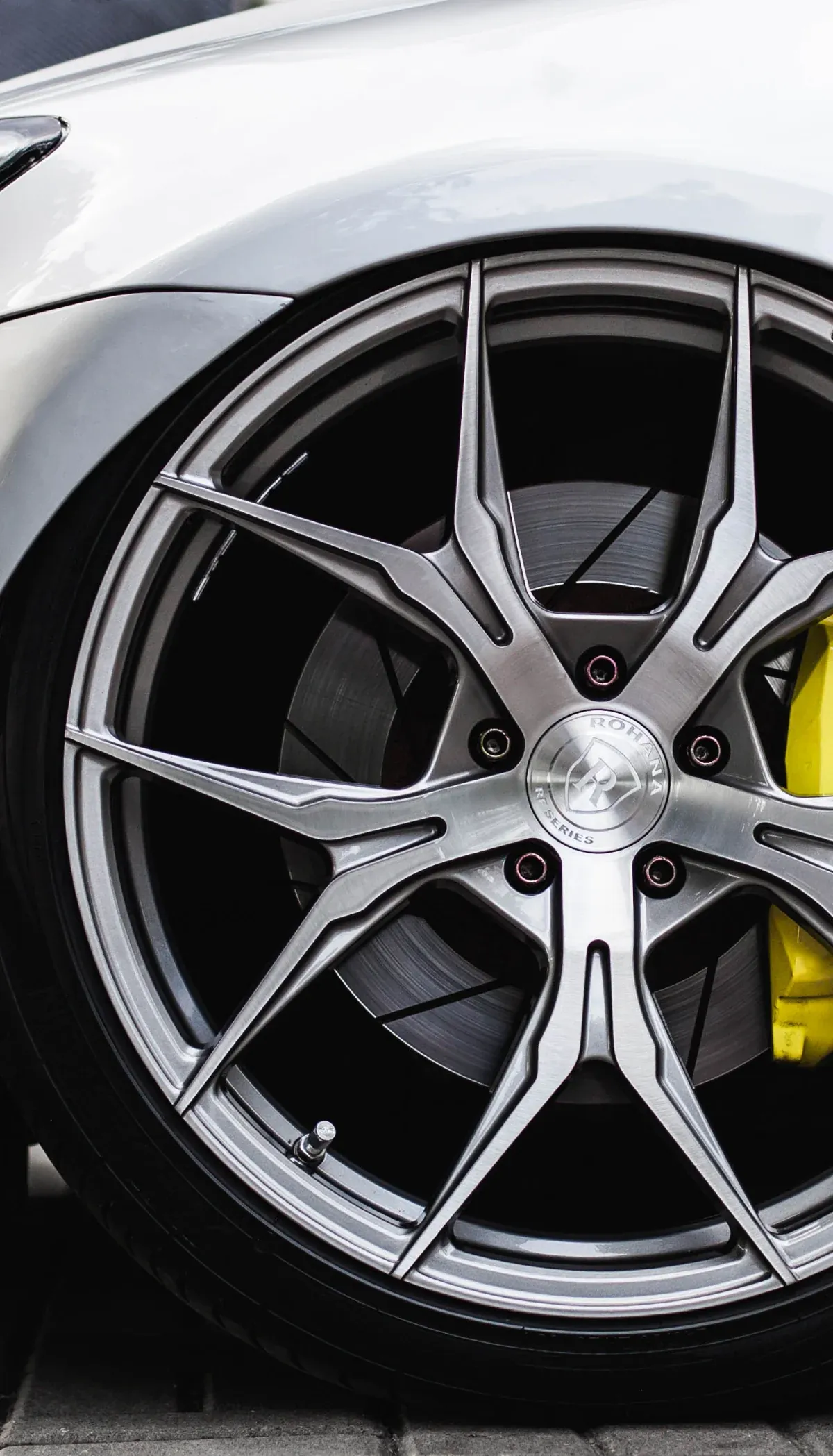
| Wheels and suspension | A356-T6 cast; 6061 / 6082-T6 forged | Strength, fatigue resistance and low unsprung mass |
| Electrical: busbars, cable, cell cases | 1xxx and 6101 bus; 1xxx / 8xxx conductors; 3003 cell cans; 1xxx foil | Conductivity, formability and weight |
6xxx body sheet is delivered in a stabilised T4 condition, soft enough for deep stamping and hemming. During the paint-bake cycle, typically around 170 – 185 °C for about 20 minutes, Mg-Si precipitates form and yield strength rises substantially, which improves dent resistance in the finished panel. Specify the bake response, not just the as-delivered strength, and confirm shelf-life limits because natural ageing slowly reduces formability.
5xxx alloys such as 5182 and 5754 do not heat-treat and keep their strength through painting, but they can show stretcher-strain (Lüders) marks after forming, so they are used for inner panels and structures rather than visible outer skins. Surface texture (mill finish or EDT), pretreatment and pre-lubrication should all be stated in the order, along with the governing material standard such as EN 485 or VDA 239-200.
Automotive parts are released through a formal qualification process rather than by grade alone. A general recommendation such as "use 6082" does not qualify a component.
Automotive production suppliers usually work to IATF 16949, with production part approval (PPAP) packages that freeze material, process and inspection.
EN 573 and EN 485 / EN 755 for composition and properties; OEM material standards and VDA 239-200 for body sheet.
Tensile and bake response, formability (e.g. bending, hemming), crash tests on profiles, corrosion tests (e.g. filiform, intergranular) and joint tests.
Cast, coil or extrusion lot numbers tracked through to the part, with certificates for every delivery.
Modern bodies mix aluminium with steel, magnesium and carbon-fibre composite. Where aluminium touches steel or carbon fibre in the presence of electrolyte, galvanic corrosion attacks the aluminium. Designers isolate joints with adhesives and sealers, use coated fasteners, and rely on e-coat coverage. Copper-containing 6xxx alloys can be more susceptible to intergranular and filiform corrosion; check corrosion test results for the actual alloy and paint system.
6xxx sheet forms well in T4 and gains strength in the paint-bake oven, giving dent resistance, and it does not show stretcher-strain marks. 5xxx alloys are used for inner panels where appearance is less critical.
Typically 6xxx extrusions (6063, 6061, 6082 or 6005A) for frames and crash rails, combined with 5754 or 6xxx sheet or cast parts for floors and covers, joined by friction stir welding, MIG and adhesives.
The increase in yield strength that 6xxx body sheet gains during the paint curing cycle, typically around 170 – 185 °C for about 20 minutes. It is a specified property for outer-panel sheet.
Yes, mainly as extruded bumper beams and some reinforcements (for example 7003 and 7108), and increasingly as high-strength sheet for safety-cage parts formed by hot or warm stamping.
No. The certificate proves the material meets its specification; component qualification (PPAP or OEM release) proves the part, process and joints meet the vehicle requirements.
Send the component, alloy and temper, specification and annual volumes. We will confirm options and documentation.





