Forming in T4
Stretch forming, deep drawing and roll forming are done in T4. Form within the natural ageing window recommended by the specification, as T4 slowly hardens at room temperature.



6013 is a heat-treatable aluminium-magnesium-silicon-copper alloy developed as a stronger 6xxx sheet for aircraft. It is formed in the soft T4 temper and aged to T6, reaching strength well above 6061-T6 with good corrosion resistance and no cladding. Metline supplies 6013 sheet and plate in T4, T6 and T651 to AMS 4216, AMS 4347 and ASTM B209, cut to size, to buyers worldwide.
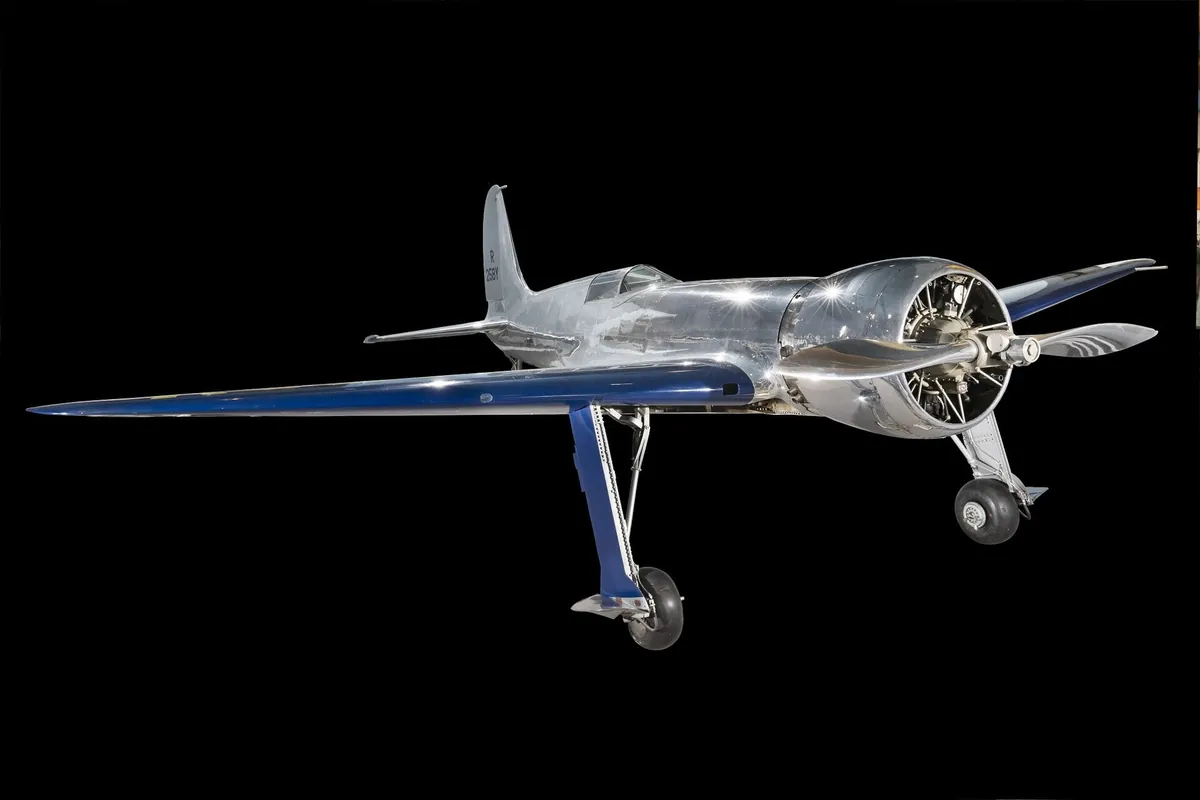
For decades, aircraft fuselage skins have used clad 2024-T3: strong and damage-tolerant, but it needs a pure aluminium cladding layer for corrosion protection and cannot be fusion welded. 6013 was developed in the 1980s as a 6xxx alternative that is lighter to process, corrosion resistant without cladding and easier to form.
Its chemistry adds more copper (0.6 – 1.1 %) and manganese to the familiar magnesium-silicon system of 6061. That gives a T6 strength about 12 – 15 % above 6061-T6, good fatigue resistance and a much better response to forming in T4. Parts can be stretch formed, drawn or roll formed while soft and then aged to full strength at around 190 °C, with no separate solution treatment.
Typical aerospace uses are fuselage and nacelle skins in suitable zones, engine cowlings, leading- and trailing-edge panels, fairings, floor and interior structure, and formed stiffeners. It is also widely used in automotive body panels and electronics housings where a strong, anodisable 6xxx sheet is needed.
| Element | Minimum | Maximum | Role in the alloy |
|---|---|---|---|
| Silicon (Si) | 0.6 | 1.0 | Forms Mg2Si and Si-rich strengthening phases |
| Iron (Fe) | — | 0.50 | Impurity |
| Copper (Cu) | 0.6 | 1.1 | Raises strength and ageing response |
| Manganese (Mn) | 0.20 | 0.8 | Grain control, toughness |
| Magnesium (Mg) | 0.8 | 1.2 | Main strengthening element with Si |
| Chromium (Cr) | — | 0.10 | Residual |
| Zinc (Zn) | — | 0.25 | Impurity |
| Titanium (Ti) | — | 0.10 | Grain refiner |
| Others, each / total | — | 0.05 / 0.15 | |
| Aluminium (Al) | Remainder | — |
Registered Aluminum Association limits. Some data sheets show only 0.1 – 0.3 % copper for 6013; that is incorrect and closer to 6061.
| Temper | Tensile strength | Yield strength | Elongation | Basis |
|---|---|---|---|---|
| T4 | About 280 – 320 MPa | About 160 – 200 MPa | About 20 %+ | Typical, as delivered for forming |
| T6, specified minimum | 359 MPa (52 ksi) | 317 MPa (46 ksi) | 8 % | AMS sheet minimums for common gauges |
| T6, typical | About 390 – 410 MPa | About 350 – 370 MPa | About 9 – 10 % | Typical values |
Minimums depend on thickness and specification revision; the certificate states the tested values. Design to the specified minimums.
| System | Designation / standard | Notes |
|---|---|---|
| SAE AMS | AMS 4216 | 6013-T6 sheet, solution heat treated and artificially aged |
| SAE AMS | AMS 4347 | 6013 sheet (confirm temper and revision on your drawing) |
| ASTM | ASTM B209 | General sheet and plate |
| UNS / ISO | A96013 / AlMg1Si0.8CuMn | — |
Weight is 2.71 kg per m² per millimetre: a 1220 × 2440 × 1.6 mm sheet weighs about 12.9 kg.
Stretch forming, deep drawing and roll forming are done in T4. Form within the natural ageing window recommended by the specification, as T4 slowly hardens at room temperature.
Artificial ageing around 190 °C for several hours converts formed T4 parts to T6. Follow the time and temperature in the governing AMS or process specification.
Riveted and bonded in most aerospace structures. Fusion and laser welding are possible with 4xxx fillers, with strength reduction in the heat-affected zone.
Anodises well with chromic, sulphuric or boric-sulphuric processes and accepts aerospace primers and topcoats.
| Property | 6061-T6 | 6013-T6 | 2024-T3 (clad) |
|---|---|---|---|
| Typical tensile strength | 310 MPa | About 400 MPa | About 440 MPa |
| Typical yield strength | 276 MPa | About 360 MPa | About 300 MPa |
| Needs cladding for corrosion | No | No | Yes |
| Fusion weldable | Yes | Yes | No |
| Damage tolerance | Moderate | Good | Very good |
6013 does not replace 2024-T3 everywhere: in highly fatigue- and crack-growth-critical zones, 2xxx sheet is still preferred. It is chosen where its formability, corrosion resistance and weldability simplify manufacture.
Formed skins and panels such as cowlings, fairings, leading- and trailing-edge panels, some fuselage zones, floor structure and stiffeners, where good strength, formability and corrosion resistance are needed.
Yes. In T6, 6013 is roughly 12 – 15 % stronger than 6061-T6, mainly because of its higher copper and silicon content.
T4 is soft and ductile, so parts form without cracking. Ageing after forming brings them to T6 strength without a further solution treatment that could distort the part.
No. Its corrosion resistance is good enough that it is normally used bare and protected by anodising and paint.
AMS 4216 covers 6013-T6 sheet. AMS 4347 also covers 6013 sheet; check the temper and revision called on your drawing.
Send the temper, thickness, size, quantity and specification. We will reply with availability, certification and a delivered price.





