CNC machining
T6 machines cleanly with short chips, suitable for unibody shells milled from plate or thick sheet.



6013 is a copper-bearing Al-Mg-Si alloy that reaches roughly 25 – 30 % more yield strength than 6061 in the T6 temper while still forming well in T4 and anodising to a cosmetic finish. For computer, communication and consumer-electronics (3C) housings, that means thinner, more dent-resistant shells without moving to the harder-to-finish 7xxx alloys. This guide covers its chemistry, properties, finishing behaviour and what to specify.
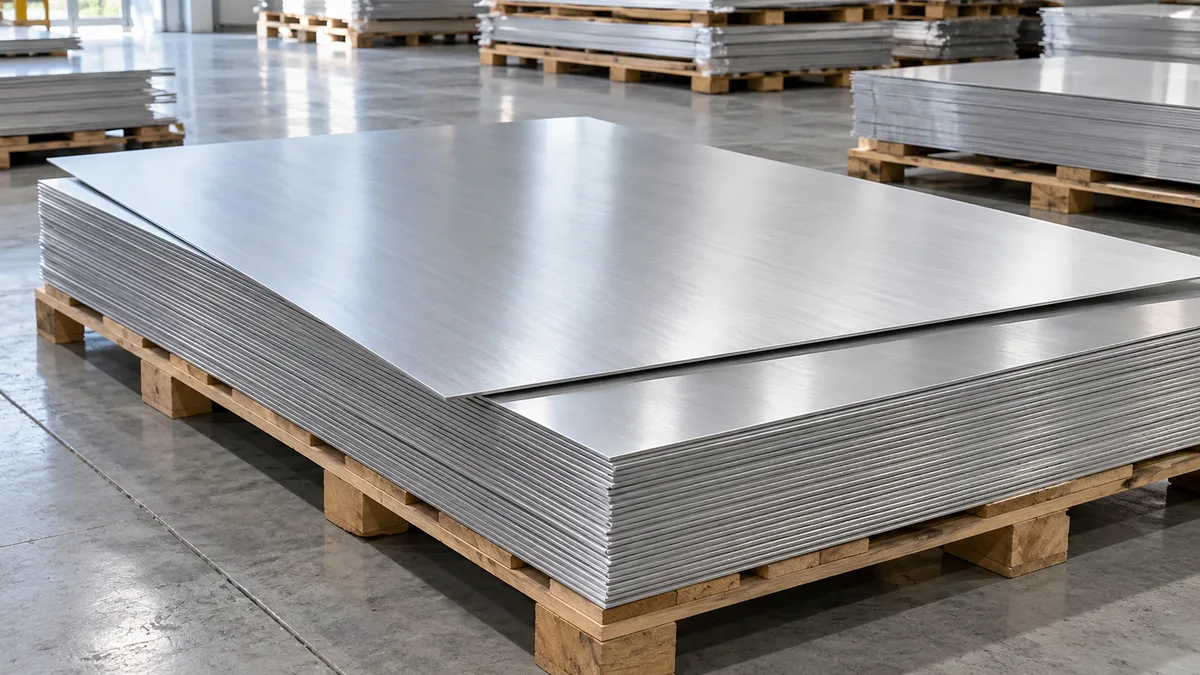
6013 was developed as a stronger alternative to 6061 for aerospace sheet, where it found use in fuselage skins. Compared with 6061 it has more silicon, more copper and a manganese addition, which together give a denser population of strengthening precipitates after ageing.
For electronics, the useful properties are a high yield strength in T6 (which resists dents and bending when a phone is dropped or a laptop is carried), good formability in T4 (so housings can be drawn or bent before ageing), and machinability good enough for CNC-milled unibody shells. It also anodises well enough for bead-blasted, coloured finishes, although its copper content gives a slightly warmer tone than lean alloys such as 6063.
The alternative choices frame where 6013 sits. 6061 and 6063 are cheaper and anodise slightly better but are weaker. 7xxx grades such as 7075 and 7021 are stronger still, but cost more and are harder to anodise evenly. 6013 is the middle route: a meaningful strength gain with nearly 6xxx finishing behaviour.
| Element | Limit | Effect |
|---|---|---|
| Silicon (Si) | 0.6 – 1.0 | With Mg forms strengthening precipitates; excess Si adds strength |
| Magnesium (Mg) | 0.8 – 1.2 | Main strengthening element |
| Copper (Cu) | 0.6 – 1.1 | Raises strength; slightly warms anodised colour |
| Manganese (Mn) | 0.20 – 0.8 | Grain control and strength |
| Iron (Fe) | ≤ 0.50 | |
| Chromium (Cr) | ≤ 0.10 | |
| Zinc (Zn) | ≤ 0.25 | |
| Titanium (Ti) | ≤ 0.10 | |
| Others each / total | ≤ 0.05 / 0.15 | |
| Aluminium (Al) | Remainder |
Aluminum Association registered limits. Some suppliers' data sheets show lower copper figures that do not match the registration; check the certificate against these limits.
| Temper | Tensile strength | Yield strength | Elongation | Use |
|---|---|---|---|---|
| O | low | low | high | Maximum formability; must be solution treated after forming |
| T4 | moderate | roughly half of T6 | high | Forming and drawing, then artificial ageing to T6 |
| T6, minimum (aerospace sheet spec, thin gauges) | ≥ 359 MPa (52 ksi) | ≥ 317 MPa (46 ksi) | ≥ 8 % | Design value |
| T6, typical | about 380 – 400 MPa | about 340 – 350 MPa | about 9 – 10 % | Finished housings |
| 6061-T6, typical (reference) | 310 MPa | 276 MPa | 12 % | For comparison |
Minimums as published for 6013-T6 sheet to aerospace material specifications; typical values from published data. Agree acceptance values for your thickness on the order.
T6 machines cleanly with short chips, suitable for unibody shells milled from plate or thick sheet.
Gives the even matte texture used on many devices; consistent grain size in the sheet avoids blotchy patches.
Sulphuric anodising produces a hard, uniform film. Expect a slightly warmer clear finish than 6063; colour matching should be trialled on production material.
Bend and draw in T4, then age. Forming in T6 is possible only with generous radii.
Fine, uniform grain avoids orange peel and streaks after anodising; specify cosmetic grade for visible parts.
Tight flatness and thickness tolerance matter for thin back plates and lids.
Every lot ships with an EN 10204 3.1 certificate covering chemistry and mechanical properties. Coils are wound on cores to suit your slitting or stamping line.
Yes. In T6, 6013 typically has a yield strength of about 340 – 350 MPa against 276 MPa for 6061, roughly 25 % higher.
It anodises well and is used for cosmetic parts, but its copper gives a slightly warmer clear finish. Run colour trials on production sheet.
Buy T4 if housings are bent or drawn, then age to T6 after forming. Buy T6 for parts that are machined from flat sheet or plate.
7075 is stronger but more expensive and harder to anodise evenly. 6013 gives a strength gain over 6061 while keeping simpler finishing.
Yes, as coil or slit strip for stamping lines, as well as cut sheet.
Send temper, thickness, size and surface grade. Metline will reply with availability, certification and delivery terms.





