Gloss white
The most vivid colour and depth; the standard for photo panels and art prints.



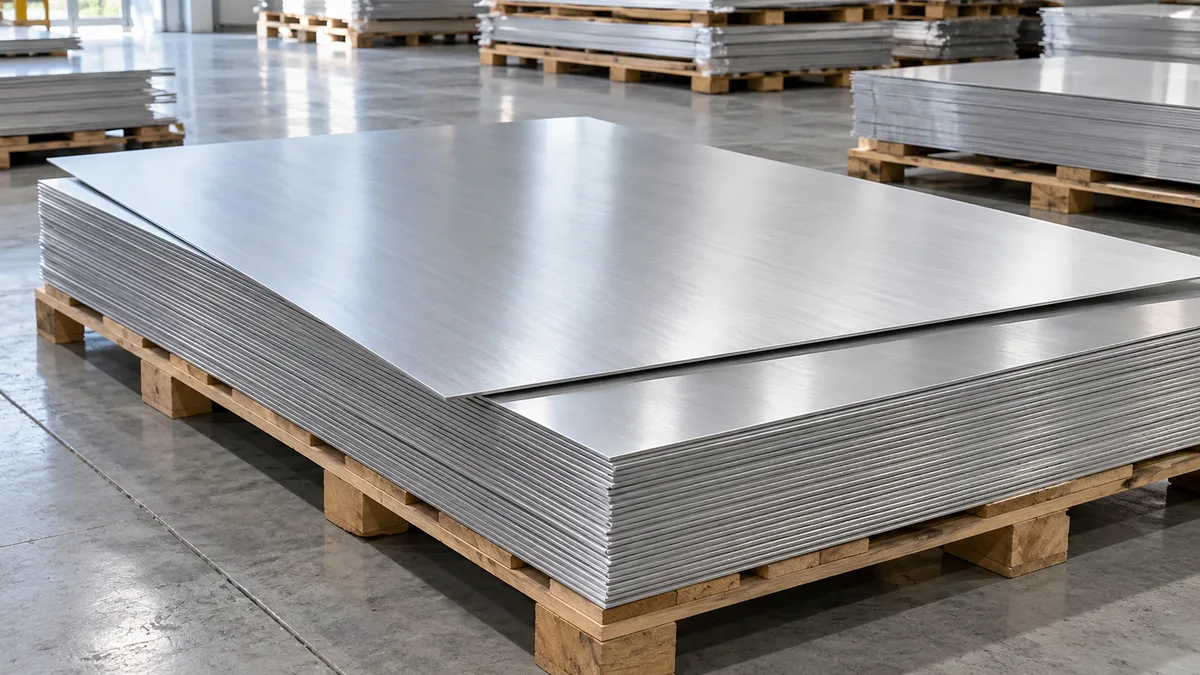
Sublimation aluminium sheet is aluminium coated with a special polyester layer that accepts dye-sublimation inks under heat and pressure, giving photo-quality, scratch-resistant prints. Plain aluminium cannot be sublimated; the coating is what makes it work. This guide explains the alloys, coatings, thicknesses and press settings, and how to fix common print faults. Metline supplies coated sublimation sheet and cut blanks to print shops and converters worldwide.
Sublimation inks are printed onto transfer paper with an ordinary inkjet head. In the heat press the dyes turn directly from solid to gas and diffuse into a polymer surface, where they become locked in as the panel cools. The image ends up inside the coating rather than sitting on top, which is why a sublimated panel is so durable.
Dyes only bond to polyester-type polymers. Bare aluminium, anodised aluminium and ordinary paint will not take the image. A sublimation blank is therefore an aluminium sheet with a cured polyester coating, usually applied on a coil-coating line for even thickness, then protected with a peelable film until printing.
Aluminium suits the process well: it is flat and dimensionally stable, it conducts heat quickly so the coating heats evenly, it does not rust outdoors, and it is light enough to hang large photo panels on a single cleat.
| Alloy | Character | Typical blank |
|---|---|---|
| 1100 / 1050 / 1060 | Soft, very flat, easy to cut and punch | Business cards, name badges, ornaments, thin plaques |
| 3003 | Stronger than 1100 with good formability | Signs, photo panels, nameplates, keychain stock |
| 5052 | Highest strength and best outdoor corrosion resistance | Outdoor signage, large wall panels, licence-plate stock |
| Thickness | Common use | Approx. weight |
|---|---|---|
| 0.20 – 0.30 mm (0.008 – 0.012 in) | Business cards, labels, photo magnets | 0.6 – 0.8 kg/m² |
| 0.45 – 0.65 mm (0.018 – 0.025 in) | Badges, small signs, wall art with a backing | 1.2 – 1.8 kg/m² |
| 1.0 – 1.15 mm (0.040 – 0.045 in) | Photo panels and wall art, mid-size signs | 2.7 – 3.1 kg/m² |
| 1.5 – 2.0 mm (0.063 – 0.080 in) | Rigid signs, outdoor and large-format panels | 4.1 – 5.4 kg/m² |
Weights calculated from a density of about 2.71 g/cm³; the coating adds very little. Common blank sizes include 200 × 300, 300 × 400, 305 × 610 (12 × 24 in), 400 × 600 and 610 × 914 mm (24 × 36 in), with full sheets up to about 1220 × 2440 mm for cutting.
The most vivid colour and depth; the standard for photo panels and art prints.
Reduces glare and reflections; preferred for signs read under bright light and for text-heavy work.
The metal shows through unprinted areas, giving a metallic look for awards and nameplates. White areas must be printed as a colour, since the press cannot create white.
Bright reflective base for decorative effects; shows fingerprints easily.
Tinted coatings for awards, giftware and decorative panels.
Printed or embossed patterns used for interior decoration and signage.
For outdoor use, ask for a coating rated for exterior UV exposure. Most sublimation dyes fade faster in direct sunlight than inkjet pigments; a UV-stabilised coating and, for long exposure, a protective clear laminate extend colour life considerably.
Always follow the coating supplier's settings: dwell times and temperatures vary between coatings and press types, and a short test on an offcut is the quickest way to confirm them.
| Fault | Likely cause | Fix |
|---|---|---|
| Dull or weak colours | Too little heat, time or pressure; wrong colour profile | Raise temperature or dwell slightly, check press calibration, use the correct ICC profile |
| Blurred or ghosted image | Paper moved when the press opened or closed | Tape all edges, lift the press cleanly, remove paper in one movement |
| Yellowed whites | Overheating or too long a dwell | Reduce temperature or time; check thermostat accuracy |
| Spots or specks | Dust or fibres under the paper, moisture in the paper | Clean the blank, store paper dry, pre-press the protective sheet |
| Uneven density | Uneven platen pressure or a cold zone | Use a pressure pad, check the platen with a temperature probe |
| Panel bowed after pressing | Cooled unevenly or handled while hot | Cool flat under light weight; use thicker blanks for large panels |
Metline supplies the coated aluminium sheet and cut blanks; finished printed products such as tags, magnets or tumblers are made by printers and converters.
Common mistakes include using uncoated or anodised aluminium, choosing too thin a sheet for large panels (it flexes and bows), and ordering a clear-coat metallic blank for artwork that needs bright whites.
No. Sublimation dyes only bond to polyester-type coatings. Plain, anodised or painted aluminium will not hold the image; you need sheet with a sublimation coating.
A common starting point is about 200 °C (400 °F) for 60 – 90 seconds at medium pressure. Thin blanks need less time; thick panels and some coatings need more. Always test with the coating supplier's settings.
Around 1.0 – 1.15 mm (0.040 – 0.045 in) is typical for wall photo panels; it stays flat and rigid. Use 0.2 – 0.3 mm for cards and 1.5 mm or more for large or outdoor signs.
Yes, with an exterior-rated coating, but dye colours fade faster in direct sun than indoors. For long outdoor life use a UV-stable coating and consider a clear protective laminate.
Clear-coated metallic blanks have no white layer, and sublimation cannot print white. Unprinted areas show the metal. Use a white-coated blank if the design needs white.
Yes. Sheets can be guillotined, punched or CNC-cut, with square or rounded corners and drilled holes, before printing.
Send alloy, thickness, finish, size and quantity. We will reply with availability and a delivered price.





