Forming
Formability is lower than for conventional sheet. Warm forming and generous bend radii are normal; trial parts are recommended.



8009 is a rapidly solidified, powder-metallurgy aluminium alloy with about 8.6 % iron, 1.8 % silicon and 1.3 % vanadium. Unlike conventional aerospace grades it is not strengthened by ageing, so it keeps useful strength at 250 – 315 °C where 2xxx and 7xxx alloys soften. Metline sources 8009-H112 sheet to AMS 4308, and thicker plate on enquiry, for aerospace and defence customers worldwide.
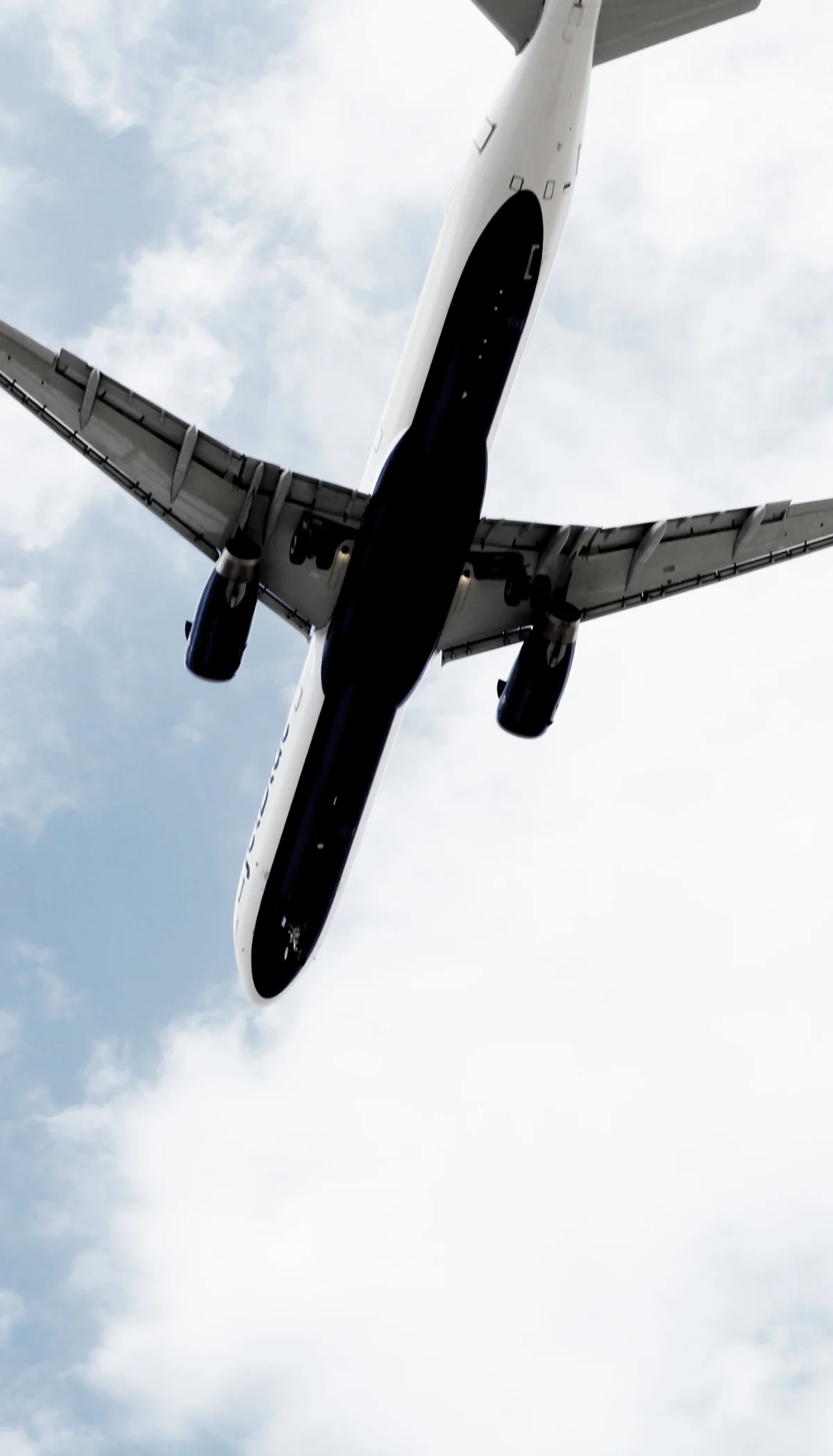
Most high-strength aluminium alloys rely on precipitates formed during ageing at 120 – 190 °C. Expose them to higher temperatures in service and those precipitates coarsen, so strength falls away. 8009 avoids this problem by using thermally stable iron-vanadium-silicon dispersoids that barely change below about 400 °C.
Those dispersoids can only be made fine enough by solidifying the metal extremely quickly. That is why 8009 is a powder-metallurgy product rather than a cast-and-rolled one. The alloy was developed for aero-engine and airframe parts that run hot, such as compressor-section components, nacelle structures, missile fins and skins near exhausts, where titanium was the only alternative.
An earlier version of this page gave a 7075-type chemistry (5 – 6 % zinc) and described 8009 as weldable and age-hardened. Both statements were wrong for the real alloy and have been corrected here.
The SAE specifications name the alloy by its nominal composition, 8.6Fe – 1.8Si – 1.3V. The limits below are approximate; certified values are given on the mill certificate for each lot.
| Element | Nominal (AMS 4308 / 4309 title) | Approximate range | Role |
|---|---|---|---|
| Iron (Fe) | 8.6 | About 8.4 – 8.9 | Forms the Al12(Fe,V)3Si dispersoids that carry strength at temperature |
| Silicon (Si) | 1.8 | About 1.7 – 1.9 | Stabilises the cubic silicide phase |
| Vanadium (V) | 1.3 | About 1.1 – 1.5 | Slows coarsening of the dispersoids |
| Copper, magnesium, zinc | — | Low impurity levels | Not used for strengthening |
| Aluminium (Al) | Remainder | Remainder | About 88 % |
Because the route involves powder handling and consolidation, 8009 sheet comes from a small number of specialist producers and is made in campaigns. Sizes depend on billet dimensions; confirm thickness, width and length at the enquiry stage.
Published research on rapidly solidified and spray-formed 8009 reports room-temperature tensile strength of roughly 410 – 460 MPa and yield strength of roughly 345 – 410 MPa, with elongation around 8 – 12 %. Values depend strongly on the processing route and product form, so use the minimums in AMS 4308 for design.
| Property | 8009-H112 (indicative) | 2618-T61 (typical) | 7075-T6 (typical) |
|---|---|---|---|
| Tensile strength, room temperature | 410 – 460 MPa | 440 MPa | 570 MPa |
| Yield strength, room temperature | 345 – 410 MPa | 370 MPa | 505 MPa |
| Strength retention after long exposure at 250 – 315 °C | High | Moderate | Low |
| Strengthening mechanism | Dispersoids | Precipitation (aged) | Precipitation (aged) |
| Density | About 3.0 g/cm³ | 2.76 g/cm³ | 2.81 g/cm³ |
The high iron content makes 8009 denser than conventional aluminium, but its strength at temperature means specific strength above about 200 °C is still well ahead of 2xxx alloys. The iron-rich phases also raise the elastic modulus above that of ordinary aluminium alloys.
The 1.0 – 150 mm and 1250 × 2500 mm sizes quoted on an earlier version of this page are not typical for a powder-metallurgy product and should not be assumed.
Formability is lower than for conventional sheet. Warm forming and generous bend radii are normal; trial parts are recommended.
Fusion welding melts the rapidly solidified structure and coarsens the dispersoids, so weld zones lose much of their strength. Riveting, bolting, diffusion bonding and friction-stir welding are preferred.
Machines well with carbide tools; the hard intermetallic particles cause more tool wear than 6061.
Avoid processing above about 450 °C; temperatures above about 600 °C coarsen the dispersoids and permanently reduce strength.
Chemical conversion coatings and paint systems apply normally; anodising gives a darker film because of the iron content.
Ultrasonic inspection is advisable for thicker sections to confirm full consolidation.
An earlier version of this page suggested turbine discs and blades. Those run far above any aluminium alloy's capability and are made from titanium and nickel superalloys.
No. It is supplied in H112 and gets its strength from fine Fe-V-Si dispersoids formed during rapid solidification. Solution treatment and ageing do not apply.
It is designed for long-term use up to roughly 315 °C, well beyond the range where 2xxx and 7xxx alloys lose strength. Exposure above about 600 °C permanently degrades it.
Fusion welding is not recommended because it destroys the rapidly solidified structure. Use mechanical fastening, diffusion bonding or friction-stir welding.
SAE AMS 4308 covers sheet 0.25 – 6.35 mm thick in H112. AMS 4309 covers extrusions of the same alloy.
It contains about 8.6 % iron, which is much heavier than aluminium. Density is about 3.0 g/cm³, against 2.7 – 2.8 g/cm³ for conventional grades.
Yes, on enquiry. Because it is a specialist powder-metallurgy product, we confirm size, specification and availability with each quote.
Send your 8009 requirement, or describe the service temperature, and we will advise on 8009, 2618 or 2219.





