Cold heading
Head in O or H13/H15. Lubrication and die condition control surface quality and head cracking.



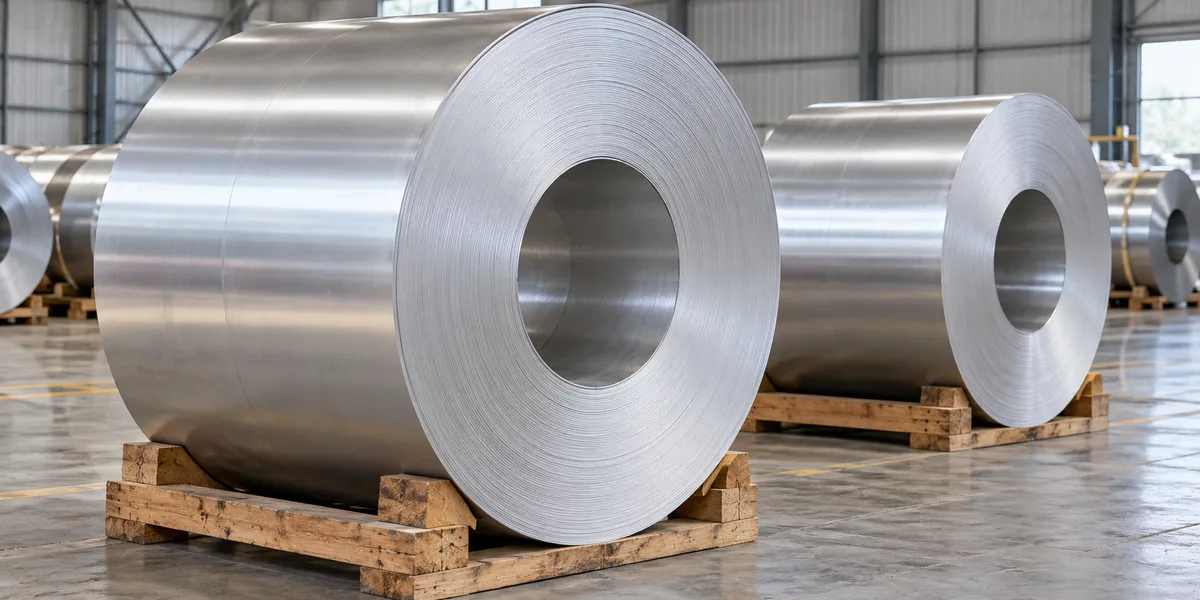
2117 is the standard alloy for "AD" solid aircraft rivets, the most widely used rivet in light and transport aircraft. Its low magnesium content lets rivets be driven in the T4 condition straight from stock, without refrigeration or re-heat-treatment, while still giving a reliable shear strength. Metline supplies 2117 rivet wire and rod in coils and lengths to QQ-A-430, ASTM B316 and EN specifications for fastener makers worldwide.
A solid rivet must be soft enough to upset into a tight head without cracking, yet strong enough in shear to carry the joint load. Higher-strength alloys such as 2017 and 2024 solve this by being driven immediately after quenching, or stored in a freezer to delay natural ageing. 2117 avoids that step.
With about 2.6 % copper and only 0.2 – 0.5 % magnesium, 2117 ages naturally to a moderate strength that still allows cold driving. Rivets are headed from wire, heat treated to T4 and used as received; the driving process adds a little further strength by cold work. This simplicity, together with good corrosion behaviour after anodising, is why 2117 AD rivets are the general-purpose aircraft rivet.
Rivet manufacturers buy 2117 as wire or rod in the annealed or lightly drawn condition, cold head it into rivet blanks, then solution treat and age the finished rivets. Wire quality, diameter tolerance and surface condition directly affect heading yield, so wire is supplied to tight tolerances and inspected for seams and laps.
Registered limits for 2117 (EN AW-2117, AlCu2.5Mg). The same composition applies to wire and rod under QQ-A-430 and ASTM B316.
| Element | Minimum | Maximum |
|---|---|---|
| Silicon (Si) | — | 0.8 |
| Iron (Fe) | — | 0.7 |
| Copper (Cu) | 2.2 | 3.0 |
| Manganese (Mn) | — | 0.20 |
| Magnesium (Mg) | 0.20 | 0.50 |
| Chromium (Cr) | — | 0.10 |
| Zinc (Zn) | — | 0.25 |
| Others, each / total | — | 0.05 / 0.15 |
| Aluminium (Al) | Remainder |
| Condition | Tensile strength | Yield strength | Shear strength | Comment |
|---|---|---|---|---|
| O (annealed wire) | Low; for heading | — | — | Maximum formability |
| H13 / H15 (drawn wire) | Slightly above O | — | — | Lightly cold drawn for straightness and handling |
| T4, typical | 295 MPa (43 ksi) | 165 MPa (24 ksi) | 195 MPa (28 ksi) | Heat-treated rivet or wire |
| 2117-T4 rivet, specified shear | — | — | 179 MPa (26 ksi) min. | Procurement minimum in rivet specifications |
Typical T4 values from ASM and Aluminum Association data; the 26 ksi minimum shear is the procurement figure in 2117-T4 rivet specifications; joint allowables come from MMPDS or your design manual. Some published sheets quote a 2117 yield strength of 240 MPa or more; we have not found a standard supporting that value.
| Document | Scope |
|---|---|
| QQ-A-430 | Aluminium alloy rod and wire for rivets and cold heading (still widely called up) |
| ASTM B316 / B316M | Aluminium and aluminium-alloy rivet and cold-heading wire and rods |
| AMS 7222 | 2117-T4 rivets |
| NASM20470 / NASM20426 | Universal and countersunk head solid rivets (AD = 2117) |
| EN AW-2117 | European designation; EN 1301 for drawn wire |
| UNS | A92117 |
The "2117A" seen in some catalogues is not a separate registered alloy; orders are made and certified as 2117 to the specification named.
The upset test is the practical one for rivet makers: a sample is compressed to a set ratio and must show no cracks. Ask for it on the order if your heading process is demanding.
Head in O or H13/H15. Lubrication and die condition control surface quality and head cracking.
Solution treat and quench rivets, then allow natural ageing to T4. Follow AMS 2771/2772-type controls for aerospace parts.
Anodise (chromic or sulphuric) or apply a conversion coating; some programmes add a dye colour for identification.
AD rivets are driven as received, with no time limit, unlike D and DD rivets.
| Alloy (code) | Relative shear strength | Driving condition | Typical use |
|---|---|---|---|
| 1100 (A) | Lowest | As received | Non-structural |
| 2117-T4 (AD) | Moderate (26 ksi min.) | As received | General airframe riveting |
| 2017-T4 (D) | Higher | Freshly quenched or refrigerated | Higher-load joints |
| 2024-T4 (DD) | High | Freshly quenched or refrigerated | Highest-strength aluminium rivets |
| 5056 (B) | Moderate | As received | Magnesium structures |
| 7050-T73 (E) | Highest | As received | Replacement for DD rivets |
AD identifies a 2117-T4 rivet, marked with a small dimple on the head. It is driven as received, and rivet procurement specifications require a minimum shear strength of 26 ksi (179 MPa).
Their low magnesium content limits natural ageing, so they stay soft enough to drive indefinitely. 2017 and 2024 rivets harden within hours of quenching.
Rivet makers usually order O, H13 or H15 wire for heading, then heat treat the rivets to T4. T4 wire is ordered for parts that are not heat treated after forming.
No separate 2117A alloy is registered. Material is supplied and certified as 2117 (EN AW-2117).
Chemical analysis, tensile tests, diameter checks and, on request, shear and upset tests to confirm heading performance.
Send diameter, temper, coil size and specification. We will reply with tolerances, testing and delivery terms.





