


7050 Aluminium Wire Rod, Wire and Bar for Aerospace Fasteners
7050 is the aluminium alloy behind high-shear T73 aerospace rivets, and it is also machined from bar into pins, collars and special fasteners. Fastener makers buy it as wire rod or drawn wire for cold heading and as extruded bar for machined parts. This guide explains the tempers, the process route from wire to driven rivet, the key specifications and what to put on a purchase order.
- Alloy
- 7050 (Al-Zn-Cu-Mg-Zr)
- Rivet temper
- T73 (driven as received)
- Rivet shear
- 41 ksi / 283 MPa min
- Specs
- EN 3115 · AMS 4341 · ASTM B316
Why 7050 is used for aerospace fasteners
A solid rivet has to do two contradictory things: deform easily when it is driven, then carry a high shear load for the life of the aircraft. 7050-T73 resolves that conflict better than most aluminium alloys, with a minimum shear strength of about 41 ksi (283 MPa) and no need for refrigeration before driving.
For decades, the strongest common aluminium rivets were 2024-T4 "icebox" rivets. They are solution heat treated, then kept refrigerated because they age-harden at room temperature within hours and become too hard to drive. That creates a cold chain on the shop floor, scrapped rivets when it is broken, and inspection headaches. 7050 rivets are heat-treated to the over-aged T73 condition by the rivet manufacturer and are driven as received, so they can be stored and used like any other rivet.
The over-aged temper also gives 7050 rivets good resistance to stress-corrosion cracking, which matters because a driven rivet is permanently loaded and is often in contact with dissimilar materials and moisture. Low iron and silicon keep the alloy clean, which helps both heading quality and fatigue life of the joint.
Wire rod, drawn wire and bar compared
| Form | Typical delivery temper | Typical size range | Used for |
|---|---|---|---|
| Wire rod / rivet wire | O, H13 | About 1.6 – 10 mm for rivet wire; larger rod by agreement | Cold-headed solid rivets and fastener blanks |
| Fine drawn wire | O, H13 or as agreed | Small diameters made to order | Small rivets, pins, clips and wire forms |
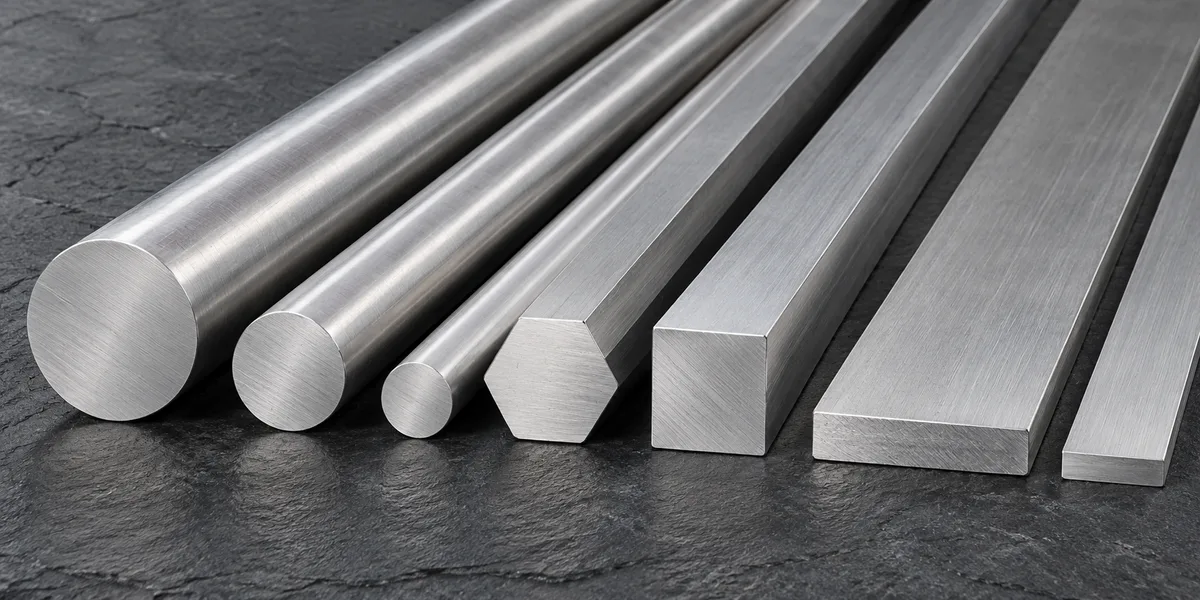
| Extruded round and hex bar | T73511, T74511, T76511 | Wide range of diameters and hex sizes by die | Machined pins, collars, bushings, special fasteners |
| Rolled or drawn bar | As specified | By agreement | Fastener blanks where drawn tolerances are needed |
The choice between headed and machined fasteners is usually made by quantity and geometry. Heading is efficient for large volumes of standard rivets and simple heads. Machining from bar suits low-volume, complex or large-diameter parts, where die costs cannot be justified or where the geometry cannot be headed.
7050 chemical composition (wt %)
| Element | Limit | Why it matters for fasteners |
|---|---|---|
| Zinc (Zn) | 5.7 – 6.7 | Main strengthening element |
| Copper (Cu) | 2.0 – 2.6 | Strength and stress-corrosion resistance in T7x tempers |
| Magnesium (Mg) | 1.9 – 2.6 | Forms the hardening precipitates with zinc |
| Zirconium (Zr) | 0.08 – 0.15 | Grain control; low quench sensitivity in larger diameters |
| Iron (Fe) | 0.15 max | Low Fe means fewer coarse particles that start cracks in heading |
| Silicon (Si) | 0.12 max | Low Si for toughness |
| Manganese (Mn) | 0.10 max | |
| Chromium (Cr) | 0.04 max | |
| Titanium (Ti) | 0.06 max | Grain refiner |
| Others each / total | 0.05 / 0.15 | |
| Aluminium | Remainder |
Aluminum Association registered limits, identical to EN AW-7050 (AlZn6CuMgZr) and UNS A97050.
From wire rod to driven rivet
- Wire supplyWire is delivered in O or H13 temper, level-wound in coils, with diameter held to a tight tolerance class to suit the heading dies.
- Cold headingThe rivet maker cuts slugs and forms the head on multi-station headers. Soft, clean wire with low inclusion content is essential to avoid head cracks.
- Heat treatmentRivets are solution heat-treated, quenched and over-aged to T73 under controlled furnace conditions.
- InspectionShear testing, hardness or conductivity checks and visual inspection confirm the temper and strength of each lot.
- DrivingThe finished T73 rivets are driven at room temperature as received, with no refrigeration or time limit.
Because the final properties are created by the rivet maker's heat treatment, the wire buyer must make sure the wire responds correctly. Specifications therefore require test samples from each wire lot to be heat-treated to T7x and tested, not just tested as delivered.
Mechanical properties: delivered and final temper
| Condition | What is checked | Reference level |
|---|---|---|
| O temper wire, as delivered | Maximum tensile strength (softness for heading) | Tensile normally no more than about 275 MPa |
| H13 wire, as delivered | Tensile within a defined band for consistent heading | Band set by the wire specification |
| Wire samples heat-treated to T7x | Tensile, yield and elongation after treatment | Minimums set by the governing specification |
| Finished T73 rivets | Double-shear strength | About 41 ksi (283 MPa) minimum |
| Extruded bar, T73511 (typical) | Tensile and yield | About 500 MPa tensile, about 435 – 440 MPa yield |
| Extruded bar, T76511 (typical) | Tensile and yield | About 550 MPa tensile, about 490 MPa yield |
Bar values are typical published figures, not guaranteed minimums. Acceptance values for wire and bar come from the specification on your order and are reported on the mill certificate.
Specifications for 7050 fastener material
| Document | Scope |
|---|---|
| EN 3115 | Aerospace series: 7050-T73 wire for solid rivets, diameters up to 10 mm |
| ASTM B316/B316M | Aluminium and aluminium-alloy rivet and cold-heading wire and rods |
| SAE AMS 4341 | 7050-T73511 extruded bars, rods, wire, profiles and tubing |
| SAE AMS 4340 | 7050-T76511 extrusions |
| ASTM B221 | Commercial extruded bars, rods and profiles |
| NAS / MS rivet standards | Finished rivet part standards that call up 7050-T73 material (for example NAS1097 "KE" part numbers) |
Airframe manufacturers also issue their own material specifications for 7050 fastener stock. If your drawing calls up one of these, send it with the enquiry, because some impose extra testing, process controls or approved-source requirements beyond the public standards.
Tolerances, surface and inspection
- Diameter tolerance: rivet wire is ordered to a tolerance class; precision classes are one-sided minus tolerances of a few hundredths of a millimetre so that slugs never jam in the die
- Ovality and straightness: controlled for feeding through straighteners and headers
- Surface: free of seams, laps, cracks, inclusions and corrosion; minor handling marks only if shallower than half the minus tolerance
- Heading test: samples upset to a specified height-to-diameter ratio without cracking
- Heat-treat response: samples treated to T7x and tested for tensile, shear and conductivity
- Bar inspection: ultrasonic testing for aerospace bar on request, plus dimensional and hardness checks
- Traceability: each coil or bundle tagged with alloy, temper, size and lot, linked to the certificate
7050 compared with other rivet alloys
| Rivet alloy and temper | Typical code | Min. shear strength | Driving condition |
|---|---|---|---|
| 1100-F | A | About 10 ksi | As received |
| 5056-H32 | B | About 28 ksi | As received |
| 2117-T4 | AD | About 30 ksi | As received |
| 2017-T4 | D | About 34 – 38 ksi | Usually as received in small sizes |
| 2024-T4 | DD | About 41 ksi | Refrigerated (icebox) after solution treatment |
| 7050-T73 | E | About 41 ksi | As received |
Head-marking codes and shear values as commonly given in aircraft maintenance references; confirm against the governing rivet standard.
The table shows why 7050 replaced icebox rivets in many new designs: it matches the shear strength of 2024-T4 without the refrigeration. Compared with 7075, 7050 has the qualified rivet specifications and better toughness; 7075 is more common for machined pins and collars. See our 7075 wire rod guide for that alloy.
What to include in your enquiry
- Product and sizeWire rod, wire or bar; diameter or hex size; tolerance class; coil weight or bar length.
- Temper and specificationFor example O-temper wire to EN 3115, or T73511 bar to AMS 4341.
- TestingHeading, heat-treat response, shear and ultrasonic requirements; any first-article inspection.
- TermsQuantity, destination and delivery terms (EXW, FOB, CIF or DAP).
- Documents and packingEN 10204 3.1 certificate with chemistry and test results; coils sealed in export cases, bars bundled with end protection.
References and standards
- EN 3115 – Aerospace series: aluminium alloy 7050-T73 wire for solid rivets
- SAE AMS 4341 – Aluminum Alloy Extrusions, 7050-T73511
- ASTM B316/B316M – Aluminum and Aluminum-Alloy Rivet and Cold-Heading Wire and Rods
- The Aluminum Association – International Alloy Designations and Chemical Composition Limits
- FAA AC 43.13-1B – Acceptable Methods, Techniques and Practices: Aircraft Inspection and Repair (rivet data)
7050 rivet wire and bar: frequently asked questions
What temper is 7050 rivet wire delivered in?
Usually O (annealed) or H13 (lightly drawn), which is soft enough for cold heading. The rivet maker heat-treats the finished rivets to T73.
Do 7050-T73 rivets need refrigeration like 2024 icebox rivets?
No. They are driven in the T73 condition as received and do not age-harden on the shelf, which is their main practical advantage over 2024-T4 rivets.
What is the shear strength of a 7050-T73 rivet?
About 41 ksi (283 MPa) minimum, which is in the same class as 2024-T4 icebox rivets and well above 2117-T4 rivets at about 30 ksi.
Can I machine fasteners from 7050 bar instead of heading them?
Yes. Extruded 7050 bar in T73511, T74511 or T76511 is used for machined pins, collars and special fasteners, especially for low volumes or complex shapes.
Is 7050 aluminum wire weldable?
No. 7050 is not suitable for fusion welding because it hot-cracks and loses strength. It is used for mechanical fasteners, which is exactly why it is made into rivets.
Which certificate do you supply?
An EN 10204 3.1 mill certificate with chemistry and the mechanical, heading or heat-treat-response results required by your specification, traceable to each coil or bundle.
Sourcing 7050 for a fastener programme?
Tell us the form, size, temper and specification. We will confirm testing, availability and a delivered price.





