


High-Precision Ultra-Flat Aluminium Plate
High-precision aluminium plate is rolled plate that has been stress-relieved and then milled or ground on both faces to a tight thickness tolerance and flatness, so it can go straight onto a machine table without facing. It saves machining time and scrap on fixtures, base plates, carriers, optical mounts and electronic equipment parts. This guide compares the main grades, explains what precision tolerances mean and how to specify them.
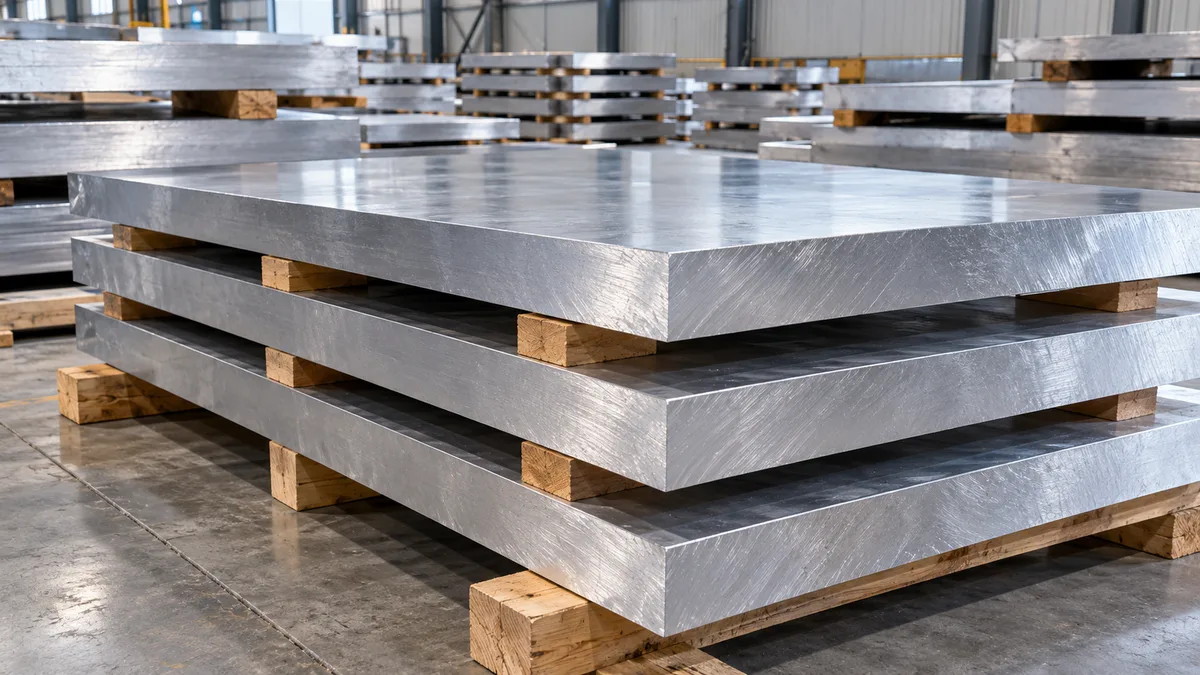
- Grades
- 5052 · 5083 · 6061-T651 · 7075-T651
- Faces
- Precision milled both sides
- Thickness
- About 3 – 40 mm typical
- Use
- Fixtures, carriers, base plates
What makes a plate "high precision"?
Standard rolled plate is supplied to the thickness and flatness tables of ASTM B209 or EN 485-3, which allow enough variation that most machined parts need both faces skimmed first. Precision plate removes that step: the plate is stress-relieved, then both faces are milled or ground to a defined thickness tolerance, flatness and surface roughness, and protected with film.
The result is a plate that can be clamped, drilled, pocketed and anodised directly. Because residual stress has been relieved before milling, the plate also stays flat as material is removed. For jigs, fixtures, test equipment and electronic carriers, the saving in machine time and the reduction in scrapped parts usually outweigh the higher price per kilogram.
5052 / 5083, 6061-T651 and 7075-T651 compared
| Grade | Strength level | Typical hardness | Strengths | Typical uses |
|---|---|---|---|---|
| 5052 / 5083 | Medium (non-heat-treatable) | Moderate | Very stable, excellent corrosion resistance, anodises for decorative and protective finish | Electronic and electrical fittings, medical and optical equipment, carriers, vacuum parts |
| 6061-T651 | Medium-high | About 95 HB | Best all-round balance of strength, machinability and anodising | Fixtures, machine base plates, automation parts, inspection plates |
| 7075-T651 | Very high | About 150 HB | Highest strength and stiffness to weight; excellent chip control | Moulds, high-load fixtures, aerospace tooling, wear-prone carriers |
The 5xxx plates are chosen when dimensional stability over time and corrosion resistance matter more than strength, for example in semiconductor and optical equipment. 6061-T651 is the general default. 7075-T651 is used where clamping forces or loads are high or where a part must be thin yet stiff; it machines to an excellent finish but is harder to weld and less corrosion resistant, so it is normally anodised.
Hardness figures are typical values from published data for the temper; the mill certificate gives tensile results for each lot.
Thickness, flatness and surface: what to expect
| Feature | Standard rolled plate | Precision-milled plate |
|---|---|---|
| Thickness tolerance | Per ASTM B209 / EN 485-3; widens with thickness | Commonly around ±0.05 mm, tighter on request |
| Flatness | Per standard tables, several mm per metre on thin plate | Often specified around 0.05 – 0.2 mm per metre, depending on thickness and grade |
| Surface | Mill finish, possible roll marks | Uniform milled or fine-ground finish, ready to anodise |
| Residual stress | Stretched (T651) or as rolled | Stress-relieved before finishing |
| Protection | Optional | PE film on both faces as standard practice |
Agree the exact thickness tolerance, flatness (and the length it is measured over) and surface roughness on the order. Flatness is usually checked on a granite table with feeler gauges or by dial indicator; thickness with micrometers at several points. Thinner plates are harder to hold flat, so the achievable flatness relaxes as thickness falls and as plate area grows.
Precision rolled plate or cast tooling plate?
Buyers looking for flat aluminium usually compare two products. Precision rolled plate (the subject of this page) starts as wrought, rolled plate, so it keeps the full strength of its temper: about 276 MPa typical yield for 6061-T651 and about 505 MPa for 7075-T651. Cast tooling plate is cast, stress-relieved and milled; it is extremely stable and free of directional grain, but its strength is lower and it does not anodise as uniformly for decorative work.
| Criterion | Precision rolled plate | Cast tooling plate |
|---|---|---|
| Strength | Full wrought-temper strength | Lower, typically below 6061-T651 |
| Stability during machining | Very good after stress relief | Excellent, no rolling texture |
| Anodising appearance | Uniform, good for visible parts | Functional; may show cast structure |
| Weldability | Good for 5xxx and 6061 | Possible but less common |
| Best for | Load-bearing fixtures, structural carriers, visible parts | Large flat bases, gauge plates, vacuum tables |
When machining precision plate, remove material symmetrically from both faces where possible, use sharp positive-rake carbide tools and moderate clamping forces, and allow thin parts to relax before final passes. These habits keep the flatness you paid for.
Where precision plate is used
- Jigs, fixtures and inspection plates where a flat datum is needed without facing
- Machine and automation base plates, linear-motion mounts and robot cells
- Electronic and electrical equipment parts, PCB carriers and test fixtures
- Medical, optical and laboratory instrument plates that need long-term stability
- Semiconductor and vacuum equipment components, usually in 5083 or 6061
- Moulds and high-load tooling in 7075-T651
How to specify and order
- Grade and temperFor example 6061-T651 or 5083; state the governing standard if your drawing names one.
- DimensionsThickness, width and length, or cut-to-size blanks with saw-cut tolerance.
- Precision requirementsThickness tolerance, flatness (and over what length), surface roughness and whether one or both faces are finished.
- Protection and packingFilm on both faces, interleaving and flat wooden cases to stop bending in transit.
- Documents and deliveryEN 10204 3.1 certificate; shipment worldwide on EXW, FOB, CIF or DAP terms.
References and standards
- ASTM B209 – Standard Specification for Aluminum and Aluminum-Alloy Sheet and Plate
- EN 485-3 – Tolerances on dimensions and form for hot-rolled products
- EN 485-2 – Mechanical properties of sheet, strip and plate
- ASM International – Properties of Wrought Aluminum and Aluminum Alloys
High-precision aluminium plate: frequently asked questions
What is the difference between precision plate and normal T651 plate?
T651 plate is stretched to relieve stress but supplied to standard rolling tolerances. Precision plate is additionally milled or ground on both faces to a tight thickness tolerance and flatness, so it can be machined without facing.
Which grade should I choose for fixtures?
6061-T651 is the usual choice for its balance of strength, machinability and anodising. Choose 5083 for maximum stability and corrosion resistance, and 7075-T651 when the fixture must carry high loads or be very stiff.
Can precision plate be anodised directly?
Yes. The milled surface is uniform and clean, so it anodises evenly. Remove the protective film and degrease before treatment.
How flat is ultra-flat aluminium plate?
Flatness is agreed per order; precision plates are commonly specified at around 0.05 to 0.2 mm per metre depending on thickness and grade, compared with several millimetres per metre allowed for standard thin plate.
Can you cut precision plate to size?
Yes. Metline supplies full plates or saw-cut blanks to your dimensions, film-protected and packed flat, with mill certificates, to customers worldwide.
Need ultra-flat plate for machining?
Send grade, thickness, size and tolerance. We will reply with availability, certification and a delivered price.





