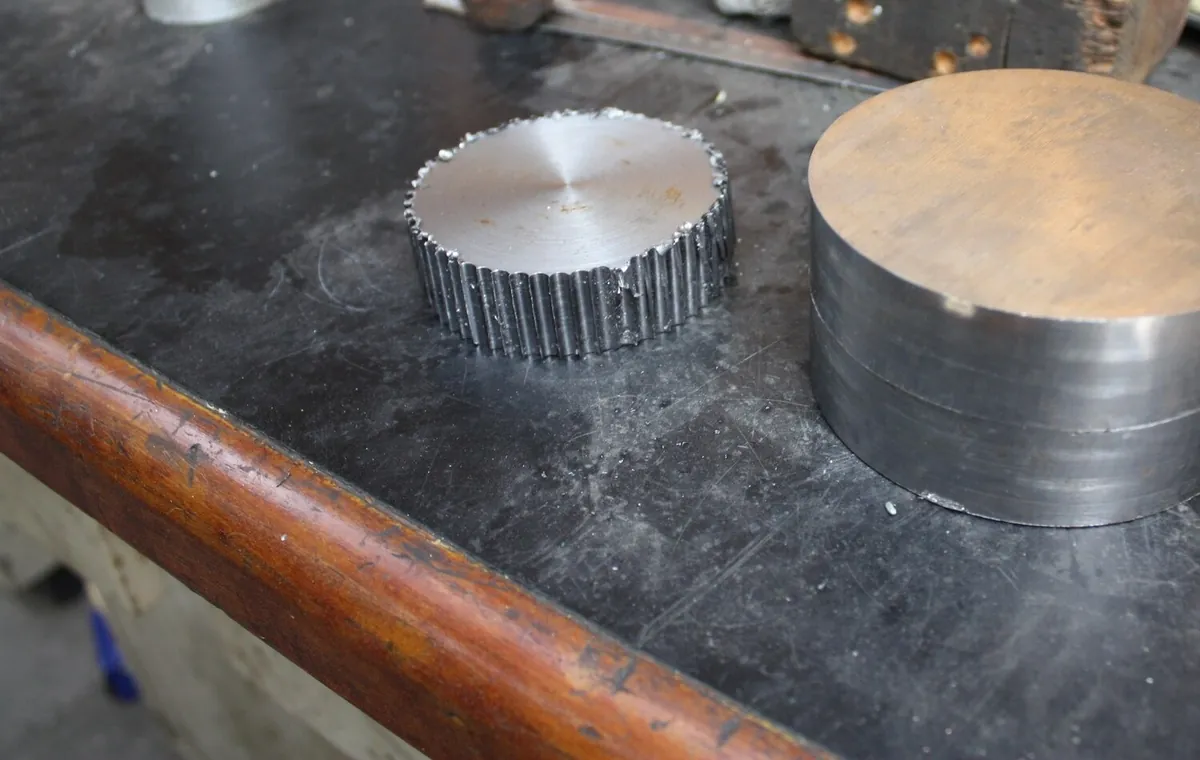
Aluminium Tooling & Jig Plate and Block: How to Choose
Tooling and jig plate is aluminium plate or block bought for flatness and dimensional stability first, and strength second. The right choice depends on whether your part is a thin, flat fixture base (cast, precision-milled plate), a stressed or welded tooling structure (rolled 5083 or 6061-T651), or a deep-machined mould or block (thick 6061, 7075 or forged block). This guide explains each route, the numbers that matter and how to order.
A jig holds and guides a cutting tool; a fixture locates and clamps a workpiece. Both, along with inspection plates, vacuum tables, machine bases and mould plates, depend on one property more than any other: the plate must be flat when it arrives and stay flat after you machine it.
Ordinary rolled plate is quenched from a high temperature during heat treatment. The quench leaves the surface in compression and the core in tension. When a machinist removes metal from one face, that balance is disturbed and the plate bows. Tooling plate products tackle the problem in two ways. Cast tooling plate is produced from a slab that is never quenched, so internal stress is very low from the start; it is then stress-relieved and milled flat on both faces. Rolled tooling plate, such as 6061-T651 or 7075-T651, is stretched by a controlled 1.5 – 3 % after quenching so that most residual stress is removed mechanically.
The term "jig plate" in the market almost always refers to the cast, precision-milled product, often bought by the sheet in imperial thicknesses from 1/4 in to 4 in. "Tooling block" usually means thicker material, from about 50 mm upward, used for mould bases, deep cavities and large machined parts, and sawn from very thick plate or from a forging.
Product routes
Cast, rolled, mould-grade and forged tooling stock
Cast precision plate
Continuously or DC-cast slab, thermally stress-relieved and milled on both faces, then film-protected. Very stable and flat, typically supplied 6 – 100 mm (1/4 – 4 in). Lower strength and elongation than wrought plate. Proprietary versions are sold under brand names such as MIC-6®, ATP-5® and Alca 5®; buyers often ask for a generic equivalent.
Rolled 5083 tooling plate
Non-heat-treatable, so there is no quench stress. Machines and welds well, has good corrosion resistance and is often supplied in a cast-and-milled or H111 condition for fixtures, welded jigs and vacuum tables.
Rolled 6061-T651 / 6082-T651
Stretched heat-treated plate. Roughly twice the strength of cast plate, good machinability and an excellent anodising response. The usual choice for loaded fixtures, machine frames and plates that must be tapped and bolted repeatedly.
7075-T651 and mould plate
High-strength plate for injection-mould cavities, blow moulds and parts that need a hard, wear-resistant surface. Thick plate is widely used for prototype and short-run moulds because it machines very fast.
Tooling block
Thick sections, typically 50 – 600 mm, sawn from plate or forging. Ordered for mould bases, deep-pocket parts and large monolithic components. Specify stress-relieved material and check the certificate for through-thickness properties.
Forged block
Open-die forged 6061, 7075 or 2024 block, used when a thick part needs finer grain and better properties in the short-transverse direction than plate can offer. See our forged block page.
Data
Typical properties: cast tooling plate vs rolled plate
Values below are typical, not guaranteed minimums. For cast tooling plate, producers publish only typical data, and the figures differ slightly between brands and alloys, so always design to the certificate or producer datasheet for the exact product you buy. Wrought-plate figures are standard Aluminum Association typical values.
Property
Cast precision plate (typical range)
5083-H111
6061-T651
7075-T651
Tensile strength
about 165 – 220 MPa (24 – 32 ksi)
290 MPa
310 MPa
570 MPa
Yield strength (0.2 %)
about 105 – 140 MPa (15 – 20 ksi)
145 MPa
276 MPa
505 MPa
Elongation
about 3 %
22 %+
12 %
11 %
Brinell hardness
about 65 – 70 HB
75 HB
95 HB
150 HB
Residual stress
Very low (no quench)
Very low (no quench)
Low (stretched)
Low (stretched)
Weldability
Fair to good, depends on alloy
Excellent
Good
Poor
Anodising response
Functional; colour may be uneven
Fair
Excellent
Good
Cast tooling plate figures summarise published producer datasheets for commercial cast plate; check the specific product data before design.
The practical message is simple. Cast plate trades strength for stability: use it where the part is located, clamped and measured, not where it carries high loads. When a fixture is bolted to a machine table and loaded by cutting forces, or when holes are tapped and threads reused hundreds of times, the extra strength and hardness of 6061-T651 or 7075-T651 make a difference.
Accuracy
Flatness, thickness tolerance and surface finish
Cast precision plate is milled on both faces, which gives a tight thickness tolerance (commonly about ±0.13 mm / ±0.005 in), close flatness and a fine machined finish in the region of Ra 0.5 – 0.8 µm (20 – 32 µin). Rolled plate is supplied to the standard mill tolerances of ASTM B209 or EN 485, which are much wider; if you need rolled plate to tooling-plate accuracy, order it precision-milled or fly-cut.
Characteristic
Cast precision plate
Rolled plate as supplied
Rolled plate, precision milled
Thickness tolerance
Tight (milled)
Mill tolerance per ASTM B209 / EN 485-3
Tight, to order
Flatness
Close; held after machining
Mill flatness; T651 holds shape when machined
Close, to order
Surface
Fine milled finish both sides
Mill finish, may show handling marks
Fine milled finish
Protection
PVC or paper film both faces
Interleaving or film on request
PVC film
Typical thickness
6 – 100 mm (1/4 – 4 in)
6 – 250 mm and above
To suit
When writing a purchase order, state flatness as a value over a length (for example 0.1 mm per 1000 mm), state parallelism if two faces must agree, and say whether the tolerance applies before or after you machine the part. Be careful when comparing quotes: one supplier may quote flatness per foot, another per metre, another over the full plate.
Supply range
Common jig plate thicknesses and weights
Typical supply range
Cast plate thickness
6 – 100 mm; imperial 1/4 – 4 in
Rolled tooling plate
6 – 250 mm; thicker on request
Block
Sawn from plate or forging, typically 50 – 600 mm thick
Plate size
Full sheets such as 1250 × 2500 mm or 48 × 144 in, wider sizes on request
Processing
Saw cut to size, precision milling, drilling and pocketing to drawing
Weight is calculated from density. Most rolled plate is about 2.70 g/cm³; cast tooling plates are slightly heavier at roughly 2.7 – 2.8 g/cm³ because of their alloy content. The table uses 2.70 g/cm³ for comparison; check the producer density for exact cast-plate weights.
Thickness
mm
kg per m²
kg, 1250 × 2500 mm
lb per ft²
1/4"
6.35
17.1
53.6
3.51
3/8"
9.52
25.7
80.4
5.27
1/2"
12.70
34.3
107.2
7.02
5/8"
15.88
42.9
133.9
8.78
3/4"
19.05
51.4
160.7
10.53
1"
25.40
68.6
214.3
14.05
1-1/4"
31.75
85.7
267.9
17.56
1-1/2"
38.10
102.9
321.5
21.07
2"
50.80
137.2
428.6
28.09
2-1/2"
63.50
171.5
535.8
35.11
3"
76.20
205.7
642.9
42.14
4"
101.60
274.3
857.2
56.18
Selection
Which tooling plate for which job?
Application
Usual choice
Why
CNC fixture plates, sub-plates, drill jigs
Cast precision plate
Stays flat when pockets are cut; no need to skim before use
Inspection and CMM base plates
Cast precision plate
Stability over time matters more than strength
Vacuum tables and router plates
Cast plate or 5083
Flat, easy to drill hundreds of holes, no distortion
Welded jigs and assembly frames
5083 or 6061-T651
Good weldability; 5083 keeps strength in the weld zone
Loaded machine bases, gantries
6061-T651 or 6082-T651
Higher yield strength and stiffness per kg
Injection and blow moulds, prototype tools
7075-T651 or thick 6061-T651
Fast machining, good surface, hardness for wear
Deep-cavity mould bases, large blocks
Thick plate block or forged block
Properties through the full section
Semiconductor and vacuum fixtures
6061-T651, 5083
Clean machining, anodising, vacuum compatibility
A common mistake is to order cast jig plate for a part that is really structural, such as a bracket that carries a cantilevered load, and then see it crack at a tapped hole. The opposite mistake is ordering standard 6061-T6 mill plate for a thin fixture and spending hours skimming both faces flat. For background on the two main rolled grades, see 6061 plate and block for CNC machining and our comparison 6061 vs cast tooling plate.
Working with it
Machining, welding and finishing tooling plate
Machining
All of these products machine well with sharp carbide, high spindle speeds and flood coolant or mist. Remove material symmetrically from both faces where possible, rough first, let the part rest, then finish. That habit gets the most from even the most stable plate.
Clamping
Thin cast plate is soft compared with T651 plate; spread clamping forces and avoid over-tightening, which can dent the surface and spoil flatness.
Threads
In cast plate and other low-strength material, specify thread inserts for threads that will be assembled often. In 6061-T651 and 7075-T651, tapped threads hold well.
Welding
5083 welds very well with ER5183 or ER5356 filler. 6061 welds with ER4043 or ER5356, with a softer heat-affected zone. Weldability of cast tooling plate depends on its alloy; check the datasheet. 7075 is not considered fusion-weldable.
Anodising
6061-T651 gives the most even decorative anodised colour. Cast plate takes clear and hard anodic coatings for wear and corrosion protection, but colour may be blotchy. Ask before specifying colour anodising.
Storage
Store plate flat on even supports, keep the film on until machining and remove film from both faces at the same time to avoid uneven temperature during cutting.
Applications
Where tooling and jig plate is used
Machining and automation: fixture plates, tombstones, robot end-of-arm tooling, pallet plates and gauge blocks
Plastics and rubber: blow moulds, thermoforming and vacuum-forming tools, prototype injection moulds and rubber moulds
Metal forming: die-set spacers, press plates and sheet-metal check fixtures
Electronics and semiconductor: vacuum chucks, test fixtures, base plates for pick-and-place and inspection equipment
Aerospace and automotive: assembly jigs, check fixtures and drill templates
Packaging and food machinery: machine bed plates, change parts and frames
Woodworking and CNC routing: router table plates and spoil-board frames
Medical and laboratory: non-magnetic fixture plates and instrument bases
Ordering
How to order tooling plate from Metline
Describe the partTell us what the plate is for, finished size, the flatness you need and how much material you will remove. We suggest cast, rolled or forged stock accordingly.
SpecifyAlloy and temper (for example 5083, 6061-T651, 7075-T651 or cast precision plate), thickness, size or drawing, quantity and governing standard.
ProcessingChoose full sheets, saw-cut blanks, milled blanks or machined parts to drawing.
DocumentsEach delivery ships with a mill test certificate to EN 10204 3.1 and a packing list; inspection reports on request.
ShippingFilm-protected plates packed flat in wooden cases on EXW, FOB, CIF or DAP terms to any destination.
ASM Handbook Vol. 2 – Properties and Selection: Nonferrous Alloys
FAQ
Aluminium (aluminum) tooling and jig plate: FAQ
What is the difference between jig plate and normal aluminium plate?
Jig plate is usually cast, stress-relieved and milled on both faces, so it is flat, has a tight thickness tolerance and stays flat when machined. Normal rolled plate has wider mill tolerances and, unless it is a stretched T651 temper, may distort as material is removed.
Is cast tooling plate strong enough for structural parts?
Generally not for highly loaded parts. Typical tensile strength is around half that of 6061-T651 and elongation is only about 3 %. Use it for fixtures, bases and templates, and choose 6061-T651, 6082-T651 or 7075-T651 for parts that carry significant load.
Can I get a generic equivalent to MIC-6 or ATP-5?
Yes, cast and precision-milled tooling plates from other producers serve the same purpose. Compare thickness tolerance, flatness, surface finish and alloy on the datasheet rather than assuming two products are identical.
Which aluminium is best for injection moulds?
7075-T651 is the most common choice for aluminium injection moulds because of its hardness and strength; thick 6061-T651 is used for less demanding tools. Check that the plate is stress-relieved and has consistent properties through its thickness.
Can tooling plate be anodised?
Yes. Clear and hard anodising work on most tooling plates. For an even decorative colour, 6061-T651 performs best; cast plate can look uneven when dyed.
Do you supply imperial and metric sizes?
Yes. Metline supplies tooling plate in metric and imperial thicknesses, full sheets or cut to size, with mill certificates and export packing to customers worldwide.
Need tooling plate or block?
Tell us the part, flatness and quantity. We will recommend cast, rolled or forged stock and quote a delivered price.