Colour anodising
Low copper lets 7021 take clear, black and dyed colours evenly. Zr grain control helps avoid the streaks that appear when coarse grains are exposed by machining.



7021 is a copper-free Al-Zn-Mg alloy that sits between 6xxx housing alloys and 7075 in strength, while anodising far more evenly than copper-bearing 7xxx grades. That combination makes 7021 sheet and plate in O, T6 and T651 a popular choice for phone middle frames, wearable cases, buttons and handheld device shells that must be both stiff and cosmetically perfect.
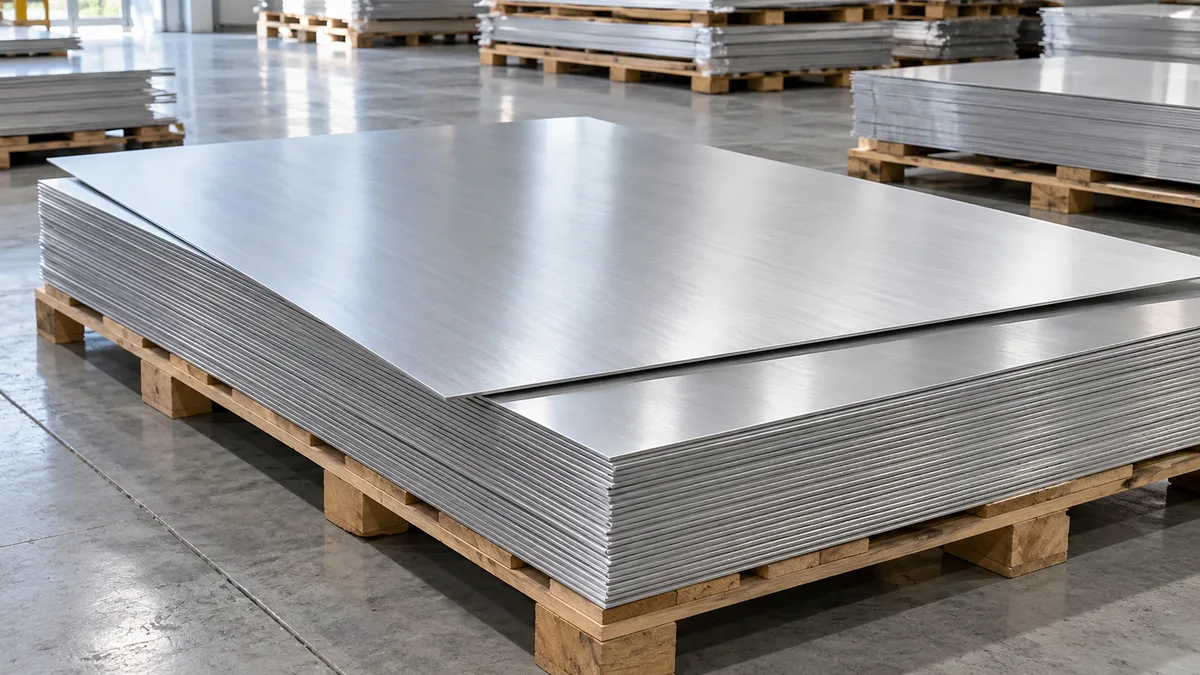
3C products (computers, communications and consumer electronics) push aluminium in two directions at once. Frames keep getting thinner, so they need more strength and dent resistance; and the finish is the product, so the alloy must anodise to a uniform, bright colour with no streaks.
6063 and 6013 anodise beautifully but are limited to roughly 250 – 400 MPa tensile. 7075 is far stronger, but its 1.2 – 2.0 % copper gives a yellowish, less consistent anodic film and makes colour matching difficult across batches. 7021 removes most of the copper (0.25 % maximum) and relies on zinc and magnesium for strength, with zirconium for grain control. The result is roughly 7075-T73 level strength with an anodising response much closer to the 6xxx alloys.
| Element | Limit | Comment |
|---|---|---|
| Zinc (Zn) | 5.0 – 6.0 | Main strengthening element with Mg |
| Magnesium (Mg) | 1.2 – 1.8 | Forms MgZn2 precipitates on ageing |
| Zirconium (Zr) | 0.08 – 0.18 | Controls grain size; keeps anodised surface uniform |
| Copper (Cu) | 0.25 max | Kept low for anodising colour |
| Iron (Fe) | 0.40 max | Low Fe reduces surface defects after polishing |
| Silicon (Si) | 0.25 max | |
| Manganese (Mn) | 0.10 max | |
| Chromium (Cr) | 0.05 max | |
| Titanium (Ti) | 0.10 max | Grain refiner |
| Others each / total | 0.05 / 0.15 | |
| Aluminium | Remainder |
Registered limits for 7021 (EN AW-7021, AlZn5.5Mg1.5). Electronics programmes often add tighter internal limits on Fe and Si for cosmetic reasons; state these on the order.
| Temper | Tensile strength | Yield strength | Elongation | Use |
|---|---|---|---|---|
| O | About 290 MPa max | About 160 MPa max | 9 % min (typical) | Forming and stamping before heat treatment |
| T6 / T651, typical | About 460 MPa | About 390 MPa | About 9 % | Machined frames and housings |
Values for T6 are typical figures from published data; supplier and customer specifications for electronics sheet often set their own minimums, which can be higher when the ageing practice is optimised. Always design to the minimums written into your purchase specification.
T651 is stretched after quenching to relieve residual stress. For a CNC-machined middle frame, where most of the plate is cut away, T651 is the right temper, because it keeps the frame flat and the wall thickness consistent. Thin stamped parts are usually made from T6 or formed in O and then aged.
Physical properties such as density, modulus and thermal conductivity are in the normal range for Al-Zn-Mg alloys: slightly denser than 6xxx housing alloys and with lower thermal conductivity. Where heat spreading in a device matters, ask for measured values on the certificate rather than relying on generic figures.
Low copper lets 7021 take clear, black and dyed colours evenly. Zr grain control helps avoid the streaks that appear when coarse grains are exposed by machining.
Fine bead or sand blasting before anodising gives the soft matte texture common on phones and laptops, and hides fine machining marks.
Chamfers cut with diamond tools show a bright edge after anodising; clean material with few inclusions is essential here.
Possible for wear parts such as buttons and SIM trays, with some loss of colour brightness.
Even with 7021, anodising quality depends on the plate. Segregation, coarse intermetallic particles and inconsistent grain structure appear as spots, bands or colour variation after anodising. That is why 3C buyers often ask for an anodising trial panel and grain-structure check from each new lot.
For electronics work, the general standard tolerances (ANSI H35.2, EN 485-4) are often tightened by agreement: closer thickness tolerance on plate to be machined, a flatness limit per blank, and a surface grade that defines permitted scratches, roll marks and inclusions. Write these into the order rather than relying on the default tables.
| Alloy | Typical tensile (T6) | Anodising appearance | Typical use |
|---|---|---|---|
| 6063-T6 | About 240 MPa | Excellent | Laptop shells, tablet backs |
| 6013-T6 | About 400 MPa | Very good | Phone frames needing more strength than 6063 |
| 7021-T6 | About 460 MPa | Good to very good | High-strength frames, wearables, buttons |
| 7075-T6 | About 570 MPa | Fair (yellowish, harder to match) | Premium frames where maximum strength is required |
Choose 7021 when a 6xxx frame dents or bends too easily but 7075 makes colour matching difficult or the cost is not justified.
The same alloy is also extruded for vehicle bumper beams, covered in our 7021 automotive profile page.
Yes. Typical 7021-T6 tensile strength is around 460 MPa, compared with about 310 MPa for 6061-T6 and about 400 MPa for 6013-T6. That extra strength lets designers thin frame walls without losing dent resistance.
Copper in 7075 (1.2 – 2.0 %) gives the anodic film a yellow tint and makes colours vary. 7021 limits copper to 0.25 %, so clear and dyed finishes are more even and easier to match.
For parts machined from plate, order T651: it is stretched to relieve stress and stays flat when most of the material is removed. T6 suits thin sheet used flat or lightly formed.
It is weldable by MIG and TIG with 5xxx filler and recovers part of its strength by natural ageing, which is one reason it is used for automotive structures. In electronics it is normally machined rather than welded.
Temper, thickness and flatness tolerance, blank size, grain structure or anodising trial requirement, permitted surface defects, and the mill certificate with chemistry and mechanical results.
Send the drawing or blank size, temper and finish. We will confirm supply, testing and a delivered price.





