


6101 and 6201 Aluminium Wire Rod in T4 Temper
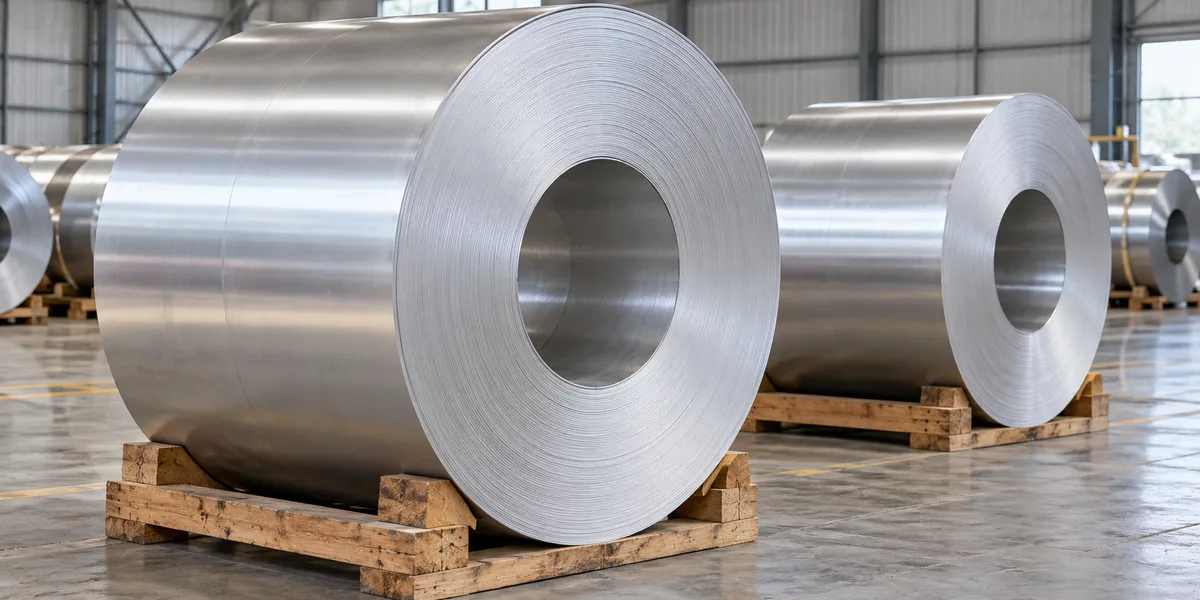
6101 and 6201 wire rod is continuously cast and rolled aluminium-magnesium-silicon rod, quenched to the T4 condition so that cable makers can draw it to wire and then age it. The finished wire is much stronger than EC-grade wire, which makes it the raw material for all-aluminium-alloy conductors (AAAC) and other high-strength conductors. This guide explains how the rod is made, what properties to specify and how it is supplied.
- Alloys
- 6101, 6201
- Temper
- T4 (solution treated, quenched)
- Common size
- 9.5 mm rod
- End product
- AAAC and alloy conductor wire
How alloy wire rod is made and used
- Continuous castingMolten alloy of controlled chemistry is cast into a continuous bar on a casting wheel.
- Hot rollingThe bar passes directly into a rolling mill and is reduced to rod, typically 9.5 mm.
- Quenching to T4The hot rod is rapidly cooled so magnesium and silicon stay in solid solution; it then naturally ages at room temperature.
- Drawing (at the cable maker)The rod is cold drawn through dies to wire, typically 2 – 4.5 mm for overhead strands.
- Artificial ageingWire is aged in ovens, precipitating Mg2Si to reach the required strength and conductivity, for example 6201-T81.
Because the final properties are developed by drawing and ageing, the rod must arrive with consistent chemistry, a fully retained solid solution and a clean, defect-free surface. Rod that was cooled too slowly, or that contains surface laps and inclusions, causes wire breaks on the drawing line and scattered properties in the finished conductor.
6101 and 6201 composition (wt %)
| Element | 6101 | 6201 |
|---|---|---|
| Silicon (Si) | 0.30 – 0.70 | 0.50 – 0.90 |
| Iron (Fe) | ≤ 0.50 | ≤ 0.50 |
| Copper (Cu) | ≤ 0.10 | ≤ 0.10 |
| Manganese (Mn) | ≤ 0.03 | ≤ 0.03 |
| Magnesium (Mg) | 0.35 – 0.80 | 0.60 – 0.90 |
| Chromium (Cr) | ≤ 0.03 | ≤ 0.03 |
| Zinc (Zn) | ≤ 0.10 | ≤ 0.10 |
| Boron (B) | ≤ 0.06 | ≤ 0.06 |
| Others, each / total | ≤ 0.03 / 0.10 | ≤ 0.03 / 0.10 |
| Aluminium (Al) | Remainder | Remainder |
Limits are the Aluminum Association registrations followed by EN 573-3. Cable makers often tighten the Mg and Si ranges inside these limits to hit a particular strength and conductivity target after ageing.
Properties of T4 rod and of the finished wire
There is no single international standard fixing rod properties, so limits are set in the purchase specification. Published producer data for 9.5 mm T4 rod commonly show tensile strengths in the range of about 160 – 200 MPa and elongation above 10 %, with resistivity limits around 0.0335 Ω·mm²/m (about 51.5 % IACS) for the rod. Values vary with alloy, producer and diameter, so agree the numbers before ordering.
| Specify on the rod | Why it matters |
|---|---|
| Tensile strength range | Too high and the rod work-hardens and breaks during drawing; too low suggests poor quenching |
| Elongation minimum | Indicates ductility for drawing |
| Maximum resistivity at 20 °C | Confirms correct chemistry and solution state |
| Diameter and ovality | Affects die life and wire uniformity |
| Surface quality | No laps, cracks, inclusions, oil or corrosion |
After drawing and ageing, 6201 wire must meet the conductor standard, for example ASTM B398 (6201-T81, 52.5 % IACS minimum), IEC 60104 or EN 50183. The rod specification should be chosen so that this target is met with margin.
Sizes, coils and packing
Typical supply
- Diameter
- 9.5 mm standard; 12 mm and other sizes by arrangement
- Temper
- T4 (some buyers specify T1 for particular processes)
- Coil
- Large coils, each strapped with steel or polyester bands in at least three places
- Labelling
- Tag on each coil with alloy, temper, size, lot number and net weight
- Certificate
- Chemistry, tensile, elongation and resistivity per lot, to EN 10204 3.1
| Rod diameter (mm) | Area (mm²) | Mass (kg/km) |
|---|---|---|
| 7.5 | 44.179 | 119.28 |
| 9.5 | 70.882 | 191.38 |
| 12 | 113.097 | 305.36 |
| 15 | 176.715 | 477.13 |
What the rod becomes
- AAAC conductors: all-aluminium-alloy overhead conductors made entirely of 6201-type wire.
- ACAR conductors: alloy wire combined with EC aluminium strands for a balance of strength and conductivity.
- Aerial bundled cable: alloy messenger or phase conductors for LV and MV overhead cable.
- Earthing and lightning-protection conductors.
- Special conductors: braids, flexible links and strand for cables needing extra strength.
Buying checklist
- Alloy and temper6101-T4 or 6201-T4, with any tightened Mg/Si window.
- Property limitsTensile range, elongation minimum and maximum resistivity at 20 °C.
- DimensionsDiameter, tolerance and ovality.
- Coil requirementsCoil weight, inside and outside diameter, strapping and protection.
- Documents and termsMill certificate per lot; EXW, FOB, CIF or DAP.
References and standards
- EN 573-3 – Chemical composition and form of wrought products
- ASTM B398/B398M – Aluminum-Alloy 6201-T81 and 6201-T83 Wire for Electrical Purposes
- IEC 60104 – Aluminium-magnesium-silicon alloy wire for overhead line conductors
- EN 50183 – Conductors for overhead lines: aluminium-magnesium-silicon alloy wires
- The Aluminum Association – International Alloy Designations and Chemical Composition Limits
6101 / 6201 aluminium (aluminum) wire rod: FAQ
Why is alloy wire rod supplied in T4?
T4 keeps magnesium and silicon in solid solution, so the rod is ductile enough to draw and can then be aged to high strength as finished wire.
What is the difference between 6101 and 6201 rod?
6201 has more magnesium and silicon, giving stronger wire with slightly lower conductivity; it is the usual choice for AAAC. 6101 gives a little more conductivity and less strength.
What size is alloy wire rod?
9.5 mm is the standard diameter for drawing; 12 mm and other sizes are available by arrangement.
Which standard does the finished wire meet?
Typically ASTM B398 (6201-T81), IEC 60104 or EN 50183, depending on the market.
Can EC-grade rod be used instead?
Only where strength is not needed. EC (1350) rod gives higher conductivity but much lower strength and cannot be aged.
Sourcing alloy rod for conductor drawing?
Send your alloy, size, property limits and quantity. Metline will quote with full lot certificates.





