Bending
5052-O and 6061-T4 bend tightly on mandrel benders. 6061-T6 needs larger radii. A common shop guide is a minimum centreline radius of about three times the OD, adjusted for wall thickness and tooling.



In aerospace and transport engineering, aluminium conduit means precision round tube that carries fuel, hydraulic fluid, lubricating oil, air or wiring through a vehicle. The usual grades are 5052-O for bendable low- and medium-pressure lines and 6061-T4 or T6 for higher pressures and structural runs, supplied seamless drawn to SAE AMS specifications. This guide covers alloys, standards, sizes, tolerances and how to order. For building wiring conduit (rigid, EMT), see our separate electrical conduit page.
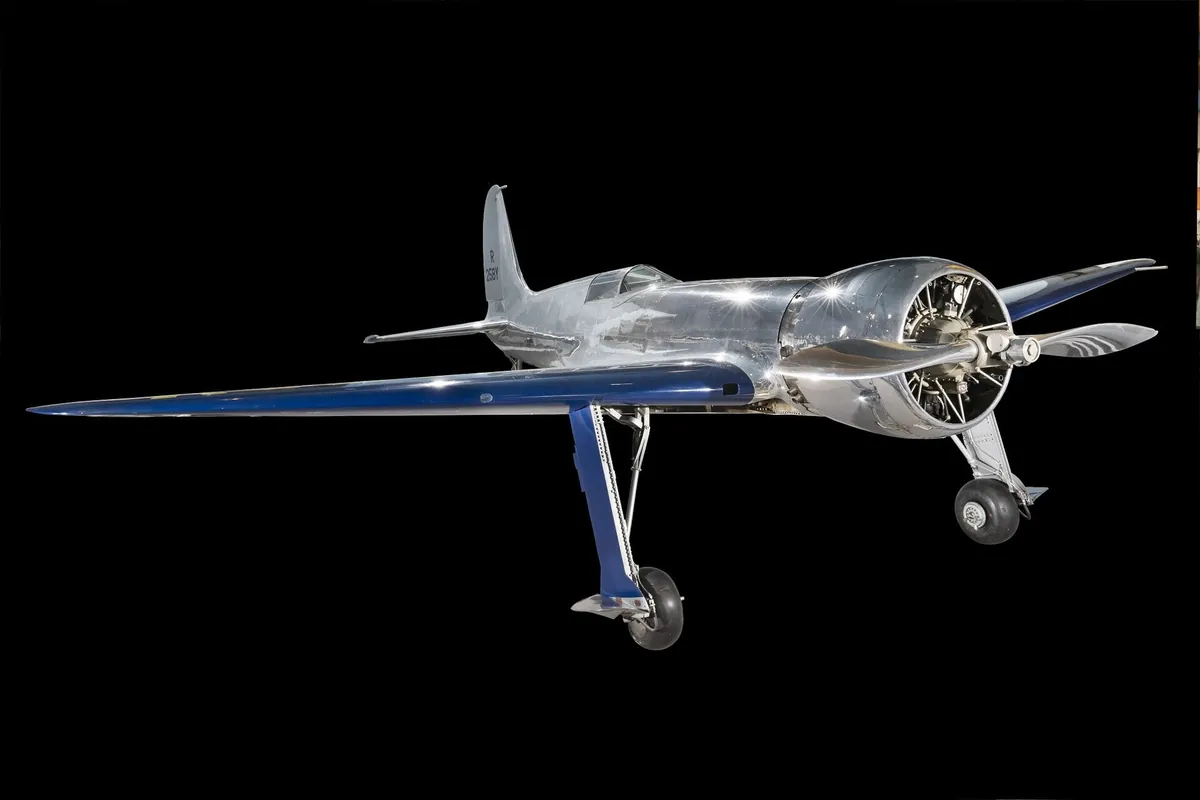
An aircraft contains kilometres of tubing: fuel feed and vent lines, hydraulic pressure and return lines, engine oil lines, cabin air and pneumatic ducts, and protective conduits that route wiring and cables. Wherever pressures and temperatures allow, these lines are aluminium, because it saves weight, bends and flares well and resists corrosion.
Aerospace conduit is not ordinary commercial tube. It is normally seamless (extruded and then cold drawn over a mandrel), made to close tolerances on diameter and wall, and tested to stricter requirements for surface quality, flare and flattening, and freedom from defects. The governing documents are SAE Aerospace Material Specifications (AMS), which define alloy, temper, tolerance and testing for each tube type.
The same tube types are used outside aviation: in racing and high-performance vehicles, marine fuel systems, industrial hydraulics, instrument lines, cryogenic equipment and spacecraft ground-support systems, where buyers want aerospace-quality tube with documented properties.
| Alloy and temper | Typical tensile / yield | Key qualities | Typical service |
|---|---|---|---|
| 3003-O / H14 | about 110 / 40 MPa (O) | Very formable, low cost, low strength | Low-pressure air, vent and drain lines; wiring conduit |
| 5052-O | about 195 / 90 MPa | Excellent bending and flaring, good fuel and seawater resistance | Low- and medium-pressure fuel, oil, hydraulic return and instrument lines |
| 6061-T4 | about 240 / 145 MPa | Good formability, can be aged to T6 after bending | Medium-pressure lines that need bending |
| 6061-T6 | about 310 / 275 MPa | Highest strength of the common grades, still weldable | High-pressure hydraulic, fuel and oil lines; structural tube runs |
| 5086 / 5056-type alloys | higher than 5052 (O) | Higher magnesium for strength and corrosion resistance | Large-diameter and marine lines |
Values are typical Aluminum Association figures for orientation. Design to the minimum properties in the specification and the mill certificate.
The GB-designated alloys 5A02 and 5A06 sometimes appear on drawings: 5A02 is an Al-Mg alloy close in behaviour to 5052, and 5A06 is a higher-magnesium alloy (about 6 % Mg) used for stronger, larger-diameter conduit. When a drawing calls for one of these, confirm whether an AA/AMS grade is acceptable or whether the GB grade and its standard must be supplied.
| Specification | Alloy and temper | Product | Typical use |
|---|---|---|---|
| AMS 4069 | 5052-O | Drawn round seamless tubing, close tolerance | Low- and medium-pressure fluid lines |
| AMS 4081 | 6061-T4 | Hydraulic seamless drawn round tubing | Hydraulic lines formed before ageing |
| AMS 4083 | 6061-T6 | Hydraulic seamless drawn round tubing | High-pressure hydraulic, fuel and oil lines |
| AMS-WW-T-700 series | 1100, 3003, 5052, 6061 and others | Drawn seamless tube (former federal WW-T-700) | General aerospace tube; the slash sheet identifies the alloy |
| ASTM B210 / B210M | Various | Drawn seamless tube | Commercial and industrial lines |
| ASTM B241 / B241M | Various | Seamless pipe and seamless extruded tube | Larger and heavier-wall lines |
| EN 754-7, EN 755 | EN AW grades | Drawn and extruded seamless tube | European projects |
AMS 4081 and AMS 4083 cover seamless round tube with walls from about 0.64 to 12.7 mm (0.025 – 0.500 in); AMS 4069 covers 5052-O with walls down to about 0.25 mm. Check the current revision on your purchase order, as AMS documents are revised regularly.
Fluid lines are usually ordered in inch sizes (for example 1/4, 3/8, 1/2, 3/4 and 1 in outside diameter) with wall thickness chosen for the pressure. The table shows representative sizes with calculated mass per metre for 5052 (density 2.68 g/cm³); multiply by about 1.01 for 6061.
| OD (mm) | OD (in) | Wall (mm) | Wall (in) | Mass, 5052 (kg/m) |
|---|---|---|---|---|
| 6.35 | 0.250 | 0.71 | 0.028 | 0.034 |
| 9.53 | 0.375 | 0.89 | 0.035 | 0.065 |
| 12.7 | 0.500 | 0.89 | 0.035 | 0.088 |
| 19.05 | 0.750 | 1.24 | 0.049 | 0.186 |
| 25.4 | 1.000 | 1.24 | 0.049 | 0.252 |
| 38.1 | 1.500 | 0.89 | 0.035 | 0.279 |
| 50.8 | 2.000 | 1.5 | 0.059 | 0.623 |
| 63.5 | 2.500 | 2 | 0.079 | 1.036 |
| 76.2 | 3.000 | 2.5 | 0.098 | 1.551 |
| 101.6 | 4.000 | 3.5 | 0.138 | 2.891 |
5052-O and 6061-T4 bend tightly on mandrel benders. 6061-T6 needs larger radii. A common shop guide is a minimum centreline radius of about three times the OD, adjusted for wall thickness and tooling.
Aerospace fittings use 37° flares (AN/MS standards). The tube must pass the flare test in its specification; 5052-O and 6061-T4 flare most easily.
Permanent swaged fittings and beaded hose ends are widely used on hydraulic and fuel lines.
6061 and 5052 weld with TIG; welded lines lose strength in the heat-affected zone, which must be allowed for in design.
6061-T4 can be bent and then aged to T6 for full strength, a common route for complex hydraulic lines.
Chemical conversion coating (to MIL-DTL-5541) or anodising (to MIL-PRF-8625) protects the tube and gives a primer base; lines are often colour-banded for identification.
Aerospace tube orders typically call for chemistry and tensile tests per lot, flattening and flare tests, dimensional inspection of OD, wall and ovality, visual inspection of inside and outside surfaces, and, where specified, eddy-current or ultrasonic testing for discontinuities. Each lot is supplied with an EN 10204 3.1 certificate (or the equivalent certificate of conformance) stating the AMS revision, heat or lot number and results.
Tube is packed with end caps to keep bores clean, bundled and boxed in wooden cases to prevent denting and abrasion during transport.
5052-O is the usual choice for low- and medium-pressure fuel lines because it bends and flares easily and resists corrosion well. Higher-pressure lines use 6061-T6 to AMS 4083.
Both cover seamless drawn 6061 hydraulic tube. AMS 4081 is the T4 temper, which is softer and easier to bend and can be aged to T6 afterwards; AMS 4083 is the fully heat-treated T6 temper with higher strength for high-pressure lines.
No. Aerospace conduit is precision seamless tube for fluids and cable protection inside vehicles. Electrical conduit for buildings is rigid conduit or EMT made to electrical codes. See our electrical conduit page for those products.
Seamless drawn tube has no weld seam, so its strength and flaring behaviour are uniform around the circumference, and it can be made to tighter tolerances. Hydraulic and fuel specifications therefore call for seamless tube.
Yes, 5052 welds readily with TIG using 5356 or 5554 filler, and because it is already annealed there is little strength loss in the heat-affected zone.
Yes. Metline supplies drawn and extruded aluminium tube to AMS, ASTM and EN specifications, with lot certificates and protective export packing.
Send the alloy, temper, size, specification and quantity. We will confirm availability, certification and delivery to your site.





