Machining
Excellent machinability in T6, T651 and T7351. Use stretched tempers for heavy pocketing to control distortion, and balance material removal on both sides of the plate.



7075 has been an aircraft structural alloy since the 1940s because it combines steel-like strength with the low density of aluminium. But aerospace-grade 7075 is defined by more than its chemistry: the temper, the AMS specification for each product form, inspection and traceability are what separate it from commercial 7075. This guide explains each of these and how to buy 7075 for flight hardware.
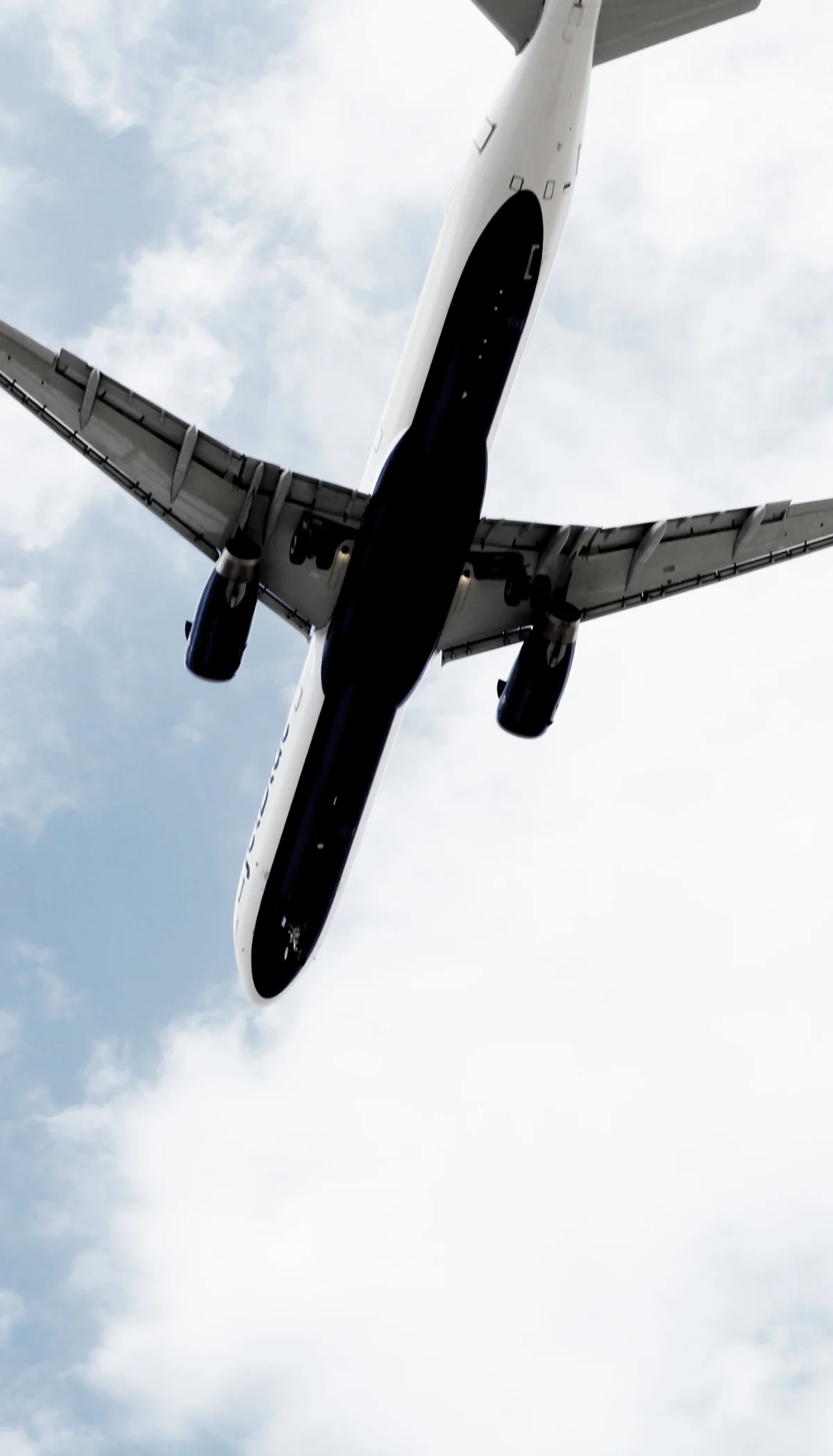
Aircraft design is a constant trade between weight and strength. 7075-T6 offers a typical tensile strength of about 572 MPa and yield of about 503 MPa at a density of 2.81 g/cm³, roughly one-third that of steel. In specific strength (strength per unit weight) it beats many structural steels and competes with titanium in moderately loaded parts, at a fraction of the cost and machining time.
The alloy was developed in the early 1940s and quickly adopted for wartime aircraft. Since then, it has been used for wing and fuselage structure, fittings, landing-gear parts and countless machined components. Modern airframes often use newer alloys such as 7050, 7150 and 7085 for thick, damage-tolerance-critical parts, but 7075 remains one of the most used aerospace alloys, especially for sheet, extrusions, bar and smaller forgings.
The weakness of 7075 is just as important to understand. In the peak-aged T6 temper it is susceptible to stress-corrosion cracking (SCC) and exfoliation corrosion, particularly in the short-transverse direction of thick sections. That is why aerospace engineers specify over-aged T73 or T76 tempers for many parts, and why thin 7075 sheet for skins is usually Alclad.
The alloy limits are the same in both cases. What differs is the specification the material is made to and the evidence that comes with it. A plate sold as "7075-T651 to ASTM B209" may be perfectly good material, but it is not acceptable for a part whose drawing calls up an AMS specification.
| Aspect | Commercial 7075 | Aerospace 7075 |
|---|---|---|
| Governing specification | ASTM B209, B211, B221, EN 485 / 755 | AMS and AMS-QQ specifications, or airframer material specifications |
| Mechanical testing | Tensile tests per lot to the standard | Tensile tests in specified directions (L, LT, ST), often more samples per lot |
| Corrosion tests | Not normally required | SCC and exfoliation acceptance tests and conductivity checks for T7x tempers |
| Non-destructive testing | Usually not required | Ultrasonic inspection of plate, bar and forgings to a defined class (for example AMS-STD-2154) |
| Traceability | Lot level | Full traceability back to cast and process lot, with certified test reports |
| Processing controls | Mill practice | Controlled heat treatment (e.g. AMS 2770 practice), quench and ageing records |
In practice, buyers of aerospace 7075 should check three things on the certificate: the exact specification and revision, the temper and product form it covers, and the test results it requires (including ultrasonic class where relevant). If any of these is missing, the material should not enter a flight-hardware supply chain.
| Element | Minimum | Maximum |
|---|---|---|
| Zinc (Zn) | 5.1 | 6.1 |
| Magnesium (Mg) | 2.1 | 2.9 |
| Copper (Cu) | 1.2 | 2.0 |
| Chromium (Cr) | 0.18 | 0.28 |
| Iron (Fe) | — | 0.50 |
| Silicon (Si) | — | 0.40 |
| Manganese (Mn) | — | 0.30 |
| Titanium (Ti) | — | 0.20 |
| Others each / total | — | 0.05 / 0.15 |
| Aluminium | Remainder |
7175 and 7475 are higher-purity derivatives of 7075 with tighter iron and silicon limits for better fracture toughness and fatigue. They are worth considering when damage tolerance governs. For thick parts that need both strength and SCC resistance, 7050 is often the better choice; see our 7050 vs 7075 comparison.
| Temper | Treatment | Typical tensile | Typical yield | SCC resistance | Typical aircraft use |
|---|---|---|---|---|---|
| T6 | Solution treated, peak aged | About 572 MPa | About 503 MPa | Low (ST direction) | Sheet parts, small fittings, extrusions |
| T651 / T6511 | As T6, stretched for stress relief | About 572 MPa | About 503 MPa | Low (ST direction) | Machined plate and bar parts |
| T73 / T7351 / T73511 | Over-aged for SCC resistance | About 505 MPa | About 435 MPa | Very high | Forgings, thick plate parts, fittings in SCC-prone areas |
| T76 / T7651 | Over-aged for exfoliation resistance | Between T6 and T73 | Between T6 and T73 | Moderate | Wing skins and parts exposed to exfoliation |
| O | Annealed | About 228 MPa | About 103 MPa | n/a | Forming, then heat treated |
Typical values per ASM data. Specified minimums vary with form and thickness and are set by the order specification; MMPDS gives design allowables.
A practical rule: T6 for thin or lightly loaded parts where stress corrosion is not a concern; T73 or T7351 whenever there is sustained tensile stress in the short-transverse direction, such as in press-fitted bushings, lugs and thick fittings; T76 where exfoliation, rather than SCC, is the main threat.
| Product form | Commercial standard | Common aerospace specifications |
|---|---|---|
| Sheet and plate (bare) | ASTM B209 | AMS-QQ-A-250/12; AMS 4045 (T6 sheet, T651 plate); AMS 4078 (T73 sheet, T7351 plate) |
| Alclad sheet and plate | ASTM B209 | AMS-QQ-A-250/13; AMS 4049 (Alclad T6 / T651) |
| Rolled or cold-finished bar and rod | ASTM B211 | AMS-QQ-A-225/9; AMS 4122, AMS 4123, AMS 4124 (by temper) |
| Extrusions | ASTM B221 | AMS-QQ-A-200/11; AMS 4154 (T6 / T6511); AMS 4167 (T73511) |
| Drawn and seamless tube | ASTM B210, ASTM B241 | AMS-WW-T-700/7 and AMS sheets for specific tempers |
| Forgings | ASTM B247 | AMS 4126 (T6); AMS 4141 (T73 die forgings); AMS 4147 (T7352) |
Specifications are revised periodically. Always order to the specification and revision on the drawing; the list above is a guide to where to look, not a substitute for it.
Most 7075 failures in service are not overload failures but corrosion-assisted ones. Two mechanisms matter. Stress-corrosion cracking is cracking under sustained tensile stress in a moist environment. In 7075-T6 it runs along the elongated grain boundaries, so it is worst when stress acts in the short-transverse direction, across the thickness of a plate or forging. Interference-fit bushings, clamped joints and residual stress from quenching or machining can all supply that stress without any external load.
Exfoliation is layered corrosion that lifts the surface in leaves, again following the flattened grain structure of rolled and extruded products. It shows up around fastener holes and cut edges where the end grain is exposed. The T76 temper was developed specifically to resist exfoliation while keeping more strength than T73.
Over-ageing works because it coarsens and spaces out the precipitates on grain boundaries and changes their electrochemistry, which interrupts the continuous anodic path along which cracks grow. The cost is strength. Aerospace specifications for T73 and T76 therefore include acceptance tests, typically a combination of electrical conductivity and tensile yield limits, to confirm the over-ageing has been done properly.
| Protection method | How it works | Typical use |
|---|---|---|
| Over-aged temper (T73, T76) | Changes grain-boundary precipitates to resist SCC or exfoliation | Forgings, thick plate parts, fittings, skins |
| Alclad sheet | Thin anodic cladding corrodes sacrificially and protects the core, including at scratches | Fuselage and wing skins |
| Anodising and conversion coating | Barrier film and paint base | Machined parts and extrusions |
| Primer, sealant and wet-installed fasteners | Excludes moisture from joints and holes | All assembled structure |
| Shot peening | Puts the surface into compression, reducing crack initiation | Lugs, fittings and fatigue-critical parts |
Note that Alclad reduces fatigue strength slightly, because the soft cladding is a weaker surface layer, and the cladding is removed wherever the part is machined. It is a sheet solution, not a cure for machined parts.
| Area | Typical parts | Typical form and temper |
|---|---|---|
| Wing | Stringers, ribs, spar caps on smaller aircraft, access panels | Extrusions T6511 / T73511; machined plate T651 / T7351 |
| Wing and fuselage skins | Skins on many general-aviation and older transport aircraft | Alclad 7075-T6 or T76 sheet |
| Fuselage | Frames, clips, floor-beam fittings, seat-track components | Extrusions and machined plate |
| Landing gear and actuation | Brackets, links, actuator housings | Forgings T73 / T7352; bar T7351 |
| Controls and systems | Bellcranks, hinges, fittings, fasteners | Bar T651 / T7351; forgings |
| Helicopters, UAVs and spacecraft | Frames, gearbox and rotor-head parts, interstage structure | Plate, forgings and bar in T6 or T73 |
A typical design path for a machined fitting is to start with 7075-T7351 plate or bar, because the part will carry sustained loads near bolt holes. If the fitting is thicker than about 75 – 100 mm, or toughness governs, engineers usually move to 7050-T7451. For thin formed brackets, 7075-T6 sheet or extrusion is common, with anodising and primer for corrosion protection.
Excellent machinability in T6, T651 and T7351. Use stretched tempers for heavy pocketing to control distortion, and balance material removal on both sides of the plate.
Poor cold formability in T6. Severe forming is done in O or freshly quenched (W) condition, followed by ageing; this requires controlled processing.
Not fusion-weldable for structural use; joined by rivets, bolts and Hi-Lok type fasteners, sometimes with adhesive bonding. Friction stir welding is possible but needs qualification.
Chromic, sulphuric, boric-sulphuric or thin-film anodising, chemical conversion coating, then primer and topcoat. Alclad skins rely on the cladding for galvanic protection.
Commonly applied to fatigue-critical parts such as lugs and fittings to add compressive surface stress.
Avoid unplanned heating above about 120 °C; it can over-age the alloy and reduce strength. Conductivity checks reveal heat damage.
No. The chemistry is the same, but aircraft-grade 7075 is produced, tested and certified to an aerospace specification such as AMS-QQ-A-250/12 or AMS 4078, with the required tests and traceability. Commercial 7075 certified only to ASTM is not acceptable where an AMS specification is called up.
T6 is peak-aged for maximum strength (about 572 MPa typical tensile). T73 is over-aged, giving about 505 MPa but far better resistance to stress-corrosion cracking. T73 is preferred for forgings and thick parts under sustained stress.
Sheet or plate with a thin metallurgically bonded layer of a more anodic aluminium alloy on each face. The layer corrodes sacrificially to protect the 7075 core, which is why Alclad is used for aircraft skins.
Yes in static strength: 7075-T6 is about 572 MPa typical tensile versus about 483 MPa for 2024-T3. 2024 has better fatigue-crack-growth resistance and damage tolerance, which is why it is preferred for lower wing skins and fuselage skins on many transport aircraft.
Not by conventional fusion welding; it cracks and loses strength. Repairs use riveted or bolted doublers according to approved structural repair data.
Send the specification and revision with your enquiry. We confirm which forms and sizes can be supplied and certified to it, with EN 10204 3.1 mill certificates and full lot traceability.
Send the form, temper, size and specification. We will reply with certification details and a delivered price.





