Extruded flat bar
The standard form, with square or radiused edges. Uniform dimensions and good surface for plating.



6101 is the dedicated aluminium alloy for busbar. ASTM B317 guarantees its conductivity for each temper, from 55 % IACS in T6 to 59.5 % IACS in T64, while giving several times the strength of pure EC aluminium. This guide shows how to pick a temper, size a 6101 bar against copper, design joints that stay cool and write a purchase specification.
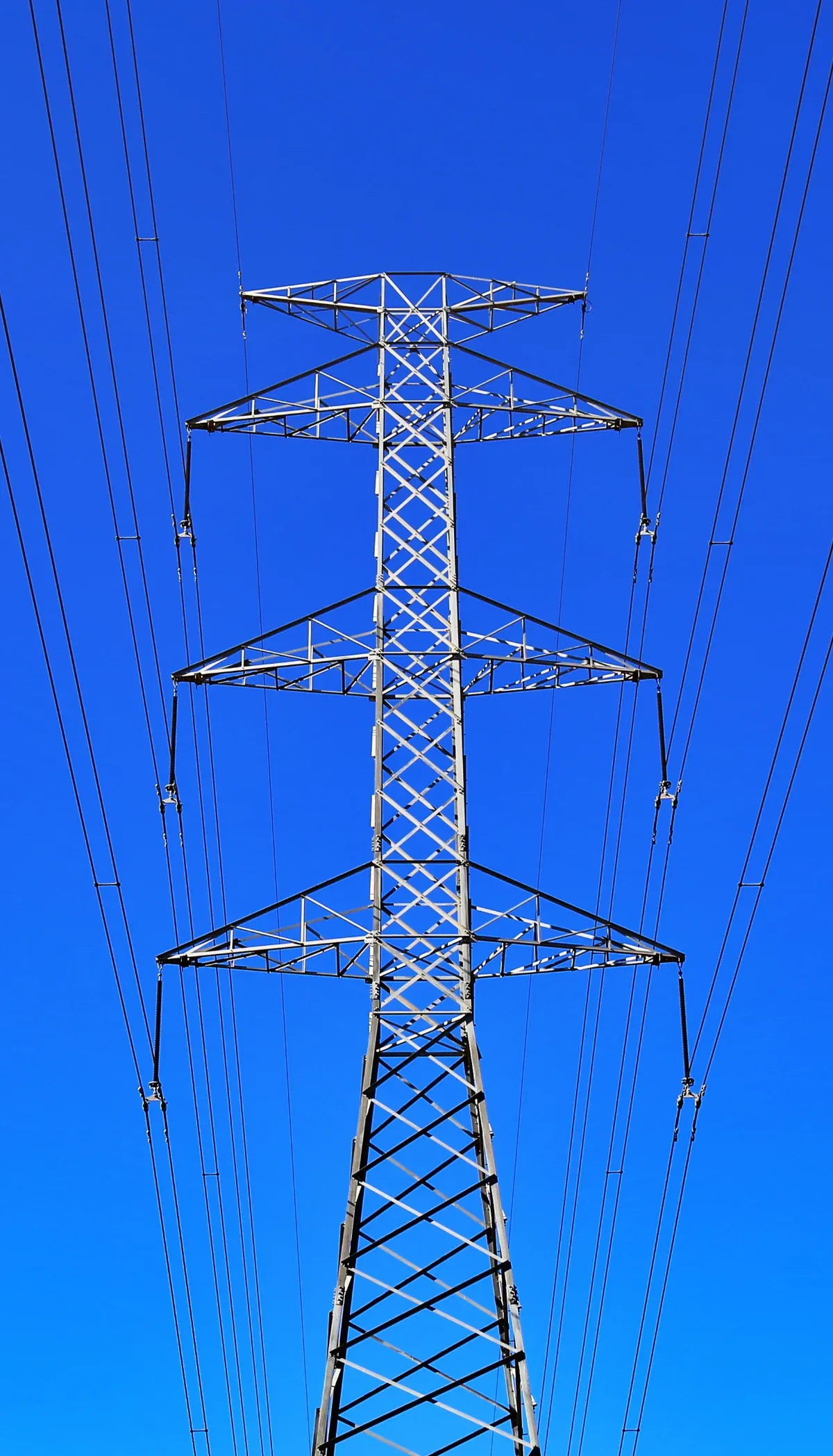
A busbar is judged on three things: how much heat it generates per ampere, whether it stays straight and tight at its joints for decades, and how much it costs and weighs. 6101 scores well on all three.
Pure EC aluminium (1350) conducts slightly better, but it is soft and creeps under bolt pressure, so its joints loosen over time unless carefully designed. General-purpose alloys such as 6063 and 6082 are stronger but their conductivity is not guaranteed and is noticeably lower. 6101 sits deliberately between them: its chemistry keeps manganese, chromium and other conductivity-killing elements at trace levels, and its ageing treatments are tuned to deliver a published minimum conductivity with useful strength.
For switchgear, busway and panel builders this means a predictable product. When a 6101-T61 bar is certified to ASTM B317, its conductivity will be at least 57 % IACS at 20 °C, and its tensile and yield strengths will meet set minimums for its thickness. That predictability is what allows designers to rely on temperature-rise test results from one batch to the next.
All conductor tempers of 6101 are solution heat-treated and aged. Moving from T6 towards T64 over-ages the alloy: strength falls, conductivity and bendability rise. The table lists the specified minimums for extruded bar.
| Temper | Thickness | Tensile min | Yield min | Conductivity min (20 °C) |
|---|---|---|---|---|
| T6 | 3.2 – 12.7 mm | 200 MPa (29 ksi) | 172 MPa (25 ksi) | 55.0 % IACS |
| T61 | 3.2 – 19 mm | 138 MPa (20 ksi) | 103 MPa (15 ksi) | 57.0 % IACS |
| T61 | 19 – 38 mm | 124 MPa (18 ksi) | 76 MPa (11 ksi) | 57.0 % IACS |
| T61 | 38 – 50.8 mm | 103 MPa (15 ksi) | 55 MPa (8 ksi) | 57.0 % IACS |
| T63 | 3.2 – 25.4 mm | 186 MPa (27 ksi) | 152 MPa (22 ksi) | 56.0 % IACS |
| T64 | 3.2 – 25.4 mm | 103 MPa (15 ksi) | 55 MPa (8 ksi) | 59.5 % IACS |
| T65 | 3.2 – 19 mm | 172 – 221 MPa (25 – 32 ksi) | 138 – 186 MPa (20 – 27 ksi) | 56.5 % IACS |
| H111 | 6.3 – 50.8 mm | 83 MPa (12 ksi) | 55 MPa (8 ksi) | 59.0 % IACS |
Specified minimums for extruded rod, bar, tube, pipe and profiles for electric conductors, from the Aluminum Association property-limit table that ASTM B317/B317M follows (inch values converted). T65 has both minimum and maximum limits so that bending behaviour is repeatable. Confirm against the current edition of the standard for contract use.
| If your priority is… | Choose | Why |
|---|---|---|
| Highest conductivity and tight edgewise bends | T64 | 59.5 % IACS minimum, softest aged temper |
| General switchgear and busway bar | T61 | 57 % IACS with enough strength for most spans |
| Repeatable bending on automated lines | T65 | Strength held within a band, so springback is consistent |
| Stiffness with good conductivity | T63 | Near-T6 strength at 56 % IACS |
| Maximum strength, long spans | T6 | 200 MPa tensile minimum; 55 % IACS |
| Element | Minimum | Maximum | Why it is limited |
|---|---|---|---|
| Silicon (Si) | 0.30 | 0.70 | Forms Mg2Si with magnesium |
| Iron (Fe) | — | 0.50 | Impurity; lowers conductivity |
| Copper (Cu) | — | 0.10 | Impurity |
| Manganese (Mn) | — | 0.03 | Very strong conductivity penalty, so held far below normal 6xxx limits |
| Magnesium (Mg) | 0.35 | 0.80 | Main strengthening element |
| Chromium (Cr) | — | 0.03 | Very strong conductivity penalty |
| Zinc (Zn) | — | 0.10 | Impurity |
| Boron (B) | — | 0.06 | Added to tie up dissolved Ti, V and Cr as borides, raising conductivity |
| Others, each / total | — | 0.03 / 0.10 | Tighter than the usual 0.05 / 0.15 |
| Aluminium (Al) | Remainder | About 97.9 – 99.4 % |
The 0.03 % caps on manganese and chromium are the critical lines on a 6101 certificate. A bar extruded from ordinary 6063 billet can look identical but will not reach the B317 conductivity minimums, so check the certified analysis as well as the measured conductivity.
Common North American bar sizes are given in inches. The table compares 6101-T61 (57 % IACS) with C11000 copper (taken as 100 % IACS) of the same size: mass per metre and calculated DC resistance per metre at 20 °C.
| Size (in) | Area (mm²) | 6101 mass (kg/m) | 6101 DC resistance (µΩ/m) | Copper mass (kg/m) | Copper DC resistance (µΩ/m) |
|---|---|---|---|---|---|
| 1/4 × 1 | 161 | 0.44 | 187.5 | 1.4 | 106.9 |
| 1/4 × 2 | 323 | 0.87 | 93.8 | 2.9 | 53.4 |
| 1/4 × 3 | 484 | 1.31 | 62.5 | 4.3 | 35.6 |
| 1/4 × 4 | 645 | 1.74 | 46.9 | 5.7 | 26.7 |
| 1/4 × 6 | 968 | 2.61 | 31.3 | 8.6 | 17.8 |
| 3/8 × 4 | 968 | 2.61 | 31.3 | 8.6 | 17.8 |
| 1/2 × 3 | 968 | 2.61 | 31.3 | 8.6 | 17.8 |
| 1/2 × 4 | 1290 | 3.48 | 23.4 | 11.5 | 13.4 |
| 1/2 × 6 | 1935 | 5.23 | 15.6 | 17.2 | 8.9 |
| 1/2 × 8 | 2581 | 6.97 | 11.7 | 22.9 | 6.7 |
For equal DC resistance, a 6101-T61 bar needs about 1.75 times the cross-section of copper. In practice the equal-temperature-rise ratio is smaller, because the larger aluminium bar has more surface area to shed heat. Two rules of thumb are widely used for converting a copper design:
Even after upsizing, the aluminium bar typically weighs about half as much as the copper bar it replaces.
The standard form, with square or radiused edges. Uniform dimensions and good surface for plating.
Extruded channels, angles and integrated profiles that combine conductor and support in one section.
Very wide or thick bars sawn from 6101 plate for rectifier and smelter buses.
Thin 6101 strip for flexible links, laminated busbar layers and stamped connectors.
Stacked thin strips or braid joined at solid ends, absorbing vibration, thermal movement and misalignment.
Epoxy powder or heat-shrink covered bar allowing closer phase spacing and touch protection.
Most busbar failures start at joints, not in the bar. Aluminium forms a hard oxide film within seconds of exposure and creeps slowly under constant pressure; good joint design deals with both.
Bend radii depend on temper: T64 and T65 take the tightest flatwise and edgewise bends, while T6 needs the most generous radius. Agree a sample bend on the first delivery if the bar will be formed on automated equipment.
Main and distribution busbar in LV and MV assemblies.
Plug-in and feeder busway conductors, often insulated.
Low-voltage leads and connection bars.
Electrolysis, plating, furnaces and rectifiers carrying very high currents.
Battery interconnects and traction busbar where low weight matters.
Inverter, combiner and energy-storage busbar.
T6 is aged to peak strength (200 MPa tensile minimum) with 55 % IACS minimum conductivity. T61 is over-aged: lower strength (138 MPa minimum in thin sections) but higher conductivity, 57 % IACS minimum. T61 is the more common busbar temper.
For equal DC resistance, about 1.75 times the cross-section for 6101-T61. For equal temperature rise, designers usually find a 25 – 50 % increase in width or thickness is enough, confirmed by testing.
Yes, when joints are designed for aluminium: clean or plated contact faces, jointing compound, and conical spring washers to maintain clamp load. 6101 creeps less than 1350, which helps.
Yes, in T64 or T65, which have the best ductility. T6 needs generous radii and is not recommended for tight edgewise bends.
ASTM B317/B317M in North America, IEC 60114 internationally, IS 5082 in India and EN 755 for extruded product properties and tolerances in Europe.
Yes. Metline supplies 6101 busbar cut, punched, bent, tin- or silver-plated or insulated to drawing, with mill test certificates, worldwide.
Send the temper, sizes, finish and quantity. We will reply with availability, certificates and a delivered price.





