T4
Solution heat-treated and naturally aged. The standard temper for 2017 extrusions and bar, giving the property set above.



2017 is the original duralumin: an aluminium-copper-magnesium-manganese alloy that reaches high strength by natural ageing in the T4 temper. As extruded bar, tube and profiles it gives automotive engineers a strong, very machinable material for fittings, hydraulic and pneumatic parts and precision brackets. Metline supplies 2017 and EN AW-2017A extrusions, fully certified, to manufacturers worldwide.
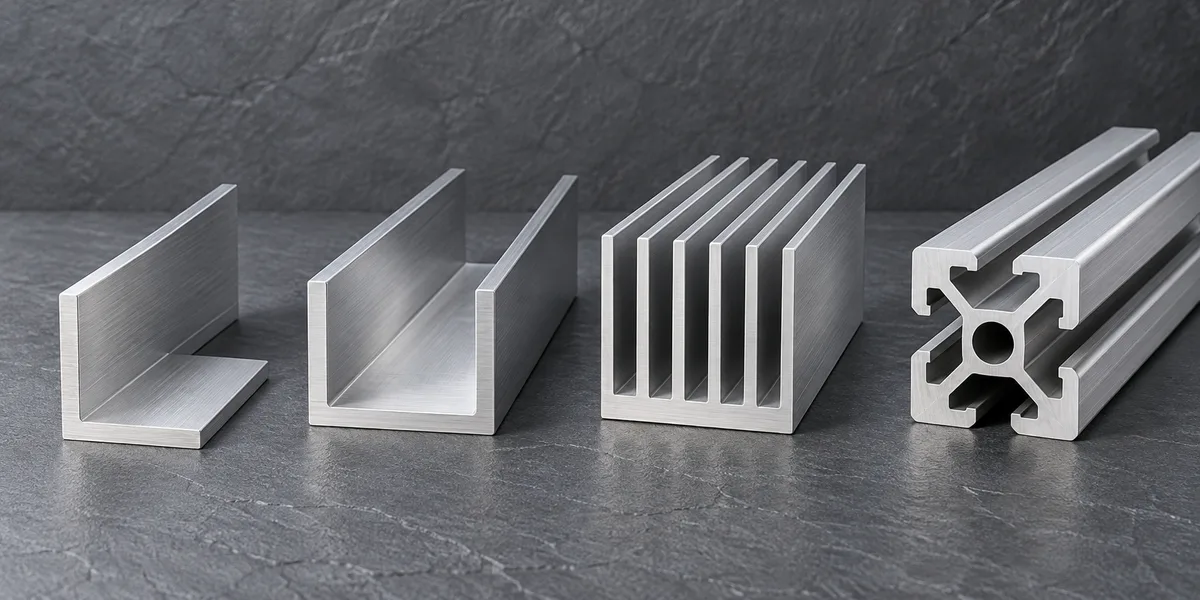
2017 descends directly from the first age-hardening aluminium alloy, discovered in the early twentieth century and sold as duralumin. With about 4 % copper, 0.6 % magnesium and 0.7 % manganese, it is solution heat-treated, quenched and left to age at room temperature to the T4 temper, where it reaches roughly the strength of mild steel at one-third of the weight.
For aircraft, 2017 has largely been replaced by 2024, which is stronger. In general engineering and automotive supply, however, 2017 and its European sister 2017A remain popular because they machine beautifully, keep good toughness in T4 and are widely available as extruded and drawn bar, tube and simple profiles.
In vehicles, 2017 is a material for machined and fastened parts, not for welded structures or body panels. It is chosen for fittings, connectors, valve and pump bodies, gear-shift and pedal components, screw-machine parts and rivets, where high strength in a compact part matters more than weldability or atmospheric corrosion resistance.
| Element | 2017 (AA) | Role |
|---|---|---|
| Silicon (Si) | 0.20 – 0.8 | Minor strengthening |
| Iron (Fe) | 0.7 max | Impurity |
| Copper (Cu) | 3.5 – 4.5 | Main strengthening element (Al2Cu precipitates) |
| Manganese (Mn) | 0.40 – 1.0 | Strength and grain control |
| Magnesium (Mg) | 0.40 – 0.8 | Accelerates and strengthens natural ageing |
| Chromium (Cr) | 0.10 max | |
| Zinc (Zn) | 0.25 max | Impurity |
| Titanium (Ti) | 0.15 max | Grain refiner |
| Others, each / total | 0.05 / 0.15 | |
| Aluminium (Al) | Remainder |
EN AW-2017A (AlCu4MgSi(A)) has very similar limits and is the usual European designation. For most machined parts 2017 and 2017A are interchangeable, but state which one your drawing requires.
| Condition | Tensile strength | Yield strength (0.2 %) | Elongation | Hardness |
|---|---|---|---|---|
| 2017-T4, typical | 427 MPa / 62 ksi | 276 MPa / 40 ksi | 22 % | 105 HB |
| Extruded T4, minimum often specified (wall ≤ 12.5 mm) | 345 MPa | 215 MPa | 12 % | — |
| Extruded T4, minimum often specified (wall 12.5 – 100 mm) | 345 MPa | 195 MPa | 12 % | — |
| 2017-O, typical | 179 MPa / 26 ksi | 69 MPa / 10 ksi | 22 % | 45 HB |
Minimums vary between standards (ASTM B211 for cold-finished bar, EN 755-2 for EN AW-2017A extrusions, national extrusion standards for profiles). The governing standard and actual test results are stated on the certificate.
Solution heat-treated and naturally aged. The standard temper for 2017 extrusions and bar, giving the property set above.
T4 plus controlled stretching to relieve quench stresses. Preferred for parts with heavy machining, because they move less.
Artificial ageing is possible but not the normal practice for 2017, and properties are not tabulated in the common standards. If you need higher strength than 2017-T4, 2024-T3 or 2014-T6 is usually the better choice.
Annealed for forming or cold heading, followed by solution treatment and ageing.
| System | Designation | Typical product standard |
|---|---|---|
| Aluminum Association / ASTM | 2017 | ASTM B211 (cold-finished bar and rod), ASTM B316 (rivet and cold-heading wire) |
| UNS | A92017 | — |
| European (EN) | EN AW-2017A / AlCu4MgSi(A) | EN 755-2 (extrusions), EN 754-2 (drawn), EN 573-3 |
| German Werkstoff | 3.1325 | — |
| ISO | AlCu4MgSi | ISO 209 |
| Japan (JIS) | A2017 | JIS H4040 (bar), JIS H4100 (extruded shapes) |
| China (GB) | 2017 | GB/T 3191, GB/T 6892 |
2xxx alloys extrude more slowly than 6xxx alloys, so very thin walls and complex hollows are limited. Send the drawing for a feasibility check.
Excellent in T4: short broken chips, good finish and accurate threads. Use sharp carbide or HSS with positive rake and coolant.
Not recommended for fusion welding: the alloy is prone to hot cracking and loses strength in the heat-affected zone. Use mechanical fastening or adhesive bonding.
Copper reduces atmospheric corrosion resistance. Anodise, apply conversion coating and paint, or keep the part in a protected environment such as inside a housing filled with oil.
Service above about 120 – 150 °C over long periods over-ages the alloy and lowers strength.
Rivets and cold-headed parts are formed freshly quenched or in O temper, then naturally aged to T4.
Takes clear and hard anodic coatings, with a slightly less bright appearance than 6xxx alloys.
Engine blocks, oil pans, wheels and brake discs are not made from 2017. Engine blocks and oil pans are cast (A319, A356 or similar), wheels are cast A356 or forged 6061 / 6082, and brake discs are cast iron or ceramic composites.
| Property | 2017-T4 | 2024-T3 | 2014-T6 | 6061-T6 |
|---|---|---|---|---|
| Typical tensile strength | ~427 MPa | ~483 MPa | ~483 MPa | ~310 MPa |
| Typical yield strength | ~276 MPa | ~345 MPa | ~414 MPa | ~276 MPa |
| Machinability | Very good | Good | Good | Good |
| Weldability | Poor | Poor | Poor | Good |
| Corrosion resistance | Fair | Fair | Fair | Good |
2017 gives most of the strength of 2024 with easier machining. Where welding or outdoor exposure is required, choose 6061 automotive profiles instead.
Yes, in practice. 2017 is the standardised form of the original duralumin alloy: aluminium with about 4 % copper plus magnesium and manganese, strengthened by natural ageing.
2017A is the European registration with slightly different limits for silicon, magnesium and minor elements. Properties are very close, and most machined parts can use either.
Fusion welding is not recommended because of hot cracking and strength loss. Join 2017 parts mechanically or by adhesive bonding.
2017 is designed to reach its useful strength by natural ageing. Artificial ageing adds little practical benefit and is not covered by the common standards; 2014-T6 or 2024 is chosen when higher strength is needed.
Moderately. Its copper content makes it less resistant than 5xxx and 6xxx alloys, so exposed parts should be anodised or painted.
Yes. Metline supplies 2017 and 2017A extrusions, bar and tube worldwide with EN 10204 3.1 certificates.
Send the size, temper, quantity and destination, and our team will reply with availability and a delivered quotation.





