Flatness and residual stress
Stretching after quenching relieves residual stress. Poorly stretched plate distorts when machined, so flatness and stretching records matter for large wing parts.



7150 is a high-purity, zirconium-bearing Al-Zn-Mg-Cu alloy developed from 7050 for structure that is loaded mainly in compression, above all the upper wing skins and stringers of large aircraft. In the T7751 temper it combines strength close to peak-aged levels with much better resistance to exfoliation and stress corrosion than T6-type tempers. Metline supplies 7150 plate to AMS specifications, certified and inspected, worldwide.
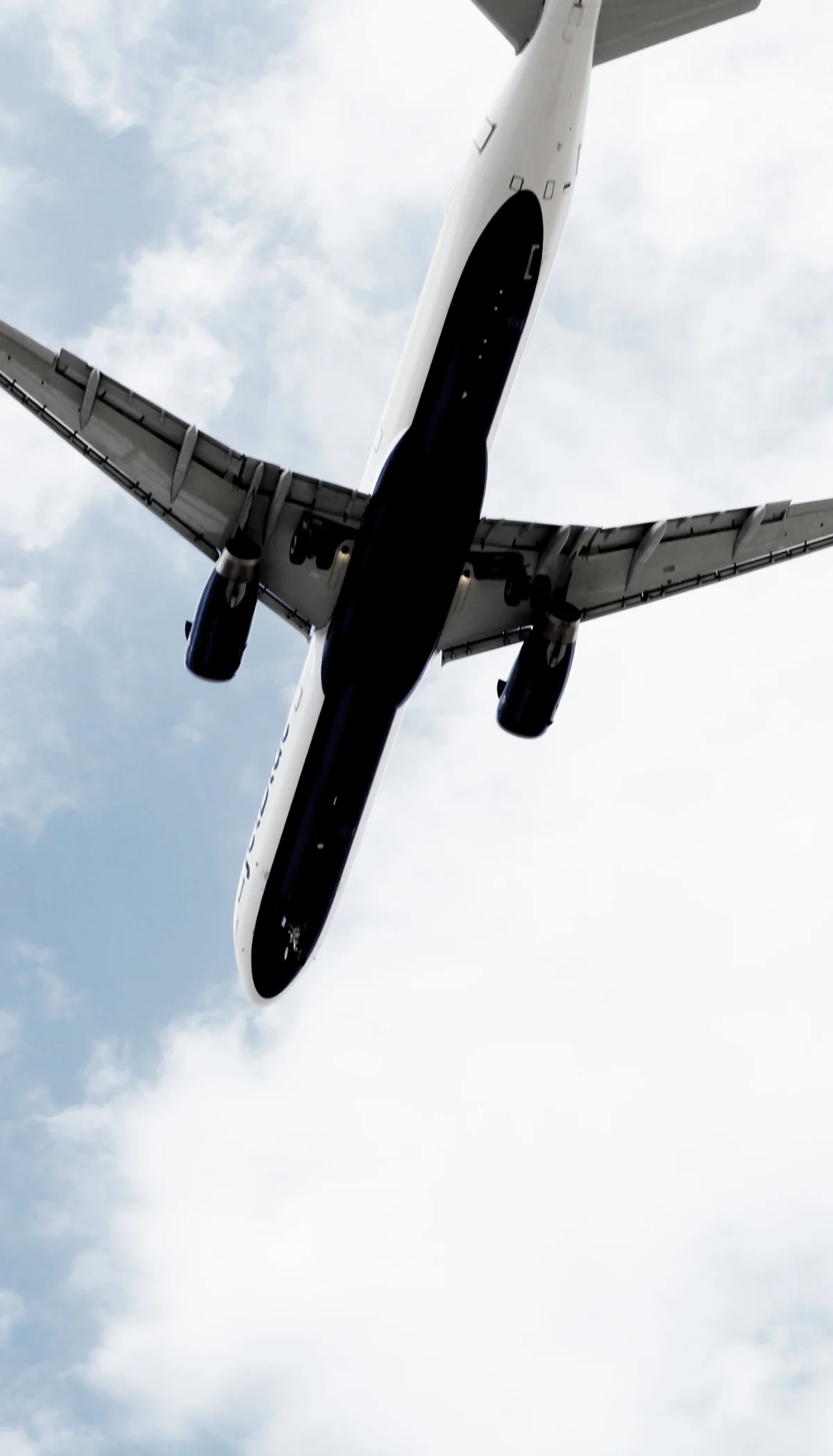
7150 is chemically a refinement of 7050: similar zinc, magnesium and copper, zirconium for grain control, and tighter limits on iron and silicon. Those purity limits improve fracture toughness and fatigue resistance at a higher strength level, which is exactly what upper wing structure needs, because it is sized by compressive yield strength and stability rather than by tensile damage tolerance.
The alloy is best known in the T77-type tempers. T7751 plate is produced by a multi-step ageing practice (often described as retrogression and re-ageing) that recovers most of the strength of a peak-aged T6-type temper while giving the exfoliation and stress-corrosion resistance associated with over-aged tempers. Before T77 tempers were introduced, designers had to choose between strength (T6151) and corrosion resistance (T7x); T7751 narrowed that trade-off considerably.
Outside aerospace, 7150 is used occasionally for highly loaded defence and motorsport parts, but its cost and the need for aerospace certification mean 7075 or 7050 are usually chosen unless the design specifically needs 7150.
Registered Aluminum Association limits, used by AMS 4252 and AMS 4306. The nominal composition in the AMS titles is 6.4 Zn – 2.4 Mg – 2.2 Cu – 0.12 Zr.
| Element | Minimum | Maximum | Role |
|---|---|---|---|
| Zinc (Zn) | 5.9 | 6.9 | Main strengthening element with Mg |
| Magnesium (Mg) | 2.0 | 2.7 | Forms strengthening precipitates with Zn |
| Copper (Cu) | 1.9 | 2.5 | Strength and stress-corrosion resistance |
| Zirconium (Zr) | 0.08 | 0.15 | Grain control; low quench sensitivity |
| Silicon (Si) | — | 0.12 | Kept low for toughness |
| Iron (Fe) | — | 0.15 | Kept low for toughness and fatigue |
| Manganese (Mn) | — | 0.10 | |
| Chromium (Cr) | — | 0.04 | |
| Titanium (Ti) | — | 0.06 | Grain refiner |
| Others, each / total | — | 0.05 / 0.15 | |
| Aluminium (Al) | Remainder |
Some online references publish a 7150 composition with 7 – 8 % zinc and chromium additions; that does not match the registered alloy. Always check the certificate against the AMS or Aluminum Association limits.
Typical longitudinal values for comparison. Specified minimums in AMS 4252 and AMS 4306 depend on thickness and direction; for design, use the specification and MMPDS allowables.
| Temper | Tensile strength | Yield strength (0.2 %) | Elongation | Main attribute |
|---|---|---|---|---|
| T7751 plate | about 600 – 610 MPa | about 565 – 575 MPa | about 10 – 11 % | Strength with exfoliation and SCC resistance |
| T6151 plate | about 600 MPa | about 560 MPa | about 10 % | Peak-type strength, lower corrosion resistance |
Weight can be calculated as length × width × thickness (mm) × 2.83 × 10⁻⁶ kg. A 25 × 1250 × 2500 mm plate weighs about 221 kg.
| Temper / form | Specification | Notes |
|---|---|---|
| T7751 plate | AMS 4252 | Plate about 6.35 – 76.2 mm (0.25 – 3.0 in); stretched and over-aged by multi-step practice |
| T6151 plate | AMS 4306 | Stretched and aged to high strength |
| T77511 extrusions | AMS 4345 | Stringers and extruded wing members |
| T6511 extrusions | AMS 4307 | High-strength extruded sections |
| T651 plate | ASTM B209 / by agreement | Commercial plate for non-aerospace use |
Designations: UNS A97150, EN AW-7150. Aerospace orders normally carry customer specifications and approvals in addition to AMS; list them in your enquiry so we can confirm the documentation that can accompany the material.
| Thickness (mm) | kg per m² | 1250 × 2500 mm (kg) | 1500 × 3000 mm (kg) |
|---|---|---|---|
| 6 | 16.98 | 53.1 | 76.4 |
| 8 | 22.64 | 70.8 | 101.9 |
| 10 | 28.30 | 88.4 | 127.4 |
| 12 | 33.96 | 106.1 | 152.8 |
| 16 | 45.28 | 141.5 | 203.8 |
| 20 | 56.60 | 176.9 | 254.7 |
| 25 | 70.75 | 221.1 | 318.4 |
| 30 | 84.90 | 265.3 | 382.1 |
| 40 | 113.20 | 353.8 | 509.4 |
| 50 | 141.50 | 442.2 | 636.8 |
| 60 | 169.80 | 530.6 | 764.1 |
| 75 | 212.25 | 663.3 | 955.1 |
Stretching after quenching relieves residual stress. Poorly stretched plate distorts when machined, so flatness and stretching records matter for large wing parts.
Aerospace plate is inspected for scratches, roll marks, dents, waviness, edge burrs and staining; acceptance limits come from the order specification.
Thickness, width and length must meet tight tolerances; cut blanks are checked before dispatch.
Ultrasonic inspection detects inclusions and porosity in thick plate before costly machining starts.
Very good, similar to 7050. High-speed machining with balanced material removal keeps distortion low.
Mechanical fastening; not suited to conventional fusion welding.
Anodising, conversion coatings, primers and topcoats to aerospace practice.
| Property | 7075-T651 | 7050-T7451 | 7150-T7751 | 7055-T7751 |
|---|---|---|---|---|
| Typical tensile strength | 572 MPa | 524 MPa | about 600 – 610 MPa | about 640 MPa |
| Typical yield strength | 503 MPa | 469 MPa | about 565 – 575 MPa | about 615 MPa |
| Fracture toughness | Moderate | Good | Good | Lower than 7150 |
| Typical structure | Fittings | Thick machined parts | Upper wing | Upper wing (highest strength) |
7055 offers even higher compressive strength than 7150 but with lower toughness. 7050 remains the choice for thick machined parts where stress-corrosion resistance and toughness lead the design.
A stretched, multi-step aged temper of 7150 plate (AMS 4252) that keeps strength close to peak-aged levels while improving exfoliation and stress-corrosion resistance.
7150 has tighter iron and silicon limits and is aged for higher strength, especially compressive yield. 7050 is favoured for thick machined parts where toughness and stress-corrosion resistance lead.
Yes. 7150-T7751 typically reaches around 565 – 575 MPa yield against about 503 MPa for 7075-T651, with better corrosion behaviour.
Length × width × thickness in mm × 2.83 × 10⁻⁶ gives kilograms. A 10 mm plate weighs about 28.3 kg per m².
Anodising, conversion coating, primers and paint systems used for aerospace aluminium.
Yes. Metline supplies 7150 plate worldwide with EN 10204 3.1 certificates, ultrasonic testing on request and export packing.
Send the temper, specification, thickness, size and quantity. We will confirm availability, certification and a delivered price.





