Welding
MIG/TIG with ER5356 (marine standard) or ER5183 for higher fillet strength; ER4043 on crack-prone joints. Weld-zone proof strength falls to roughly half the T6 value; Eurocode 9 gives the reduction factors.



6082-T6 is the strongest of the common 6xxx extrusion alloys, with a minimum proof strength of 260 MPa for mid-range bar sizes, and the standard structural aluminium for European and class-approved ship extrusions. As square bar it is used for stiffeners, frames, machinery seats and machined fittings that carry real load. Metline supplies 6082 square bar in O, T4 and T6, cut to length with EN 10204 3.1 certificates, worldwide.
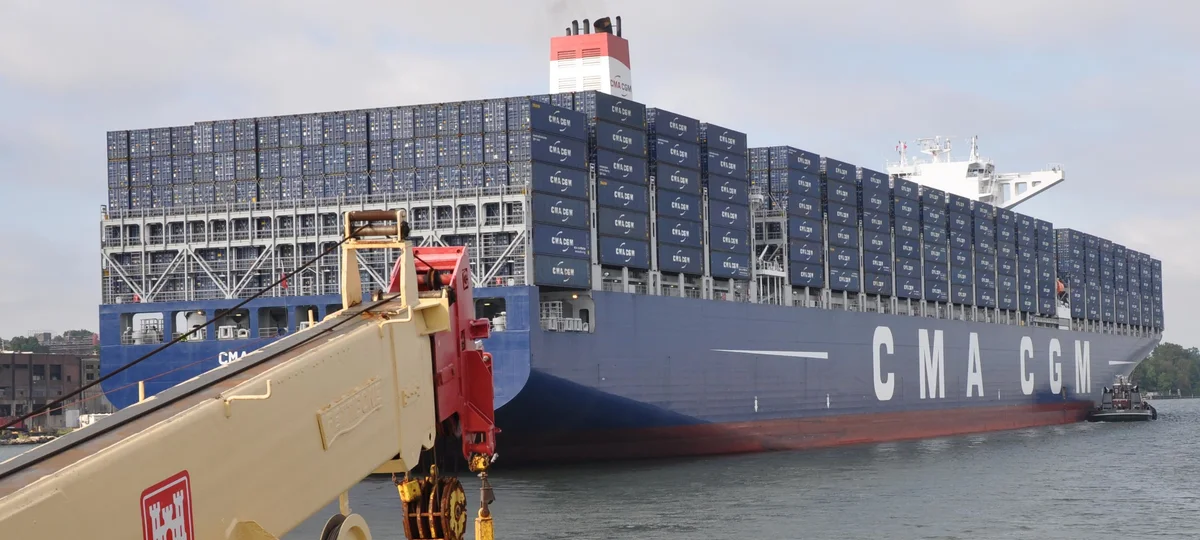
6082 replaced the older 6351 and HE30 grades as Europe's main structural aluminium alloy, and it is the extrusion grade most often used alongside 5083 plate in aluminium ships, offshore modules and gangways. Its relatively high silicon (0.7 – 1.3 %) and magnesium (0.6 – 1.2 %) give the most Mg2Si strengthening in the 6xxx family, and its manganese addition (0.4 – 1.0 %) keeps the grain structure fine, which supports toughness and strength in thick sections.
Copper is held to 0.10 % or less, so 6082 resists marine atmospheres better than the copper-bearing 6061, although like all 6xxx alloys it should be anodised or painted where seawater contact is frequent. Class societies list 6082 in T5 and T6 for ship extrusions, and Eurocode 9 (EN 1999) gives design values for welded and unwelded members.
Square bar in 6082-T6 suits stiffeners and frames, keel and machinery seats, hatch coamings, brackets and pads, and all kinds of machined fittings. Strength depends on size: the EN 755-2 minimum is 295 / 250 MPa up to 20 mm, rises to 310 / 260 MPa from 20 to 150 mm, and drops to 280 / 240 MPa between 150 and 200 mm because thick bar cools more slowly during quenching.
| Element | 6082 |
|---|---|
| Silicon (Si) | 0.70 – 1.30 |
| Iron (Fe) | ≤ 0.50 |
| Copper (Cu) | ≤ 0.10 |
| Manganese (Mn) | 0.40 – 1.00 |
| Magnesium (Mg) | 0.60 – 1.20 |
| Chromium (Cr) | ≤ 0.25 |
| Zinc (Zn) | ≤ 0.20 |
| Titanium (Ti) | ≤ 0.10 |
| Others, each / total | ≤ 0.05 / ≤ 0.15 |
| Aluminium (Al) | Remainder |
Some trade tables list 6082 with a titanium range of 0.10 – 0.35 % or a required chromium content; the registered EN 573-3 limits are those shown above.
EN 755-2 minimums for extruded bar (D = side length):
| Alloy-temper | Size D (mm) | Tensile Rm (min) | Proof Rp0.2 (min) | Elongation A |
|---|---|---|---|---|
| 6082-O | ≤ 200 | ≤ 160 MPa | ≤ 110 MPa | ≥ 14 % |
| 6082-T4 | ≤ 200 | 205 MPa | 110 MPa | ≥ 14 % |
| 6082-T6 | ≤ 20 | 295 MPa | 250 MPa | ≥ 8 % |
| 6082-T6 | > 20 – 150 | 310 MPa | 260 MPa | ≥ 8 % |
| 6082-T6 | > 150 – 200 | 280 MPa | 240 MPa | ≥ 6 % |
| 6082-T6 | > 200 – 250 | 270 MPa | 200 MPa | ≥ 6 % |
Typical 6082-T6 bar achieves about 330 – 340 MPa tensile and 290 – 310 MPa proof strength with 10 – 12 % elongation.
| System | Designation |
|---|---|
| EN 573-3 | EN AW-6082 / AlSi1MgMn |
| German Werkstoff | 3.2315 |
| UNS | A96082 |
| British (former) | HE30 / H30 |
| India | 64430 (IS 733) |
| ISO | AlSi1MgMn |
| China | 6082 (GB/T 3190); bar GB/T 3191 |
| Side (mm) | kg per metre | kg per 3 m bar | kg per 6 m bar |
|---|---|---|---|
| 10 | 0.270 | 0.81 | 1.6 |
| 12 | 0.389 | 1.17 | 2.3 |
| 15 | 0.608 | 1.82 | 3.6 |
| 20 | 1.08 | 3.24 | 6.5 |
| 25 | 1.69 | 5.06 | 10.1 |
| 30 | 2.43 | 7.29 | 14.6 |
| 40 | 4.32 | 12.96 | 25.9 |
| 50 | 6.75 | 20.25 | 40.5 |
| 60 | 9.72 | 29.16 | 58.3 |
| 70 | 13.23 | 39.69 | 79.4 |
| 80 | 17.28 | 51.84 | 103.7 |
| 100 | 27.00 | 81.00 | 162.0 |
| 120 | 38.88 | 116.64 | 233.3 |
| 150 | 60.75 | 182.25 | 364.5 |
| 200 | 108.00 | 324.00 | 648.0 |
| Side length (mm) | Permitted deviation (mm) |
|---|---|
| over 8 to 18 | ±0.22 |
| over 18 to 25 | ±0.25 |
| over 25 to 40 | ±0.30 |
| over 40 to 50 | ±0.35 |
| over 50 to 65 | ±0.40 |
| over 65 to 80 | ±0.45 |
| over 80 to 100 | ±0.55 |
| over 100 to 120 | ±0.65 |
| over 120 to 150 | ±0.80 |
| over 150 to 180 | ±1.00 |
| over 180 to 220 | ±1.15 |
Tolerances follow EN 755-4 for alloy group I. Corner radius, twist and straightness are also controlled by that standard; precision-cut or milled blanks can be supplied to tighter limits.
MIG/TIG with ER5356 (marine standard) or ER5183 for higher fillet strength; ER4043 on crack-prone joints. Weld-zone proof strength falls to roughly half the T6 value; Eurocode 9 gives the reduction factors.
Excellent in T6: short chips and a good surface; hold-down stresses are lower in T6511 bar.
T6 bends only to generous radii; bend in O or T4 and age to T6 afterwards.
Protective anodising is effective; decorative anodising is slightly less uniform than 6060 or 6063.
When 6082 square bar forms part of the hull structure or of class-relevant equipment, the classification society's material rules apply. In broad terms they require the material to come from a works approved by the society, to be tested per batch for tensile properties, and to be delivered with a certificate endorsed or issued under the surveyor's supervision. Requirements differ between DNV, ABS, Lloyd's Register, Bureau Veritas and other societies, so state the society and the rule edition on your order.
| Item | What is usually required |
|---|---|
| Alloy and temper | 6082 in T5 or T6 (as listed in the society's aluminium alloy tables) |
| Testing | Tensile test per batch; chemistry per cast; additional tests where the rules call for them |
| Marking | Alloy, temper, cast or batch number and the surveyor's stamp where applicable |
| Certificate | Inspection certificate type 3.1 or 3.2 to EN 10204, as the rules specify |
| Welding | Approved welding procedures and qualified welders; welded design values from the rules |
For non-class items such as outfitting, a standard EN 10204 3.1 certificate to EN 755-2 is normally sufficient.
| Alloy | Min. proof (bar, 20 – 50 mm) | Copper | Typical role |
|---|---|---|---|
| 6082-T6 | 260 MPa | ≤ 0.10 % | Primary extruded structure |
| 6061-T6 | 240 MPa | 0.15 – 0.40 % | Machined parts, ASTM projects |
| 6005A-T6 | 225 MPa | ≤ 0.30 % | Thin-wall and hollow sections |
| 5083-H112 | about 110 – 125 MPa | ≤ 0.10 % | Welded parts in seawater |
Yes. It is the main class-recognised extrusion alloy for ship structure, with low copper for good atmospheric corrosion resistance. Protect it where seawater contact is frequent.
EN 755-2 minimums are 310 MPa tensile and 260 MPa proof for 20 – 150 mm, 295 / 250 MPa up to 20 mm and 280 / 240 MPa for 150 – 200 mm.
Slightly, in extruded bar: 260 MPa versus 240 MPa minimum proof strength in T6 for mid-range sizes.
About 9.72 kg per metre.
HE30 (or H30) under the former BS 1474 standard.
Send temper, size, length, quantity and destination for availability, certification and a delivered price.






