Turning
Use sharp, polished tools with a large positive rake and a chip-breaker; run high cutting speeds with coolant to stop built-up edge. Expect a better finish from H112 than from fully soft O bar.



5A02 round bar is extruded from a 2.5 % magnesium aluminium alloy that resists seawater, welds without losing a heat-treated temper and machines into shafts, pins, bushes and fittings. It is supplied in the soft O and as-extruded H112 tempers to GB/T 3191, with AMg2, 5251 and 5052 as its nearest international grades. Metline cuts 5A02 rod to length and ships it with mill certificates worldwide.
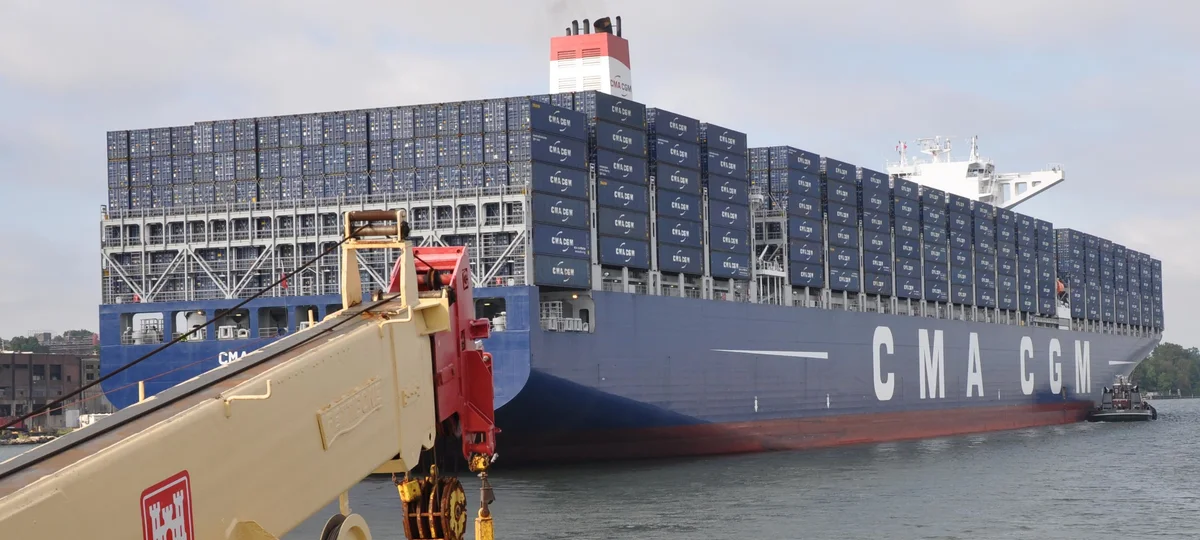
Round bar is the most versatile form of a marine alloy. It is turned into shafts and pins, bored into bushes and sleeves, cut into blanks for flanges and bosses, and drawn down into wire for rivets. In a salt-laden environment the alloy choice matters as much as the dimensions, because a part that pits or cracks around a fastener hole soon becomes a maintenance problem.
5A02 belongs to the aluminium-magnesium (5xxx) series. Its 2.0 – 2.8 % magnesium content gives moderate strength and a robust passive film in seawater, while copper is held to 0.10 % or less. Because the alloy is strengthened by its magnesium and by cold work rather than by heat treatment, there is no quench-and-age temper to lose when a bar is welded to a bracket or plate. The heat-affected zone ends up close to the annealed condition that O-temper bar already has.
The grade is designated in China's GB/T 3190 and was formerly known as LF2. Shipyards and equipment makers working to GB and GOST specifications use it widely, and it is common on fishing vessels, ferries, patrol craft and inland waterway boats built to those codes. Elsewhere the same role is filled by 5052 or 5251 rod, and 5A02 is a sensible substitute when the drawing allows it.
GB/T 3190 sets the limits below. In practice most casts run near the middle of the magnesium range, about 2.4 %, which balances strength against extrudability.
| Element | Limit (%) |
|---|---|
| Magnesium (Mg) | 2.0 – 2.8 |
| Manganese (Mn) or chromium (Cr) | 0.15 – 0.40 |
| Silicon (Si) | ≤ 0.40 |
| Iron (Fe) | ≤ 0.40 |
| Copper (Cu) | ≤ 0.10 |
| Titanium (Ti) | ≤ 0.15 |
| Others, each / total | ≤ 0.05 / ≤ 0.15 |
| Aluminium (Al) | Remainder |
Compared with 5052 (Mg 2.2 – 2.8 %, Cr 0.15 – 0.35 %), 5A02 allows slightly lower magnesium and permits manganese in place of chromium. The effect on properties is small, but it is the reason the two grades are described as close equivalents rather than identical.
GB/T 3191 controls 5A02 bar by a tensile ceiling and an elongation floor. The ceiling ensures the bar is soft enough for heading and forming; the floor guarantees ductility. Typical values are shown for design guidance only.
| Temper | Diameter (mm) | Tensile strength Rm | Proof strength Rp0.2 | Elongation A |
|---|---|---|---|---|
| O, H112 (standard requirement) | 25 – 150 | ≤ 225 MPa | — | ≥ 10 % |
| O (typical) | all | 170 – 200 MPa | 70 – 90 MPa | 20 – 25 % |
| H112 (typical) | all | 180 – 220 MPa | 80 – 110 MPa | 15 – 22 % |
If you need guaranteed minimum proof strength for a structural calculation, order a grade and standard that specify it, for example 5083-H112 to EN 755-2, or 5052-H112 with agreed minimums.
| Standard system | Grade | Typical bar specification |
|---|---|---|
| China | 5A02 (LF2) | GB/T 3191 bars, GB/T 14846 tolerances, GB/T 6892 general extrusions |
| Russia / CIS | AMg2 (1520) | GOST 21488 pressed bars |
| USA | 5052 (UNS A95052) | ASTM B211 cold-finished, ASTM B221 extruded |
| Europe | EN AW-5251 (AlMg2Mn0.3) or EN AW-5052 | EN 755-2 properties, EN 755-3 tolerances |
| Japan | A5052BE / A5052BD | JIS H4040 |
Tell us which standard appears on your drawing. Where a buyer outside China asks for 5A02, we can supply 5A02 itself or quote the nearest EN or ASTM grade with a certificate to that standard.
Weight per metre is π/4 × d² × 2.68 / 1,000 (d in mm). Quick reference:
| Diameter (mm) | kg per metre | kg per 3 m bar | kg per 6 m bar |
|---|---|---|---|
| 8 | 0.135 | 0.40 | 0.8 |
| 10 | 0.210 | 0.63 | 1.3 |
| 12 | 0.303 | 0.91 | 1.8 |
| 16 | 0.539 | 1.62 | 3.2 |
| 20 | 0.84 | 2.53 | 5.1 |
| 25 | 1.32 | 3.95 | 7.9 |
| 30 | 1.89 | 5.68 | 11.4 |
| 40 | 3.37 | 10.10 | 20.2 |
| 50 | 5.26 | 15.79 | 31.6 |
| 60 | 7.58 | 22.73 | 45.5 |
| 70 | 10.31 | 30.94 | 61.9 |
| 80 | 13.47 | 40.41 | 80.8 |
| 100 | 21.05 | 63.15 | 126.3 |
| 120 | 30.31 | 90.93 | 181.9 |
| 150 | 47.36 | 142.08 | 284.2 |
| 200 | 84.19 | 252.58 | 505.2 |
| 250 | 131.55 | 394.66 | 789.3 |
| 300 | 189.44 | 568.31 | 1136.6 |
Extruded 5A02 rod is normally supplied to the ordinary-grade diameter tolerances of GB/T 14846, which follow the same pattern as EN 755-3 for the easier-to-extrude alloy group. Larger diameters carry wider tolerances: about ±1.3 mm for 220 – 270 mm and ±1.6 mm for 270 – 320 mm.
| Diameter (mm) | Permitted deviation (mm) |
|---|---|
| over 8 to 18 | ±0.22 |
| over 18 to 25 | ±0.25 |
| over 25 to 40 | ±0.30 |
| over 40 to 50 | ±0.35 |
| over 50 to 65 | ±0.40 |
| over 65 to 80 | ±0.45 |
| over 80 to 100 | ±0.55 |
| over 100 to 120 | ±0.65 |
| over 120 to 150 | ±0.80 |
| over 150 to 180 | ±1.00 |
| over 180 to 220 | ±1.15 |
Use sharp, polished tools with a large positive rake and a chip-breaker; run high cutting speeds with coolant to stop built-up edge. Expect a better finish from H112 than from fully soft O bar.
Spiral-flute drills with polished flutes clear chips best. Form taps and roll threads give stronger, galling-resistant threads.
TIG or MIG with ER5356 or ER5183. Clean oxide and grease immediately before welding; preheat is not normally needed.
O-temper 5A02 heads and swages well, which is why rivets, studs and terminal fittings are made from it.
Clear anodising or a marine primer adds life in the splash zone; avoid copper-containing antifouling paints in direct contact.
Isolate from stainless steel, bronze and steel with nylon or PTFE washers and a barrier compound to prevent galvanic attack.
| Grade | Typical tensile strength | Seawater resistance | Machinability | Best for |
|---|---|---|---|---|
| 5A02 O / H112 | 170 – 220 MPa | Very good | Fair | Fittings, rivets, ductile parts on GB/GOST vessels |
| 5052 H112 / H32 | 195 – 230 MPa | Very good | Fair | Same role in ASTM and JIS markets |
| 5083 H112 | 270 – 300 MPa | Excellent | Fair | Higher-load welded marine parts |
| 6061-T6 | 290 – 310 MPa | Good | Very good | Precision machined parts above the waterline |
A useful rule: if the part is welded and lives in seawater, stay in the 5xxx family; if it is machined to tight tolerances and lives above the waterline, 6061-T6 or 6082-T6 usually machines faster and holds size better.
Not exactly. Both contain about 2.5 % magnesium, but 5052 uses chromium as its grain-refining addition while 5A02 allows manganese or chromium. Properties and corrosion behaviour are very close, so many engineers accept one for the other after checking the drawing.
Extruded bar is normally available from about 8 mm up to roughly 320 mm diameter, in lengths up to about 6 m, with cut pieces on request.
The O and H112 conditions are meant to be soft and ductile for heading, swaging and forming. A tensile ceiling ensures the bar has not been accidentally cold-worked beyond what those processes can tolerate.
Yes, it resists seawater well. Keep it electrically isolated from more noble metals such as stainless steel and bronze, and protect submerged assemblies with sacrificial anodes.
About 21.0 kg per metre, so a 3 m length weighs roughly 63 kg.
Yes. Each lot ships with an EN 10204 3.1 certificate showing chemistry and mechanical test results; class-society or third-party witness testing can be arranged when your order calls for it.
Send diameter, temper, length, quantity and destination, and we will reply with availability, certification and a delivered price.






