T4
Solution treated, quenched and naturally aged. Lowest yield and best formability; the delivery condition for pressed parts. Strength rises slowly over the first weeks after quenching.



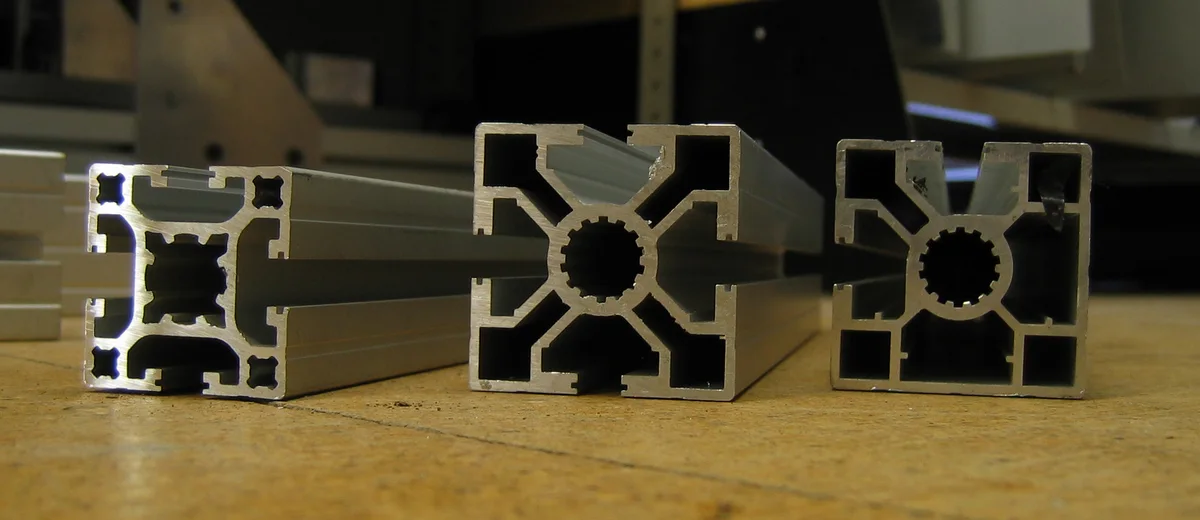
2008 is a heat-treatable aluminium alloy with about 0.9 % copper, magnesium and silicon, developed for formed automotive body parts. Its low T4 yield strength gives very good formability and low springback, and it gains strength in the paint-bake oven. Metline supplies 2008 sheet and extruded profiles to drawing, with full certification, to automotive manufacturers worldwide.
2008 belongs to a small group of low-copper 2xxx alloys created when car makers first moved body panels from steel to aluminium. It sits between the classic aerospace 2xxx grades and the 6xxx alloys now used for most body sheet: it has far less copper than 2024, so it is formable and reasonably weldable, but more copper than 6xxx alloys, which strengthens the paint-bake response.
In service history, 2008-T4 was used for inner panels such as hood inners, where its low yield strength reduced springback and allowed deep draws. It even replaced steel in a differential cover pressed in the same tools at the same gauge, a good illustration of how formable it is. Its weakness was a limited response to low paint-cure temperatures, which kept it out of outer skins where dent resistance after baking matters most.
Today most new body programmes use 6xxx alloys such as 6016, 6111 and 6022, but 2008 is still specified for replacement parts, legacy drawings and some formed or extruded components where its forming and bake-hardening balance suits the part.
Composition limits as registered with the Aluminum Association. Silicon and magnesium together form Mg2Si, while copper adds a further ageing response and strength.
| Element | Minimum | Maximum | Role |
|---|---|---|---|
| Silicon (Si) | 0.50 | 0.8 | Forms Mg2Si with magnesium; improves bake response |
| Iron (Fe) | — | 0.40 | Impurity; controlled for formability |
| Copper (Cu) | 0.7 | 1.1 | Main extra strengthening element |
| Manganese (Mn) | — | 0.30 | Grain control |
| Magnesium (Mg) | 0.25 | 0.50 | Strengthening with Si and Cu |
| Chromium (Cr) | — | 0.10 | Grain control |
| Zinc (Zn) | — | 0.25 | Impurity |
| Titanium (Ti) | — | 0.10 | Grain refiner |
| Others, each / total | — | 0.05 / 0.15 | |
| Aluminium (Al) | Remainder |
2008 is usually delivered in T4, a solution heat-treated and naturally aged condition. The table places it beside its sister alloys and the 6xxx grades that replaced them.
| Alloy-temper | Tensile strength | Yield strength | Elongation | Typical role |
|---|---|---|---|---|
| 2008-T4 | ≈ 250 MPa | ≈ 125 MPa | ≈ 28 % | Inner panels, formed parts |
| 2010-T4 | ≈ 255 MPa | ≈ 140 MPa | ≈ 25 % | Inner and outer panel trials |
| 2036-T4 | ≈ 340 MPa | ≈ 195 MPa | ≈ 24 % | Outer skins (hoods, decklids) |
| 6016-T4 | ≈ 230 – 250 MPa | ≈ 110 – 120 MPa | ≈ 25 % | Current European outer panels |
| 6111-T4 | ≈ 290 MPa | ≈ 160 MPa | ≈ 25 % | Current North American outer panels |
Approximate typical values for T4 sheet from published autobody-alloy data (ASM handbooks and producer literature), rounded. They are not specified minimums; actual values depend on gauge, ageing time and supplier practice and are reported on the certificate.
Because 2008 is not listed with guaranteed minimums in the general extrusion standards, strength requirements for T6 profiles are agreed per order. As a rule of thumb, artificially aged 2008 reaches a moderate strength level, above 6063-T6 but below 6061-T6, so set the minimum you need on the drawing and we will confirm it before production.
Solution treated, quenched and naturally aged. Lowest yield and best formability; the delivery condition for pressed parts. Strength rises slowly over the first weeks after quenching.
The forming is done in T4, then the paint oven gives a partial artificial age. This is the in-service condition of most body parts.
Fully artificially aged for maximum strength, used for extruded or machined components that are not formed after heat treatment.
Annealed, for very severe forming followed by re-heat treatment. Rarely used in production.
2008 is a specialised alloy. Feasibility and minimum run size are confirmed per enquiry; we will suggest a 6xxx equivalent where it gives a better result.
Form in the T4 (naturally aged) condition, when yield strength is low and elongation high. Low yield also reduces springback, which is why these alloys were first used for inner panels.
A paint-bake cycle (around 170 – 180 °C for 20 – 30 minutes) partially ages the metal and raises yield strength in the finished part. Full T6 needs a longer artificial ageing treatment.
Resistance spot welding, self-piercing riveting, clinching and adhesive bonding are the normal body-shop methods. Fusion welding with 4043 / 4047 filler is possible but more crack-sensitive than 6xxx alloys, so qualify the procedure.
Copper lowers corrosion resistance compared with 5xxx and 6xxx grades. Parts need conversion coating, e-coat and paint; avoid unprotected exposure to road salt and contact with bare steel.
Machines well in T4 and better in T6, with short chips. Use sharp carbide tools and coolant.
Anodises with a slightly yellowish tint because of the copper; powder coating and e-coat are the more common finishes on vehicle parts.
Earlier descriptions sometimes list 2008 for suspension arms, steering knuckles or wheels. Those safety parts are normally forged 6061 / 6082 or cast A356, which are proven and standardised for that duty.
| Requirement | 2008 | 6016 / 6111 | 6063 / 6061 extrusions |
|---|---|---|---|
| Formability in T4 | Excellent | Very good | Good (6063), fair (6061) |
| Paint-bake strength gain | Moderate | Good | Not usually relied on |
| Corrosion resistance | Fair; needs paint | Good | Good |
| Availability | Specialised | Mainstream body sheet | Mainstream extrusions |
| Recyclability within 6xxx scrap | Copper complicates | Good | Good |
For new designs, compare 2008 with 6016 body sheet or 6063 automotive profiles. Keep 2008 where the drawing calls for it or the forming behaviour clearly justifies it.
It was developed for formed automotive body parts, especially inner panels, where low T4 yield strength gives good formability and little springback. It is also used for some extruded and pressed components.
No. 2008 has about 0.9 % copper; 2024 has about 4.4 % copper and 1.5 % magnesium. 2008 is far more formable and weldable, while 2024 is much stronger but needs careful corrosion protection.
Yes, by resistance spot welding and, with qualified procedures, by MIG or TIG with 4xxx filler. Body structures in this alloy are also commonly joined by self-piercing rivets and adhesives.
6xxx alloys gave a better paint-bake strength gain, better corrosion behaviour and simpler recycling, so they became the standard for both inner and outer panels.
T4 for parts that will be formed and paint-baked; T6 for extruded or machined parts that are used straight from heat treatment.
Yes. Metline supplies 2008 sheet and profiles to order worldwide, with EN 10204 3.1 certificates and export packing.
Send the part drawing, temper and volume. We will confirm feasibility, suggest alternatives if useful and quote delivered terms.





