


7014 Aerospace Aluminium Bar & Rod
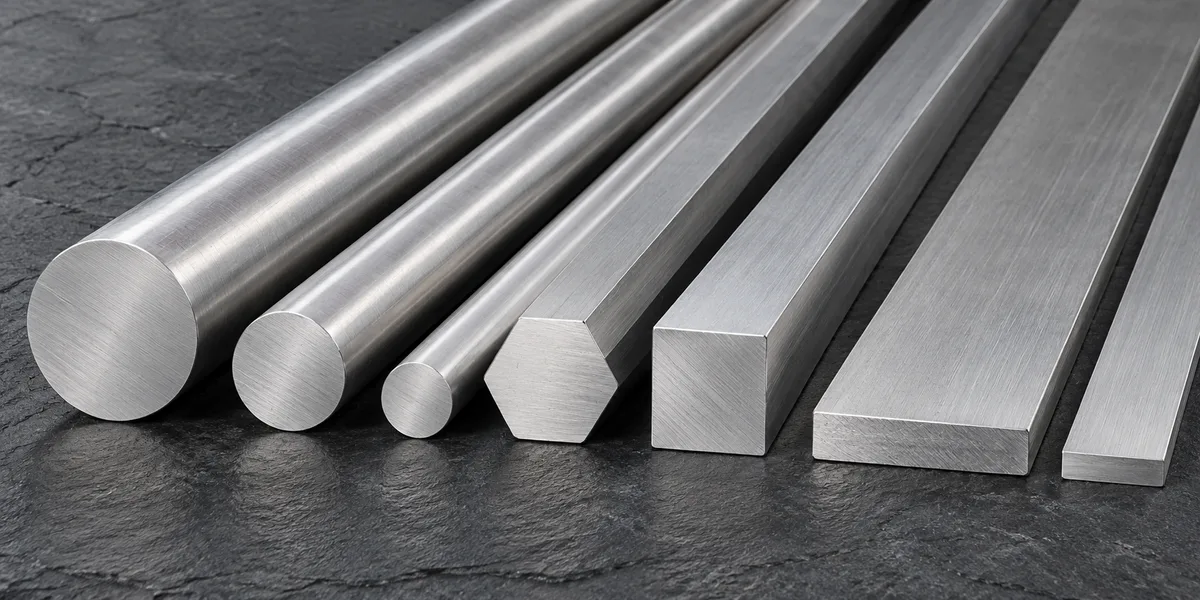
7014 is a British high-strength Al-Zn-Mg-Mn-Cu aerospace alloy, used as extruded or rolled bar, forging stock and machined parts in the solution-treated and overaged condition. It appears mainly on UK and legacy airframe and engine drawings. Metline sources 7014 bar to BS L 172 and purchaser specifications, and can offer approved alternatives such as 7075-T73 and 7050 where 7014 is not practical, with certification and worldwide delivery.
- Alloy
- 7014 (Zn 5.7, Mg 2.7, Mn 0.5, Cu 0.5)
- Condition
- F / O stock; solution treated & overaged parts
- Standards
- BS L 172 · BS L 171 · purchaser specs
- Forms
- Extruded and rolled bar, forging stock
What is 7014 aluminium bar?
7014 belongs to the 7xxx family, strengthened by zinc and magnesium precipitates. Compared with 7075 it uses more magnesium and less zinc, and replaces chromium with about 0.5 % manganese for grain control, while a modest copper addition supports stress-corrosion resistance.
The alloy was developed for British aerospace use and is specified through BS aerospace (L-series) and Ministry of Defence specifications. Bar is supplied as extruded or rolled product, either for machining or as forging stock under BS L 172. Finished parts are used in the solution-treated and overaged condition, which gives high strength together with much better resistance to stress-corrosion cracking than the peak-aged T6 condition.
Today 7014 is a specialised, low-volume material. Most demand comes from maintenance, spares and re-manufacture of existing aircraft and engines whose drawings call for it. For new designs, engineers generally choose 7075-T73, 7050 or 7175, which are covered by SAE AMS specifications and are widely available.
7014 chemical composition (wt %)
7014 is defined by British aerospace specifications rather than by a widely published international data sheet. Its nominal composition, given in the titles of BS L 171 and BS L 172, is Zn 5.7 – Mg 2.7 – Mn 0.5 – Cu 0.5. The ranges below are the indicative limits most often quoted for the alloy; the governing values are those of the specification and revision on your order, and every lot is certified against it.
| Element | Nominal | Indicative range | Role |
|---|---|---|---|
| Zinc (Zn) | 5.7 | 5.2 – 6.2 | Main strengthening element with Mg |
| Magnesium (Mg) | 2.7 | 2.2 – 3.2 | Forms MgZn2; high Mg gives strength at modest Zn |
| Manganese (Mn) | 0.5 | 0.3 – 0.7 | Grain control in place of chromium |
| Copper (Cu) | 0.5 | 0.3 – 0.7 | Improves stress-corrosion resistance and strength |
| Silicon (Si) | — | ≤ 0.50 | Impurity |
| Iron (Fe) | — | ≤ 0.50 | Impurity |
| Titanium + zirconium | — | ≤ 0.20 | Grain refinement |
| Aluminium (Al) | Remainder |
Properties and heat treatment
Mechanical properties of 7014 are set by the governing specification for each product form and section size, and are reported on the certificate for the lot. We do not publish single "typical" figures because the published data for this alloy are sparse and older sources disagree; quoting them would be misleading.
In practice, 7014 bar in the solution-treated and overaged condition is used where high strength is needed together with good resistance to stress-corrosion cracking, similar in purpose to 7075-T73. Physical properties are those of typical 7xxx alloys: density about 2.78–2.80 g/cm³, modulus of elasticity about 70–72 GPa and a thermal expansion of about 23 µm/m·°C.
Typical heat-treatment route for parts
- Stock condition
- As-extruded (F) or annealed (O) for machining or forging
- Solution treatment
- Heated to the specified solution temperature and quenched
- Ageing
- Two-stage or extended ageing to an overaged condition for SCC resistance
- Verification
- Tensile tests, hardness and electrical conductivity per the specification
Specifications for 7014
| Specification | Scope |
|---|---|
| BS L 171 | Forgings of Al-Zn-Mg-Mn-Cu alloy 7014, up to 150 mm diameter or minor section, supplied as-forged or annealed for use solution treated and overaged |
| BS L 172 | Extruded, rolled or cast forging stock for forgings to BS L 171 |
| UK DTD specifications | Legacy Ministry of Defence material specifications for 7014 bar, section, forgings and plate; still cited on older drawings |
| Purchaser / OEM specifications | Many 7014 orders are placed against the airframe or engine maker's own material specification |
Some suppliers list 7014 bar in tempers such as T4, T6 or T74. Treat these with caution: the BS specifications define the alloy for use in the solution-treated and overaged condition, and any other temper must match your drawing.
Forms and sizes
7014 bar supply
- Forms
- Extruded round, square and rectangular bar; rolled bar; cast or extruded forging stock
- Sizes
- Diameter and length to order, quoted against the drawing and specification
- Condition
- F or O for subsequent heat treatment, or heat-treated to the specification
- Processing
- Saw cutting to blanks; machining on request
- Certification
- EN 10204 3.1 with chemistry and mechanical results
Where 7014 bar is used
- Airframe fittings: machined brackets, links and lugs on legacy UK designs
- Engine and accessory parts: mounting fittings and housings machined from bar
- Forging stock: billets for 7014 forgings to BS L 171
- Spares and MRO: replacement parts made to original drawings
Alternatives to 7014 bar
If 7014 is hard to source in the size and quantity you need, these alloys are commonly evaluated as replacements. Substitution always requires approval from the design authority.
| Alloy and temper | Why it is considered | Typical specifications |
|---|---|---|
| 7075-T73 / T7351 | Overaged, stress-corrosion-resistant 7xxx with worldwide availability | SAE AMS bar, plate and forging specifications; ASTM B211, B209, B247 |
| 7050-T74 / T7451 | Higher strength than 7075-T73 with good SCC resistance, low quench sensitivity | SAE AMS plate, extrusion and forging specifications |
| 7175-T74 | High-purity forging alloy with excellent toughness | SAE AMS forging specifications |
| 7010-T7451 | European thick-plate and forging alternative | AMS 4205, EN 485 |
How to order 7014 bar
- SpecifyDrawing number, governing specification and revision, product form, size, condition and quantity.
- ReviewWe confirm sourcing route, test requirements, certification and delivery terms (EXW, FOB, CIF or DAP), or propose an alternative for approval.
- DocumentEN 10204 3.1 certificate against the ordered specification.
- ShipExport-packed by sea or air.
References and standards
- BS L 172 – Extruded, rolled or cast forging stock of Al-Zn-Mg-Mn-Cu alloy for forgings to BS L 171 (7014)
- BS L 171 – Forgings of Al-Zn-Mg-Mn-Cu alloy (7014)
- The Aluminum Association – International Alloy Designations and Chemical Composition Limits (Teal Sheets)
- ASM Handbook, Vol. 2 – Properties and Selection: Nonferrous Alloys and Special-Purpose Materials
7014 aerospace bar: frequently asked questions
What is 7014 aluminium?
A British high-strength 7xxx aerospace alloy with nominal composition Zn 5.7, Mg 2.7, Mn 0.5 and Cu 0.5, used in the solution-treated and overaged condition.
Which standard covers 7014 bar?
BS L 172 covers 7014 forging stock, including extruded and rolled bar, and BS L 171 covers the forgings made from it. Legacy UK MoD specifications and purchaser specifications are also used.
Is 7014 the same as 7075?
No. 7014 has more magnesium, less zinc and copper, and uses manganese instead of chromium. 7075-T73 is a common approved alternative, but only with design authority approval.
Is 7014 bar readily available?
It is a low-volume material made to order. Send the specification and size, and we will confirm the sourcing route or suggest an AMS-specified alternative.
Need 7014 bar for a legacy drawing?
Send the drawing, specification and quantity. We will confirm sourcing, certification and a delivered price, or propose an alternative.





