Weld-on hull anodes
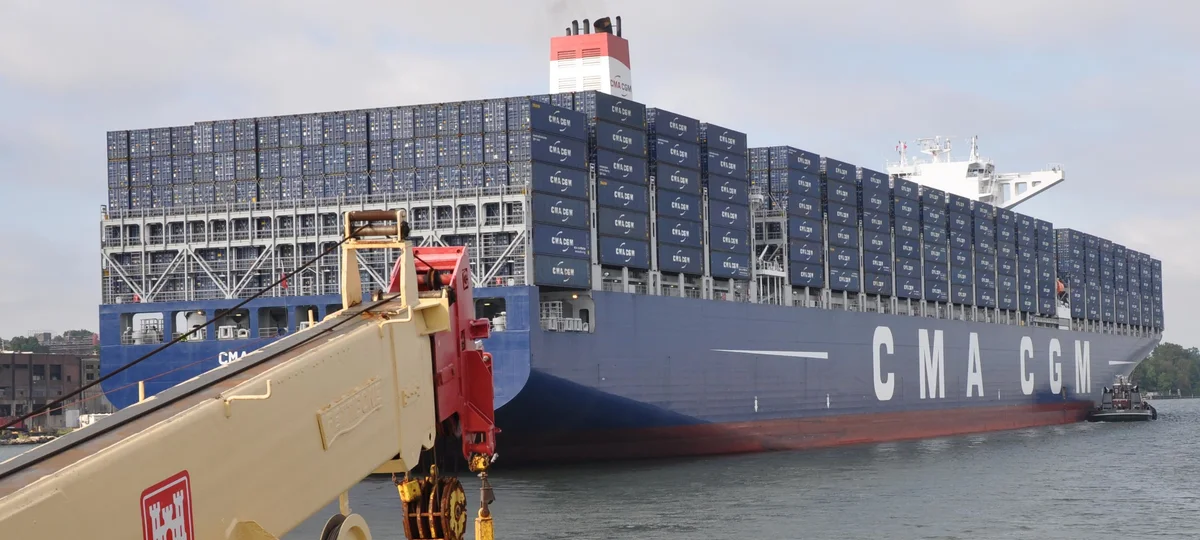
Long trapezoidal blocks with a steel strap or single/double foot welded to the hull. Distributed along the bilge keel, stern frame and around sea chests.



A sacrificial anode is a block of a more active metal, usually a zinc-aluminium-cadmium alloy, an aluminium-zinc-indium alloy or magnesium, that corrodes in place of the steel or aluminium structure it is connected to. Zinc anodes are the traditional choice for ships, ballast tanks and seawater cooling systems; aluminium anodes deliver more than twice the charge per kilogram and now dominate offshore work. This guide compares the alloys, their standards and how to size them.
Corrosion is an electrochemical cell: metal dissolves at anodic sites and electrons are consumed at cathodic sites. Connect a metal that is more electrically negative than the structure, and the whole structure becomes the cathode. The anode dissolves instead, releasing a protective current through the electrolyte (seawater, brackish water or soil).
For steel in seawater, protection is normally achieved when the structure potential is shifted to −0.80 V or more negative against a silver/silver chloride (Ag/AgCl) reference electrode. Aluminium structures are protected at around −0.95 to −1.10 V Ag/AgCl, and must not be driven too negative, because excess alkalinity at the surface attacks aluminium. That limit is why magnesium anodes are avoided on aluminium hulls in seawater.
A good anode alloy needs three things: a sufficiently negative working potential, a high and predictable current capacity (ampere-hours delivered per kilogram consumed), and uniform dissolution, so the surface stays active and corrosion products fall away rather than forming an insulating crust. Small alloy additions (aluminium and cadmium in zinc; zinc and indium in aluminium) exist precisely to keep the anode active.
| Property | Zinc (Zn-Al-Cd) | Aluminium (Al-Zn-In) | Magnesium |
|---|---|---|---|
| Closed-circuit potential (Ag/AgCl, seawater) | about −1.03 V | about −1.05 V | about −1.5 to −1.7 V |
| Theoretical capacity | 820 Ah/kg | 2,980 Ah/kg | 2,200 Ah/kg |
| Design capacity, seawater ≤ 30 °C (DNV-RP-B401) | 780 Ah/kg | 2,000 Ah/kg | Not used offshore |
| Density | 7.1 g/cm³ | 2.7 g/cm³ | 1.7 g/cm³ |
| Best environment | Seawater, brackish water, ballast tanks | Seawater, seabed mud, offshore | Fresh water, high-resistivity soil |
| Temperature limit | Avoid above about 50 °C (passivation risk) | Capacity falls with temperature; derate | Fast consumption |
| Typical use | Ships, cooling systems, tanks, small craft | Platforms, jackets, pipelines, ship hulls | Freshwater boats, buried pipes, water heaters |
Capacity and potential values are design values from DNV-RP-B401 for seawater service; manufacturers’ test values are often higher, but designs should use the code values.
Weight for weight, an aluminium anode delivers about 2.5 times the charge of a zinc anode, so the same protection needs far less anode mass. That saving matters on offshore jackets and long pipelines, and on weight-sensitive vessels. Zinc remains popular in ballast tanks, on ships that move between waters and in seawater cooling systems because of its long track record and tolerance of intermittent wetting.
Zinc anodes for seawater are made to ASTM B418 Type I or the near-identical US military specification MIL-DTL-18001. Some national standards allow slightly higher aluminium and cadmium contents, for example Al 0.3 – 0.6 % and Cd 0.05 – 0.12 %, which is the chemistry quoted on many Zn-Al-Cd datasheets. Iron is the critical impurity: above about 0.005 % it forms an insulating layer and the anode stops working.
| Element | Zn-Al-Cd (ASTM B418 Type I) | Al-Zn-In (typical DNV-RP-B401 range) |
|---|---|---|
| Zinc (Zn) | Remainder | 2.5 – 5.75 |
| Aluminium (Al) | 0.10 – 0.50 | Remainder |
| Cadmium (Cd) | 0.025 – 0.07 | ≤ 0.002 |
| Indium (In) | — | 0.015 – 0.040 |
| Iron (Fe) | ≤ 0.005 | ≤ 0.09 |
| Copper (Cu) | ≤ 0.005 | ≤ 0.003 |
| Lead (Pb) | ≤ 0.006 | — |
| Silicon (Si) | ≤ 0.125 | ≤ 0.12 |
Raw material purity drives performance. Zinc anodes are normally cast from special high grade zinc (99.99 % or better), and aluminium anodes from primary aluminium of at least 99.7 – 99.8 % purity, with indium and zinc added as master alloys. Cadmium-free zinc anodes (ASTM B418 Type II, high-purity zinc) are specified where cadmium is restricted, mainly in brackish water and for environmental reasons.
Long trapezoidal blocks with a steel strap or single/double foot welded to the hull. Distributed along the bilge keel, stern frame and around sea chests.
The same blocks with a drilled or slotted insert, bolted to studs. Used where hot work is restricted or for easy replacement at dry-dock.
Heavier tapered blocks on long inserts, positioned to protect tank floors and lower walls that are wet only when ballasted.
Large stand-off anodes on steel cores for sheet piles, piers, dolphins and mooring structures.
Bar and disc anodes fitted in sea chests, strainers, coolers and pipe headers to protect steel and copper-alloy components.
Bracelet anodes for subsea pipelines; packaged zinc or magnesium anodes in backfill for buried pipelines.
The basic rule from DNV-RP-B401 and ISO 15589-2 is that the anodes must supply the mean current demand for the whole design life. The net anode mass is:
Worked example. A section of coated steel with a mean current demand of 2 A for 5 years needs 2 × 5 × 8760 ÷ (0.85 × 780) ≈ 132 kg of zinc anode, or 2 × 5 × 8760 ÷ (0.85 × 2000) ≈ 52 kg of aluminium anode. The designer then checks that the anodes can also deliver the initial and final current (which depends on anode surface area and shape) and spreads them to give uniform protection.
Aluminium boats in 5083, 5086 and 5383 plate are naturally resistant to seawater, but any contact with stainless steel shafts, bronze propellers or steel fittings creates a galvanic couple, and stray currents in marinas can attack the hull. Anodes on an aluminium vessel protect both the hull and these dissimilar fittings.
| Check | Typical requirement |
|---|---|
| Chemical analysis | Each heat analysed against the specified alloy limits |
| Electrochemical test | Capacity and potential test per DNV-RP-B401 Annex or NACE TM0190 on samples from production |
| Weight | Typically ±3 % on individual anodes, with total lot weight not below nominal |
| Dimensions | Length about ±2 %, width ±3 %, thickness ±5 %, straightness ≤ 2 % of length |
| Insert | Correct position, cleanliness and bond; insert steel is blasted before casting |
| Surface | No cracks, cold laps or shrinkage cavities beyond agreed limits; destructive section test on a sample |
Tolerances shown are common commercial values; the purchase specification or class rules govern.
In seawater, aluminium (Al-Zn-In) anodes last longer per kilogram and also work in brackish water, so many boat builders now prefer them. Zinc anodes are equally effective in full-strength seawater. In fresh water, zinc stops working and magnesium is normally used, except on aluminium hulls where it can over-protect.
Small amounts of aluminium and cadmium refine the grain and stop the zinc forming a dense, insulating corrosion film, so the anode keeps dissolving evenly and delivering current. Cadmium-free high-purity zinc is an alternative where cadmium is restricted.
It depends on the current it supplies. Anodes are sized for a design life, typically 2 – 5 years on ships between dry-dockings and 20 – 30 years on offshore structures. Replace hull anodes when about half the material is consumed.
Not in seawater. Magnesium drives the hull potential too negative, which produces alkalinity at the surface and can corrode aluminium and lift paint. Use aluminium or zinc anodes instead.
Iron above about 0.005 % forms an insulating layer on the anode, which then stops delivering current even though it looks intact. This is why anode specifications cap iron so tightly and why chemistry is tested on every heat.
Metline works only in aluminium. We can discuss aluminium-alloy anodes and the marine aluminium plate, pipe and extrusions they protect; zinc and magnesium anodes are covered on this page for comparison.
Tell us the environment, design life and anode drawing, and our team will reply on aluminium alloy options and supply.






