H14
Half-hard drawn wire. Straight and stable in automatic headers; the rivets are solution treated after heading.



2A10 (formerly LY10) is a high-copper, low-magnesium rivet alloy that combines about 245 MPa minimum shear strength with the convenience of driving after ageing, with no quench-to-drive limit. Supplied as H14 or T4 wire to GB/T 3195 in 1.6 to 10 mm, it is the usual choice for strong structural rivets operating below about 100 °C. Its Russian counterpart is В65.
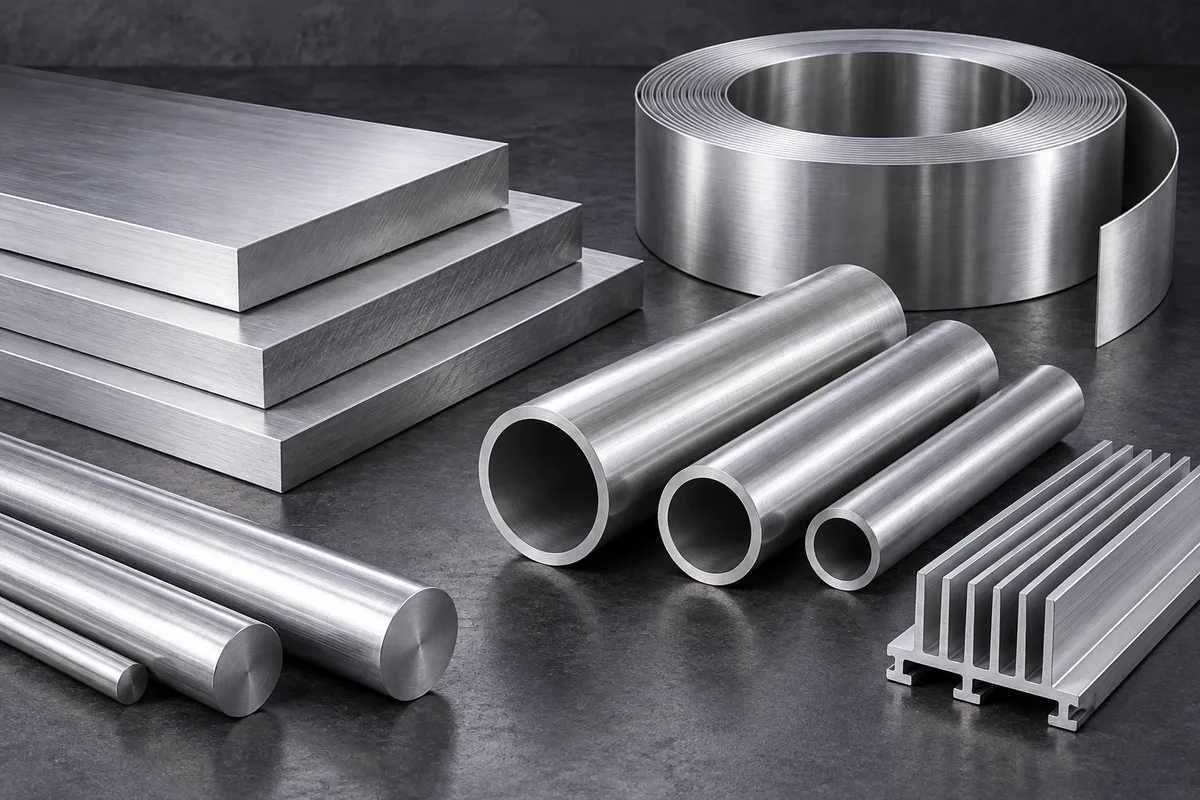
2A10 is a Chinese national-standard (GB) designation in the 2xxx Al-Cu-Mg family. The "A" in the middle shows that the grade was carried over from the older Chinese system, where it was called LY10. Its nearest Russian counterpart is В65 (1165).
2A10 contains 3.9 – 4.5 % copper but only 0.15 – 0.30 % magnesium. Some datasheets show magnesium up to 0.40 %; the registered GB and GOST (В65) limit is 0.30 %. The low magnesium is deliberate: it lets the alloy reach high shear strength while remaining drivable after natural ageing.
| Element | Minimum | Maximum |
|---|---|---|
| Copper (Cu) | 3.9 | 4.5 |
| Magnesium (Mg) | 0.15 | 0.30 |
| Manganese (Mn) | 0.30 | 0.50 |
| Silicon (Si) | — | 0.25 |
| Iron (Fe) | — | 0.20 |
| Zinc (Zn) | — | 0.10 |
| Titanium (Ti) | — | 0.15 |
| Aluminium (Al) | Remainder |
Others: each ≤ 0.05 %, total ≤ 0.10 – 0.15 % depending on edition. The certificate shows the actual melt analysis.
GB/T 3195 accepts rivet wire on two tests carried out on heat-treated samples: a shear test and an upsetting (riveting) test in which a sample of set height-to-diameter ratio is compressed into a head without cracking. Values below are the requirements commonly quoted from the standard; confirm them against the edition named on your order (the current edition is GB/T 3195-2023).
| Supply temper | Test temper | Diameter (mm) | Shear strength | Upset sample ratio | Riveting timing |
|---|---|---|---|---|---|
| H14, T4 | T4 | 1.6 – 4.5 | ≥ 245 MPa | 1.5 | After quenching and ageing |
| H14, T4 | T4 | > 4.5 – 8.0 | ≥ 245 MPa | 1.4 | After quenching and ageing |
| H14, T4 | T4 | > 8.0 – 10.0 | ≥ 235 MPa | 1.3 | After quenching and ageing |
Because the riveting test is made after ageing, 2A10 rivets can be stored and driven at any time, like 2A01, while carrying roughly a third more shear load. The low magnesium content is what keeps the aged alloy soft enough to head.
| Diameter (mm) | Class A | Class B | Class C | Class D |
|---|---|---|---|---|
| ≤ 1.6 | +0 / −0.015 | ±0.015 | ±0.015 | +0 / −0.04 |
| > 1.6 – 4.0 | +0 / −0.025 | +0.025 / −0.015 | ±0.025 | +0 / −0.05 |
| > 4.0 – 6.0 | +0 / −0.030 | ±0.025 | ±0.040 | +0 / −0.08 |
| > 6.0 – 10.0 | +0 / −0.040 | +0.050 / −0.025 | ±0.060 | +0 / −0.12 |
Half-hard drawn wire. Straight and stable in automatic headers; the rivets are solution treated after heading.
Solution treated and naturally aged wire, used where the rivet maker heads and drives within the alloy's working window.
Annealed for severe head forms; heat treated after forming.
Metline supplies an EN 10204 3.1 mill certificate with each lot on request, along with packing lists. Coils are wrapped against moisture and packed in wooden cases or on pallets for export.
At least 245 MPa for diameters up to 8 mm and 235 MPa for 8 – 10 mm, per the commonly quoted GB/T 3195 values.
No. They are tested after quenching and ageing and can be driven at any time, unlike 2A04 or 2024 rivets.
The Russian rivet alloy В65 (1165) has the same composition range. There is no exact Aluminum Association equivalent.
LY10, from the older Chinese duralumin designations.
Yes. Our 2A10 aerospace wire page covers aerospace-specific tempers and supply; this guide focuses on rivet wire to GB/T 3195.
Tell us the temper, diameter, tolerance class and quantity. We will reply with availability, certificates and delivery terms worldwide.





