Strength
Alloys of this family reach high strength after solution treatment and ageing. Actual minimums depend on the specification and temper and must come from the certificate.



"Сплав АКЦМ" means "АКЦМ alloy": an aluminium alloy whose letters, in Russian practice, signal silicon (К), zinc (Ц) and copper (М) additions. It is not among the grades in the GOST 4784 composition tables we have reviewed, so it should be treated as a trade or works designation that must be pinned to a written specification. This guide decodes the name, explains what its quoted chemistry implies, and shows how to order it or a standard substitute safely.
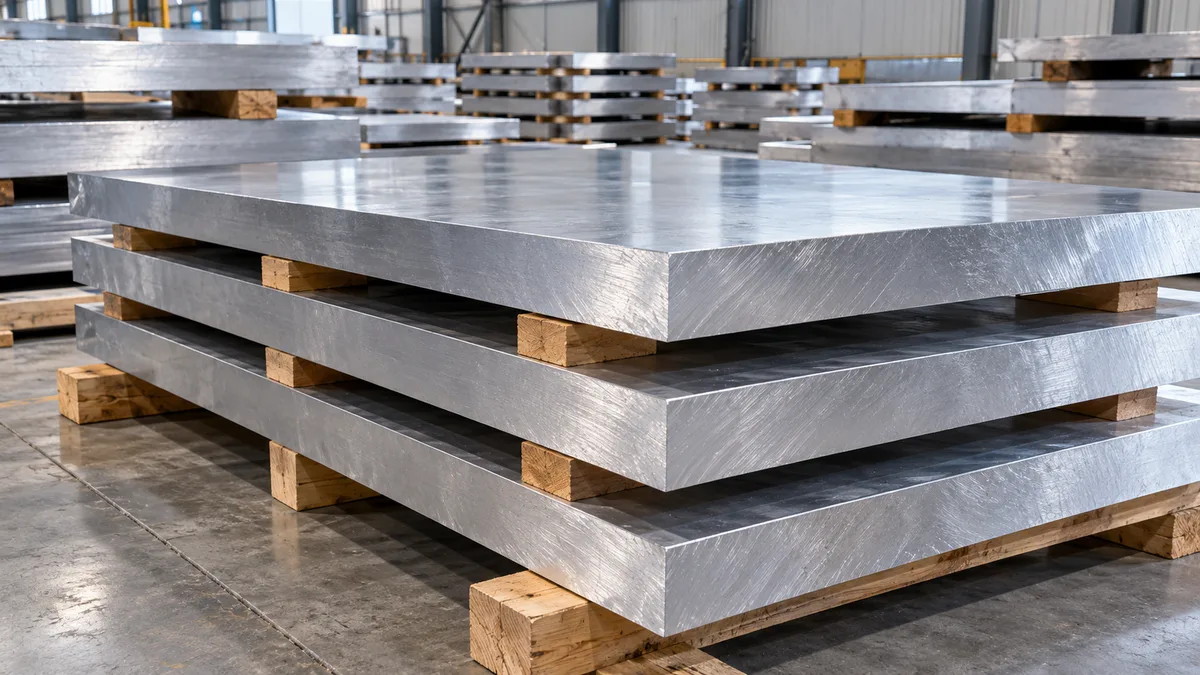
Russian aluminium designations use letters for alloying elements: А for aluminium, К (kremniy) for silicon, Ц (tsink) for zinc, М (med') for copper and Мг for magnesium. Read that way, АКЦМ describes an aluminium alloy containing silicon, zinc and copper. "Сплав" simply means "alloy". The Latin transliteration is AKTsM, and the grade is sometimes confused with АКМ, a different Al-Si-Cu designation.
Standard Russian wrought alloys are listed in GOST 4784 with a four-digit number (for example В95, number 1950) and cast alloys in GOST 1583. АКЦМ does not appear in the GOST 4784 tables we have checked, and we have not found it in an openly published standard. That does not make the material fictitious; works and trade names are common in the CIS market. It does mean the name alone does not define the chemistry, the temper or the guaranteed properties, so a buyer must obtain the specification behind it before ordering or accepting a substitute.
Trade literature for АКЦМ quotes roughly 3.5 – 6 % zinc, 1.4 – 3 % copper, 1.2 – 2.5 % magnesium and 0.8 – 1.6 % silicon, with manganese, chromium and small nickel and zirconium additions and iron up to about 1 %. We cannot confirm these limits against a published standard, so use them only to understand the alloy family. The table compares that range with registered grades.
| Element (wt %) | АКЦМ (as quoted, unverified) | В95 / 1950 (GOST) | 7075 (AA) | 7020 (AA) |
|---|---|---|---|---|
| Zinc (Zn) | 3.5 – 6 | 5.0 – 7.0 | 5.1 – 6.1 | 4.0 – 5.0 |
| Magnesium (Mg) | 1.2 – 2.5 | 1.8 – 2.8 | 2.1 – 2.9 | 1.0 – 1.4 |
| Copper (Cu) | 1.4 – 3 | 1.4 – 2.0 | 1.2 – 2.0 | ≤ 0.20 |
| Silicon (Si) | 0.8 – 1.6 | ≤ 0.5 | ≤ 0.40 | ≤ 0.35 |
| Iron (Fe) | ≤ 1 | ≤ 0.5 | ≤ 0.50 | ≤ 0.40 |
Zinc, magnesium and copper in these proportions place the alloy in the high-strength, heat-treatable Al-Zn-Mg-Cu family, the same group as В95 and 7075. The silicon and iron levels are the surprise: registered high-strength wrought grades keep both low, because coarse iron- and silicon-bearing particles reduce toughness, fatigue life and ductility. A deliberate silicon addition of around 1 % and iron up to 1 % is more typical of casting alloys or of alloys made from recycled metal. That is a strong reason to ask for the full specification and certified test results before relying on any strength figure.
Alloys of this family reach high strength after solution treatment and ageing. Actual minimums depend on the specification and temper and must come from the certificate.
Copper-bearing Al-Zn-Mg alloys have only moderate general corrosion resistance and can be prone to exfoliation and stress-corrosion cracking. Claims of seawater resistance should be treated with caution; protect parts by anodising, painting or cladding.
Copper-containing 7xxx-type alloys are generally regarded as unsuitable for fusion welding because of hot cracking. Use mechanical fastening or a weldable grade such as 7020.
High-strength tempers of this family machine well, producing short chips and good finishes with sharp carbide tools.
High silicon and iron are expected to lower toughness compared with В95 or 7075; verify with impact or fracture data if the part is critical.
Solution treatment, quench and artificial ageing; over-aged tempers improve stress-corrosion resistance at some cost in strength.
| Requirement | Candidate grade | Why |
|---|---|---|
| Highest strength, GOST certification | В95 / В95пч / В95оч (GOST 4784) | Registered Russian Al-Zn-Mg-Cu grade with documented properties |
| Highest strength, international certification | 7075-T6 / T651 / T7351 | Widely available to ASTM B209, AMS and EN 485 |
| High strength with weldability | 7020 / EN AW-7020, or 1915 (GOST) | Copper-free Al-Zn-Mg; weldable with good post-weld strength recovery |
| Good strength, better corrosion behaviour | 6061 or 6082 | Lower strength but far easier to weld and finish |
| Al-Si-Cu forging-type alloy | АК6 / АК8 (≈ 2014) | If the drawing actually meant АКМ-type material |
Any substitution should be approved by whoever owns the design. Present the candidate grade with its chemistry, temper and guaranteed properties for the actual thickness side by side with the original requirement.
In Russian alloy naming, А is aluminium, К silicon, Ц zinc and М copper. АКЦМ therefore indicates an aluminium alloy with silicon, zinc and copper; magnesium is also present in the quoted chemistry.
We have not found it in the GOST 4784 composition tables or another openly published standard. Treat it as a trade or works designation and obtain the specification that defines it.
There is no official one. By its zinc, magnesium and copper content it belongs with В95 and 7075; if weldability matters, 7020 or GOST 1915 are copper-free alternatives. Any substitute needs design approval.
Copper-bearing Al-Zn-Mg alloys are not marine alloys. They need protective finishes in humid or salt environments. For seawater service, 5083 or 5086 are the usual choices.
Alloys of this type are generally not fusion welded because they crack and lose strength near the weld. Use bolting or riveting, or choose a weldable grade such as 7020.
Send the defining specification. We will confirm whether material can be certified to it or propose a registered grade such as В95 or 7075, shipped worldwide with mill certificates.
Send the drawing or specification, form, size and quantity. We will confirm a certifiable grade and reply with availability and a delivered price.





