H116
Strain hardened with controlled processing to meet the exfoliation (ASTM G66) and intergranular (ASTM G67) corrosion tests in ASTM B928. The default for hull, deck and superstructure plating in seawater.



5059 is a high-magnesium Al-Mg-Mn-Zn-Zr alloy that is roughly 10 – 25 % stronger than 5083 in the same temper, before and after welding, while keeping marine-grade corrosion resistance. Shipbuilders use it to thin down hull and deck plating, and defence builders use it as armour. Metline supplies 5059 sheet and plate in O, H111, H116, H321, H131 and H136 to ASTM B209, ASTM B928 and MIL-DTL-46027, to customers worldwide.
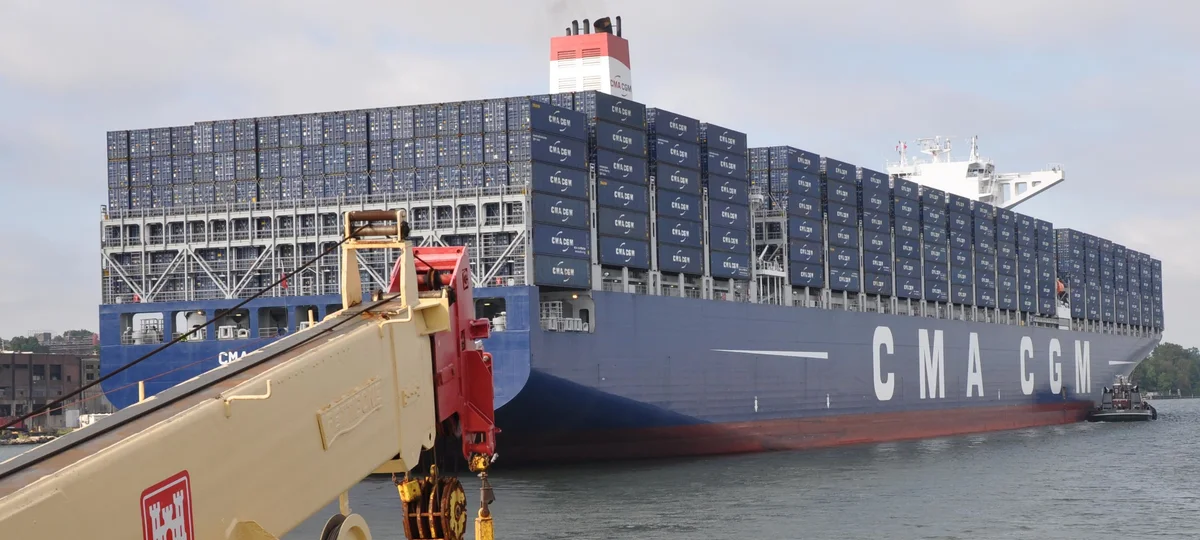
5059 was developed in Europe in the 1990s as a stronger successor to 5083 for welded marine structures. It raises magnesium to 5.0 – 6.0 % and adds zinc (0.40 – 0.90 %) and zirconium (0.05 – 0.25 %) to the familiar Al-Mg-Mn base.
Each addition has a purpose. The extra magnesium gives more solid-solution strength. Zirconium forms very fine Al3Zr dispersoids that resist recrystallisation, so the heat-affected zone next to a weld keeps more of its strength than in 5083. Zinc helps the alloy resist the grain-boundary precipitation that makes high-magnesium alloys prone to intergranular and exfoliation corrosion. The result, in the marine tempers, is plate with yield strength around 25 % above 5083-H116 and welded joints with a correspondingly higher allowable stress.
For designers, that headroom can be spent in two ways: reduce plate thickness and save weight (common in fast ferries, patrol craft and superyachts), or keep the thickness and gain a margin for fatigue and impact. In armoured vehicles, the strain-hardened H131 temper gives ballistic performance at lower areal density than 5083 armour plate. Tank and tanker builders use the soft O and H111 tempers for shells and heads that must be rolled and formed.
Limits below follow the Aluminum Association registration for 5059, which ASTM B928 and EN 573-3 (EN AW-5059) adopt. Note the zirconium range: it is a defining part of the alloy and should appear on the certificate.
| Element | Minimum | Maximum | Purpose |
|---|---|---|---|
| Silicon (Si) | — | 0.45 | Impurity |
| Iron (Fe) | — | 0.50 | Impurity |
| Copper (Cu) | — | 0.25 | Limited for corrosion resistance |
| Manganese (Mn) | 0.60 | 1.20 | Dispersoid strengthening, grain control |
| Magnesium (Mg) | 5.0 | 6.0 | Main solid-solution strengthener |
| Chromium (Cr) | — | 0.25 | Grain control |
| Zinc (Zn) | 0.40 | 0.90 | Improves resistance to sensitisation |
| Titanium (Ti) | — | 0.20 | Grain refiner |
| Zirconium (Zr) | 0.05 | 0.25 | Recrystallisation control, weld-zone strength |
| Others, each / total | — | 0.05 / 0.15 | |
| Aluminium (Al) | Remainder |
Minimum values depend on the standard and thickness band. The figures below are representative minimums for medium-thickness plate and typical values where stated; your mill certificate reports the actual results against the ordered specification.
| Temper / standard | Tensile strength | Yield strength (0.2 %) | Elongation | Basis |
|---|---|---|---|---|
| O / H111 (ASTM B209) | ≥ 330 MPa (48 ksi) | ≥ 160 MPa (23 ksi) | ≥ 17 – 24 % by thickness | Specified minimum |
| H116 (ASTM B928) | ≥ 370 MPa (54 ksi) | ≥ 270 MPa (39 ksi) | ≥ 10 % | Specified minimum, medium gauges |
| H321 (ASTM B928) | ≥ 360 – 370 MPa | ≥ 260 – 270 MPa | ≥ 10 % | Specified minimum, varies with thickness |
| H321 typical | about 410 MPa | about 300 MPa | about 10 – 15 % | Typical |
| H131 armour (MIL-DTL-46027) | about 390 MPa | about 295 MPa | about 7 – 8 % | Typical, armour gauges |
| 5083-H116 for comparison | ≥ 305 MPa | ≥ 215 MPa | ≥ 10 – 12 % | Specified minimum (B928) |
Thick plate (above about 40 mm) carries lower minimums in all standards. Armour orders are accepted on ballistic and mechanical test results defined in the military specification, not on these figures.
Strain hardened with controlled processing to meet the exfoliation (ASTM G66) and intergranular (ASTM G67) corrosion tests in ASTM B928. The default for hull, deck and superstructure plating in seawater.
Strain hardened and thermally stabilised, also corrosion-tested to B928. Interchangeable with H116 in most class rules; choose whichever the drawing or shipyard specifies.
Annealed or lightly strain hardened. Highest elongation for rolling cylindrical tank shells, dishing heads and pressing. Used in road tankers and cryogenic vessels.
As-fabricated plate with properties from hot rolling. Also common for 5059 bar and extrusions.
Heavily strain hardened armour temper defined in MIL-DTL-46027 for military vehicle hulls, floors and add-on armour panels.
Armour temper with a slightly different strength and ductility balance for thicker armour sections.
| System | Designation | Typical product standard |
|---|---|---|
| Aluminum Association / ASTM | 5059 | ASTM B928 (marine tempers), ASTM B209 (general) |
| US military | 5059-H131 / H136 | MIL-DTL-46027 (aluminium armour plate, weldable) |
| UNS | A95059 | — |
| European (EN) | EN AW-5059 / AlMg5.5MnZnZr | EN 485-2, EN 573-3; EN 13195 for marine applications |
| Classification societies | 5059 H116 / H321 | DNV, ABS, LR, BV and other society rules for hull materials |
| Small craft design | — | ISO 12215-5 uses material properties in scantling calculations |
For hull plating, classification societies normally require material produced at an approved works and certified with a society certificate (often EN 10204 3.2) that includes the corrosion test results. If your vessel is built to class, name the society and the rule edition in your enquiry and we will confirm which certification can be provided with the plate.
For armour, the purchaser usually defines first-article ballistic testing, lot acceptance and traceability. State the military specification revision, the class and the thickness range when you ask for a quotation.
5059 is produced by fewer mills than 5083, so allow time for mill scheduling on large or thick orders.
At 2.66 g/cm³, 5059 plate weighs 2.66 kg per m² for each millimetre of thickness. Typical hull and armour gauges are shown below.
| Thickness (mm) | kg per m² | 1500 × 6000 mm (kg) | 2000 × 6000 mm (kg) | 2500 × 8000 mm (kg) |
|---|---|---|---|---|
| 3 | 7.98 | 71.8 | 95.8 | 159.6 |
| 4 | 10.64 | 95.8 | 127.7 | 212.8 |
| 5 | 13.30 | 119.7 | 159.6 | 266.0 |
| 6 | 15.96 | 143.6 | 191.5 | 319.2 |
| 8 | 21.28 | 191.5 | 255.4 | 425.6 |
| 10 | 26.60 | 239.4 | 319.2 | 532.0 |
| 12 | 31.92 | 287.3 | 383.0 | 638.4 |
| 15 | 39.90 | 359.1 | 478.8 | 798.0 |
| 20 | 53.20 | 478.8 | 638.4 | 1064.0 |
| 25 | 66.50 | 598.5 | 798.0 | 1330.0 |
| 30 | 79.80 | 718.2 | 957.6 | 1596.0 |
| 40 | 106.40 | 957.6 | 1276.8 | 2128.0 |
| 50 | 133.00 | 1197.0 | 1596.0 | 2660.0 |
MIG and TIG weld well. ER5183 is the usual filler; ER5556 or ER5087 (Zr-bearing) give higher as-welded strength. Keep heat input moderate and interpass temperatures low to preserve heat-affected-zone strength.
The fusion zone and HAZ are weaker than the parent H116/H321 plate, as with every 5xxx alloy, but the welded strength of 5059 is clearly higher than 5083. Use the welded design values from your class rules.
O and H111 roll and dish well. H116 and H321 form to moderate radii; avoid heating to aid forming, as it can change the corrosion-tested condition.
Like all alloys above about 3 % Mg, 5059 should not be used for sustained service above roughly 65 °C, where sensitisation can lead to intergranular corrosion and stress corrosion cracking.
Plasma, waterjet and saw cut cleanly. Remove plasma-affected edges before welding critical joints.
Can be painted after blasting and priming; antifouling systems must be compatible with aluminium (no copper-based paints in direct contact).
A typical fast-ferry application replaces 8 mm 5083-H116 bottom plating with thinner 5059-H116 after recalculating scantlings to the class rules, saving weight across the whole hull. The saving depends entirely on the rule-based design, so treat any figure as project-specific.
| Property | 5059-H116/H321 | 5383-H116/H321 | 5083-H116/H321 |
|---|---|---|---|
| Magnesium | 5.0 – 6.0 % | 4.0 – 5.2 % | 4.0 – 4.9 % |
| Min. tensile (medium plate) | ≈ 370 MPa | ≈ 305 MPa | 305 MPa |
| Min. yield (medium plate) | ≈ 270 MPa | ≈ 220 MPa | 215 MPa |
| As-welded strength | Highest | About 10 – 15 % above 5083 | Reference |
| Corrosion-tested marine tempers | Yes (B928) | Yes | Yes (B928) |
| Availability | Selected mills | Selected mills | Very wide |
| Relative cost | Highest | Medium–high | Lowest |
Choose 5083 when availability and cost dominate and its strength is sufficient. Move to 5059 when weight saving or welded strength justifies the higher material cost and longer mill lead time. Compared with carbon steel, aluminium hull structure is typically around half the weight for equal stiffness-driven designs, but the comparison must be made on a full structural design, not on plate thickness alone.
In the marine tempers, minimum yield is about 270 MPa for 5059 against 215 MPa for 5083 in medium thicknesses, roughly 25 % higher. Minimum tensile strength rises from about 305 to 370 MPa. The welded strength is also higher, which is what usually lets designers reduce thickness.
ER5183 is standard. Zirconium-bearing fillers such as ER5087 or higher-strength ER5556 can raise as-welded strength. Always follow the welding procedure qualified for the class society or code you build to.
Not for sustained service. Like 5083 and 5086, it can become sensitised above about 65 °C, making it susceptible to intergranular corrosion and stress corrosion cracking. For hot service, use 5454 or 5052.
Yes, 5059 in H116 and H321 is covered by the rules of the major classification societies when produced and tested under their requirements. Material for a classed vessel needs society certification, so tell us the society before ordering.
Both are corrosion-tested marine tempers under ASTM B928. H116 is reached by controlled strain hardening; H321 adds a thermal stabilising step. Properties are very similar and most rules accept either.
Yes. 5059-H131 and H136 are covered by MIL-DTL-46027 alongside 5083 and 5456 and are used for welded military vehicle hulls and add-on armour.
Send the temper, thickness, sizes, quantity and the class or military specification. We will confirm supply, certification and a delivered price.






